

Tensions are mounting in Ladakh as civil society groups oppose winter elections to the Hill Councils and question the delay in publishing the inquiry report into the killing of four people in September 2025.
BY PC BUREAU
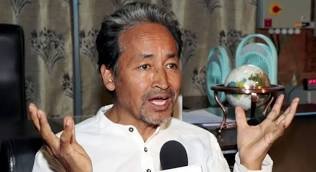
November 12– Fresh tensions have erupted in Ladakh after authorities imposed movement restrictions on climate activist Sonam Wangchuk, following his participation in protests against the administration’s decision to hold Hill Council elections in December. The restrictions have also brought renewed attention to the delay in publishing the judicial inquiry report into the September 2025 violence in Leh, in which four people were killed.
While the administration maintains that the measures are preventive and intended to ensure peaceful elections, Wangchuk has described the situation as a form of house arrest, alleging that armed police personnel have effectively confined him to his residence.
The confrontation comes as the Leh Apex Body (LAB), which has been spearheading the agitation for greater constitutional safeguards and statehood, prepares to launch an indefinite sit-in from November 12.
I AM UNDER HOUSE ARREST
Dozens of armed guards surround my house while the government version says ‘I have been advised to stay at home’. All for asking uncomfortable questions like… why is the Judicial Enquiry Commission Report (of last year’s killings in Leh) is delayed & a phoney Council election is foisted on people with rocket speed in mid winter.
Whole of Ladakh is in protest.
My X, Instagram & YouTube reach have been drastically suppressed in the world’s largest democracy. Please help share this message…— Sonam Wangchuk (@Wangchuk66) November 12, 2026
Why Ladakh Is Protesting
Ladakh has witnessed sustained protests since it was separated from Jammu and Kashmir and made a Union Territory in 2019.
The Leh Apex Body and the Kargil Democratic Alliance (KDA) have been leading demands for full statehood and inclusion under the Sixth Schedule of the Constitution to protect the region’s tribal identity, land rights and employment opportunities.
Wangchuk has emerged as one of the prominent faces of the movement, using hunger strikes and public demonstrations to press for these demands.
The agitation turned violent on September 24, 2025, when a protest in Leh escalated into clashes. Four civilians, including a Kargil war veteran, were killed in police firing, while around 80–90 people were injured.
Protesters also set fire to the BJP office and several vehicles. The administration subsequently imposed curfew and internet restrictions.
Wangchuk was detained under the National Security Act following the violence and remained in custody for approximately six months before being released in March 2026.
Judicial Inquiry Report Still Awaited
The delay in making public the findings of the inquiry into the September 2025 violence has become another major source of discontent.
The Union Home Ministry constituted a Judicial Inquiry Commission in October 2025 under former Supreme Court judge Justice B.S. Chauhan to investigate the circumstances surrounding the violence, police action and the deaths.
The commission has examined a large number of witnesses, with reports indicating that 93 people had been questioned by May 2026. It also extended deadlines for submissions after receiving requests from local organisations.
However, more than a year after the violence, the findings have yet to be made public.
Wangchuk and LAB leaders have criticised the delay and warned that they may explore alternative public accountability mechanisms if the official report remains pending.
The commission, meanwhile, has maintained that the inquiry is proceeding in a fair and transparent manner.
Why Ladakh Opposes December Elections
The immediate trigger for the latest confrontation is the administration’s decision to hold elections to all eight Ladakh Autonomous Hill Development Councils (LAHDCs) on December 4.
The announcement has drawn objections from local organisations, which argue that December is among the harshest months in the region, with temperatures dropping below minus 30 degrees Celsius in some areas and heavy snowfall potentially disrupting movement.
They also contend that a significant section of Ladakh’s population migrates during winter for education, employment and other reasons. Critics say holding elections during this period could affect voter participation and undermine representative democracy.
The LAB and other organisations have demanded that the elections be postponed until April or May, when weather conditions are more favourable.
Representations have been submitted to the President, Prime Minister, Union Home Minister and Leader of the Opposition seeking intervention.
Some organisations in Leh have announced plans to boycott the elections, while Kargil has witnessed a shutdown in protest.
The administration, however, has defended the election schedule, describing it as an important democratic exercise and maintaining that residents are accustomed to dealing with harsh winter conditions.
The authorities have also imposed prohibitory orders under the election-related Model Code of Conduct and other legal provisions, restricting protests and public gatherings in municipal areas of Leh and Kargil.
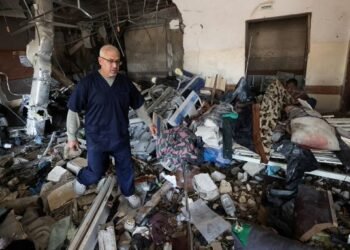
Read–Israeli Strike on Gaza Hospital Kills Six, Including Doctor and 13-Year-Old Boy
Police Escort Wangchuk Home
On November 11, police intervened when Wangchuk attempted to join a planned demonstration at NDS Memorial Park in Leh. He was removed from the protest site and escorted to his residence.
Ladakh Director General of Police Anand Jain said Wangchuk had been advised to remain at home in view of prohibitory orders issued by the Chief Electoral Officer and the District Magistrate to prevent any breach of public order.
A separate order under Section 163 of the Bharatiya Nagarik Suraksha Sanhita (BNSS) imposed restrictions for 60 days on Wangchuk organising or participating in unauthorised rallies, processions and public gatherings that could disrupt peace or interfere with the electoral process.
The administration cited his previous involvement in protests and apprehensions of a possible law-and-order disturbance.
Wangchuk, however, has questioned the legality and practical implications of the restrictions. He has written to the administration seeking written clarification on the instructions and the police deployment outside his residence.
He maintains that the order does not explicitly direct him to remain confined to his home. However, the presence of around 20–22 armed personnel, according to his account, has effectively prevented him from moving freely.
The administration maintains that the measures are preventive rather than a formal detention or house-arrest order.
Broader Opposition and Unresolved Demands
The restrictions on Wangchuk have added another dimension to the confrontation between Ladakh’s civil society groups and the administration.
The LAB and KDA have continued to organise protests, sit-ins, shutdowns and election-boycott campaigns. However, the scale of participation varies across the region, and the opposition should not be interpreted as a uniform position among all residents of Ladakh.
Dialogue between local representatives and the Centre over constitutional safeguards has also remained stalled since the September 2025 violence.
Wangchuk has separately raised concerns about the visibility of his posts and videos on social media platforms, including X, Instagram and YouTube. He has alleged that his online reach has been restricted. However, there is no independently established evidence of systematic government-directed throttling of his accounts.
Democracy Versus Accountability
The latest developments have brought into focus two competing concerns: the administration’s insistence on holding elections according to its announced schedule and the local organisations’ demand for conditions that allow meaningful participation.
For the protesting groups, the issue goes beyond the timing of the Hill Council elections. Their demands include statehood, constitutional safeguards, protection of land and employment rights, and accountability for the four deaths during the September 2025 violence.
The delay in publishing the judicial inquiry report has further deepened distrust.
The restrictions on Wangchuk, meanwhile, have raised questions about the limits of preventive policing during an election period, particularly when applied to a prominent activist associated with a long-running political movement.
The immediate test will be whether the administration and local organisations can resume dialogue before the December 4 elections, or whether the dispute over winter polling and the unresolved inquiry will trigger another phase of confrontation in Ladakh.