Prashant Kishor’s Bankipur victory has reignited debate over whether Bihar’s decades-old caste arithmetic is beginning to weaken as voters embrace governance-focused politics over traditional identity-based alliances.
BY PC Bureau
PATNA/ August 3, 2026: Prashant Kishor’s emphatic victory in the Bankipur Assembly bypoll has done more than establish the Jan Suraaj Party as a serious political force. It has reopened an old question in Bihar politics: Is caste arithmetic beginning to lose its decisive grip when voters are presented with a credible alternative?
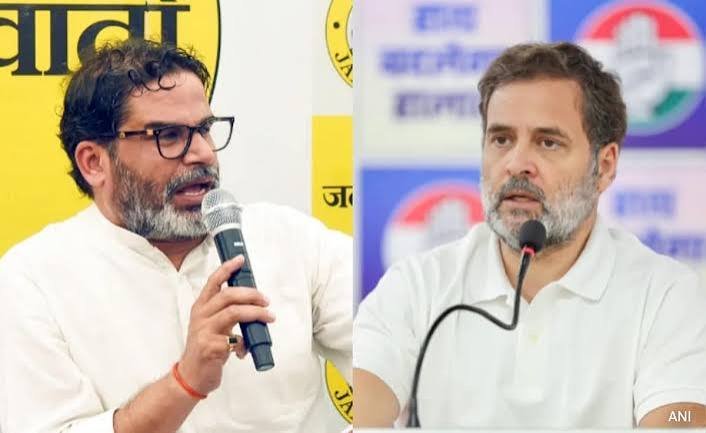
The result has also sparked speculation about whether the Congress, struggling to regain relevance in Bihar, could explore an understanding with Jan Suraaj ahead of the Assembly elections instead of remaining tethered to an RJD-centric opposition strategy.
Kishor secured 64,151 votes, defeating BJP candidate Neeraj Kumar Sinha by nearly 19,000 votes, while the RJD’s Rekha Kumari Gupta finished a distant third with just over 14,000 votes. The victory ended the BJP’s uninterrupted hold over Bankipur, one of its most prestigious urban strongholds since 1995.
More importantly, it challenged one of the central assumptions that has governed Bihar politics for more than three decades—that elections are won primarily through caste coalitions.
Has Bankipur Exposed the Limits of Caste Politics?
Political analysts have long argued that Bihar’s elections are little more than a contest of social arithmetic.
Every party carefully calculates caste combinations before distributing tickets. Voters, in turn, are often expected to vote along community lines.
Bankipur has complicated that assumption.
Kishor belongs to the Brahmin community, which accounts for only a small percentage of the constituency’s electorate. Unlike many candidates in Bihar, he could not depend on his own caste to deliver victory.
Instead, his campaign revolved around governance, education, jobs, corruption, migration and administrative reforms.
If voters across caste groups rallied behind him, it suggests that when presented with a credible and viable alternative, sections of Bihar’s electorate may be willing to move beyond traditional caste loyalties.
That does not mean caste politics has disappeared. Rather, it suggests that performance and credibility can, in certain circumstances, override identity politics.
Why Congress May Be Watching Closely
The Bankipur verdict could also prompt a strategic rethink within the Congress.
For years, the party has remained a junior partner in the RJD-led Mahagathbandhan, often contesting fewer seats while depending on the RJD’s social coalition.
However, repeated elections have exposed the limitations of the RJD’s traditional Muslim-Yadav (MY) formula.
The BJP has successfully consolidated large sections of Hindu voters by portraying the RJD as a party centred primarily on Muslim politics. At the same time, many non-Yadav OBCs, EBCs and upper-caste voters have remained reluctant to support the RJD.
The result has been a ceiling on the RJD’s electoral expansion.
Could Muslim Voters Shift?
Perhaps the most intriguing political implication of Bankipur concerns Muslim voters.
For decades, Muslims in Bihar have largely voted for the RJD because they viewed it as the strongest force capable of defeating the BJP.
Their voting behaviour has often been driven less by ideological affinity than by electoral pragmatism.
However, the Bankipur result could introduce a new calculation.
If Jan Suraaj emerges as a stronger challenger to the BJP than the RJD in several constituencies, a section of Muslim voters may begin reassessing which opposition party is best placed to defeat the BJP.
This is not because Muslim voters are necessarily abandoning the RJD, but because their primary objective has generally been to back the most viable anti-BJP candidate.
If Congress and Jan Suraaj were to forge an alliance and demonstrate electoral competitiveness, it could make such a coalition more attractive in constituencies where the RJD has struggled.
Whether such a shift occurs will depend on future elections rather than one bypoll, but Bankipur has undeniably introduced a new variable into Bihar’s political equations.
Beyond Muslims: A Wider Social Coalition?
The implications extend beyond one community.
Several social groups in Bihar have, for years, found themselves choosing between the NDA and the RJD-led alliance despite dissatisfaction with both.
Many urban middle-class voters, sections of upper castes, educated youth, professionals, non-Yadav OBCs and even parts of the Dalit electorate have often complained that Bihar’s politics offers little room for a genuine alternative.
Kishor’s victory suggests that a third political force can attract voters from multiple communities simultaneously without relying on caste mobilisation alone.
If Congress joins hands with Jan Suraaj, such an alliance could potentially seek support from:
- Muslims looking for the strongest anti-BJP platform.
- Upper-caste voters dissatisfied with the BJP.
- Dalits seeking an alternative to traditional alliances.
- Educated youth frustrated by unemployment and migration.
- Urban middle-class voters prioritising governance.
- Sections of non-Yadav OBCs and EBCs looking beyond established political formations.
Such a coalition would be built less around caste identity and more around governance and electoral viability.
READ: Will Samrat Choudhary Survive After BJP’s Bankipur Debacle?
Congress’s Historical Advantage
Historically, the Congress once enjoyed support among upper castes, Muslims and Dalits in Bihar.
Although much of that support fragmented after the rise of Mandal politics, remnants of that social coalition continue to exist.
A partnership with Jan Suraaj could offer Congress an opportunity to rebuild its organisation without remaining dependent on the RJD’s social base.
Interestingly, during the Bankipur bypoll itself, some Congress leaders argued that the party should either contest the seat or consider supporting Kishor rather than allowing the RJD to fight alone. The eventual outcome has only strengthened those within Congress who believe the party should reconsider its alliance strategy.
Obstacles Remain
Despite the speculation, a Congress-Jan Suraaj alliance remains far from certain.
Kishor has repeatedly projected Jan Suraaj as an independent political alternative rather than an appendage of existing parties.
He has also criticised both the NDA and the Mahagathbandhan for perpetuating Bihar’s governance failures.
Congress, meanwhile, remains part of the INDIA alliance and would have to navigate its relationship with the RJD.
Seat-sharing, leadership issues and ideological positioning would all require careful negotiation.
भाजपा के गढ़ बांकीपुर में जन सुराज पार्टी के प्रशांत किशोर ने दर्ज की ऐतिहासिक जीत
Prashant Kishor victory Bankipur, Jan Suraaj party win Bankipur assembly election Bihar, Prashant Kishor#PrashantKishor #JanSuraaj #BankipurBypoll #BankipurResult #BiharPolitics #PatnaNews pic.twitter.com/spxc4hj3ta
— Harish Saharan (@journoharish) August 3, 2026
A Political Conversation Has Begun
What Bankipur has unquestionably demonstrated is that Bihar’s electoral arithmetic may not be as rigid as previously believed.
The victory suggests that voters are prepared to cross caste lines if they are convinced that a candidate or party offers a credible chance of both defeating the incumbent and governing differently.
For decades, many voters have complained that Bihar has been left with the same familiar political choices election after election.
Bankipur indicates that a significant section of the electorate may now be searching for something new.
Whether that translates into a formal Congress-Jan Suraaj alliance remains uncertain.
But one thing is clear: Prashant Kishor has changed the political conversation. Instead of asking whether Jan Suraaj can survive, Bihar’s political class is now asking whether it can become the nucleus of a broader opposition realignment.