The controversy over remarks by NSCN (IM) leaders against S.C. Jamir highlights a deeper shift in Nagaland, where the group’s long-standing claim to represent the broader Naga aspiration is facing growing scrutiny.
BY Navin Upadhyay
September 23: The latest intervention by the Central Nagaland Tribes Council (CNTC) over the NSCN (IM)’s criticism of former Nagaland Chief Minister S.C. Jamir points to a larger and increasingly visible shift in Naga politics: the NSCN (IM)’s long-standing claim to represent the broader Naga political aspiration is facing greater scrutiny from institutions and groups within Nagaland itself.
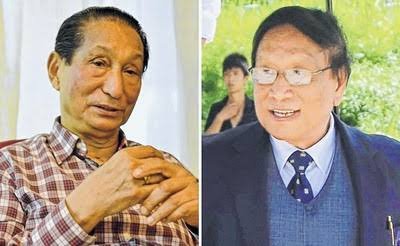
The immediate dispute erupted after senior NSCN (IM) leaders V.S. Atem and Rh Raising questioned Jamir’s authority to speak on the Naga political issue following his September 10 meeting with RSS chief Mohan Bhagwat. At a September 16 consultation between the Nagaland government’s Political Affairs Committee and the NSCN (IM), Raising reportedly maintained that the meeting was a consultation rather than formal negotiations and questioned Jamir’s mandate to represent the Nagas.
The CNTC has now pushed back against that position, arguing that Jamir, as a senior Naga statesman and participant in the region’s modern political history, has the right to express his views on the future of the Naga people.
In its statement, the CNTC appealed to all Naga political groups, civil society organisations and public figures to exercise restraint and maintain mutual respect. It expressed regret over the remarks made by Atem and Raising, saying that while differing political perspectives and robust debate were legitimate, some of the comments directed at Jamir had gone beyond constructive political engagement.
The council said questioning the standing or right of a senior Naga leader to express views on matters of common concern could introduce an “unhelpful and divisive element” into an already complicated political situation.
The CNTC argued that the Naga political journey was a shared inheritance of the Naga people and that Jamir, as a participant in the modern history of the Nagas and a senior public figure, retained the right to offer his reflections on their political future. Attempts to diminish an individual’s contribution on the basis of perceived political alignment, it said, could deepen mistrust when unity and mutual respect were required.
The council also invoked Naga customary principles, stressing respect for elders, reasoned dialogue and historical understanding. It urged all stakeholders to put consensus-building ahead of personal differences in the search for a lasting, honourable and inclusive settlement of the Naga political issue.
But the significance of the CNTC intervention extends beyond its defence of Jamir.
It exposes an increasingly important fault line in Naga politics: the difference between being a principal negotiating organisation and claiming to speak for the entire Naga people.
The NSCN (IM) occupies a central position in the peace process. It is the principal Naga group that signed the 2015 Framework Agreement with the Government of India, and its negotiations with New Delhi have shaped the political discourse around the Naga issue for decades.
But the prolonged negotiations have also produced a more complicated political landscape inside Nagaland.
The longer a final settlement remains elusive, the more space is being created for other institutions to assert their own role. The elected state government, tribal councils, civil society organisations and other Naga political groups increasingly want a place in discussions about a settlement that will ultimately affect the entire Naga society.
READ: Manipur IT Road: Kuki Lineman Killed While Repairing Power Line
READ: Gyanesh Kumar’s ECI Fiefdom: Two Members Cry Foul 14 Times in 10 Months
The latest controversy over Jamir is therefore less about one former chief minister than about political ownership of the Naga question.
When NSCN (IM) leaders question whether Jamir has the mandate to speak for the Nagas, they are effectively asserting a particular understanding of political legitimacy: that the authority to speak on the Naga political issue must derive from the recognised Naga political process.
The CNTC’s response challenges that premise.
Its argument is that being a Naga and having participated in the political history of the community provides an independent basis for contributing to the debate. In other words, political legitimacy in Naga affairs cannot necessarily be confined to organisations currently engaged in negotiations with New Delhi.
This is where the NSCN (IM) increasingly finds itself under pressure.
The challenge is not coming from one rival organisation alone. It is emerging from multiple centres of authority within Nagaland.
The state government has become more actively involved in attempts to revive the stalled peace process. Tribal bodies are asserting their right to participate. Civil society organisations continue to intervene on questions concerning the political settlement. And senior Naga leaders such as Jamir continue to publicly articulate their own views.
The proposed apex committee is potentially important in this context. Any mechanism that brings a wider spectrum of Naga representatives into the political process would inevitably reduce the space for any one organisation to claim exclusive ownership of the Naga political narrative.
That does not make the NSCN (IM) irrelevant. Its decades-long role in the Naga movement and its position in negotiations with New Delhi mean that it remains a central stakeholder in any eventual settlement.
But central stakeholder and sole representative are two different propositions.
The CNTC statement effectively draws that distinction.
It also highlights a potential political problem for the NSCN (IM): attempts to silence or delegitimise alternative Naga voices can produce the opposite effect by encouraging more tribal and civil society organisations to assert their own political space.