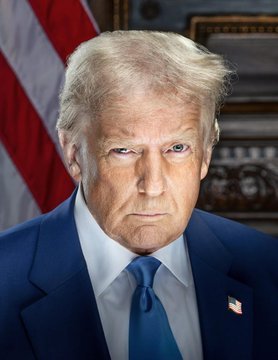
Trump argued that birthright citizenship encouraged illegal immigration, but civil rights groups and legal experts maintained that the policy is protected by the 14th Amendment
BY PC Bureau
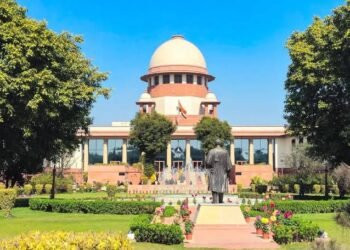
June 30, 2026: In a major setback for President Donald Trump’s immigration agenda, the U.S. Supreme Court has blocked his administration’s attempt to end birthright citizenship, preserving a constitutional principle that has been at the heart of American citizenship law for more than 150 years.
The move had been one of the earliest and most controversial executive actions of Trump’s second term. Through an executive order, the administration sought to deny automatic U.S. citizenship to children born on American soil if neither parent was a U.S. citizen or lawful permanent resident. The proposal immediately sparked multiple legal challenges from states, civil rights groups and immigrant advocacy organisations, eventually reaching the country’s highest court.
With the Supreme Court refusing to allow the order to take effect, birthright citizenship remains intact, reaffirming one of the central guarantees of the 14th Amendment to the U.S. Constitution.
READ: Sabarimala Gold Case: SIT Names Former TDB Chief, Ex-Chief Priest as Accused
What Is Birthright Citizenship?
Birthright citizenship is the legal principle that nearly every child born in the United States automatically becomes an American citizen, irrespective of the immigration status of their parents.
The principle is rooted in the 14th Amendment, ratified in 1868 following the American Civil War. It states:
“All persons born or naturalized in the United States, and subject to the jurisdiction thereof, are citizens of the United States and of the State wherein they reside.”
For more than a century, courts and successive administrations have interpreted this provision to mean that almost everyone born on U.S. soil is entitled to citizenship at birth.
Only a few narrow exceptions exist, including children born to accredited foreign diplomats and, in extremely rare circumstances, children of hostile occupying forces.
Trump on SCOTUS decision on birthright citizenship,
“I guess I have to accept it. It is the Supreme Court. I think it is very bad for our nation, we are the only nation that does it.”
pic.twitter.com/0Ol9e9MO0f— Defiant L’s (@DefiantLs) June 30, 2026
Why Trump Wanted to End It
President Trump has long argued that birthright citizenship encourages illegal immigration and creates what critics describe as “birth tourism,” where foreign nationals travel to the United States to give birth so their children automatically receive American citizenship.
Calling the policy “a disgrace,” Trump made ending birthright citizenship a central part of his broader immigration platform. Vice President JD Vance has also criticised the policy, previously describing it as “the dumbest immigration policy in the world.”
The executive order sought to reinterpret the Constitution by excluding children born to undocumented immigrants and certain temporary visa holders from automatic citizenship.
Legal experts, however, argued that such a sweeping change could not be achieved through an executive order and would require either a constitutional amendment or a reversal of long-standing Supreme Court precedent.
Supreme Court Preserves the Status Quo
The Supreme Court’s decision effectively leaves existing citizenship rules unchanged.
Civil rights organisations welcomed the ruling as an affirmation of constitutional protections.
The American Civil Liberties Union (ACLU), one of the organisations challenging the executive order, described the judgment as a reaffirmation of a fundamental American principle.
“No matter who your parents are, if you’re born here, you belong here,” the organisation said following the ruling.
The decision represents one of the earliest judicial setbacks for Trump’s renewed immigration agenda during his second term.
Why the Case Still Matters
Although birthright citizenship remains protected, legal scholars warn that simply reopening the debate could have lasting consequences.
Kim Lane Scheppele, professor of sociology and international affairs at Princeton University, argues that the legal uncertainty itself has weakened the perceived permanence of citizenship.
“The fact that the question is now open in a way it never was has made citizenship more precarious,” she observed.
Scheppele also pointed to broader developments under the Trump administration, including the creation of a dedicated denaturalisation office within the Justice Department and proposals requiring documentary proof of citizenship to vote.
She noted that many Americans do not possess easy proof of citizenship.
“Less than half the U.S. population has passports,” she said, adding that most citizens have traditionally relied on their birth certificates because birthright citizenship has never previously been in doubt.
Who Would Have Been Affected?
According to the Migration Policy Institute, approximately 255,000 children are born in the United States every year to parents who are not U.S. citizens.
Had Trump’s executive order taken effect, those children could have been denied automatic citizenship.
The proposal was not retroactive, meaning the estimated 4.4 million people who acquired citizenship through birthright between 2006 and 2023, according to the Pew Research Center, would have remained U.S. citizens.
Several prominent Americans whose parents were not U.S. citizens at the time of their birth—including Secretary of State Marco Rubio, FBI Director Kash Patel, and Second Lady Usha Vance—would also have fallen outside the proposed eligibility rules.
Administrative Challenges
Beyond its constitutional implications, experts warned that ending birthright citizenship would have created significant administrative complications.
Hospitals would likely have been required to verify the immigration status of parents before registering newborns as U.S. citizens.
Birth certificates alone would no longer have been sufficient proof of citizenship for obtaining passports, Social Security numbers or other official documents.
Legal scholars also cautioned that some children could become effectively stateless if their parents’ countries did not automatically grant citizenship to children born abroad.
Such changes would have required an entirely new bureaucratic system for determining citizenship at birth—something the United States has never previously needed.
Is the U.S. Unique?
Despite Trump’s repeated assertions, the United States is not alone in granting birthright citizenship.
According to the Pew Research Center, at least 32 countries, most of them in North and South America, continue to provide automatic citizenship based on birthplace.
Elsewhere, citizenship laws vary considerably.
Countries including Australia, Germany, and the United Kingdom link citizenship partly to the legal residency status of parents, while others such as Greece and Iran apply different ancestry-based criteria. Some nations maintain much stricter rules governing citizenship by birth.
A Setback, But Not the End of Trump’s Immigration Agenda
The Supreme Court’s ruling marks a significant defeat for one of President Trump’s signature immigration initiatives.
However, it is unlikely to alter the broader direction of his administration’s immigration policies, which continue to focus on tighter border controls, expanded deportations, reduced refugee admissions and increased immigration enforcement.
For supporters of birthright citizenship, the judgment offers reassurance that a constitutional protection in place since the 19th century remains intact.
At the same time, the legal battle underscores that questions surrounding citizenship, immigration and constitutional interpretation are likely to remain central to American politics well beyond this case.