BY PC Bureau
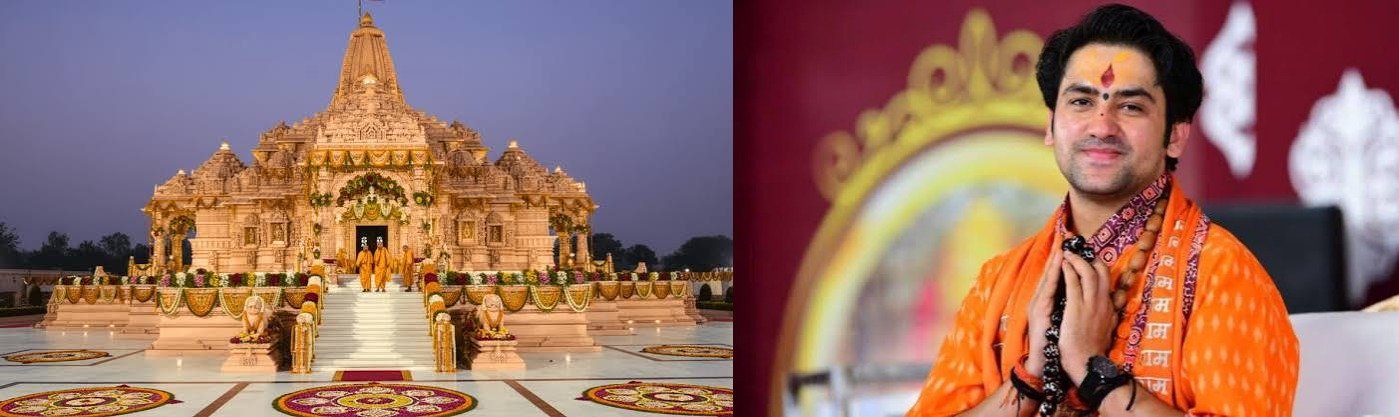
July 1, 2026: Prominent spiritual leader Pandit Dhirendra Krishna Shastri, popularly known as Baba Bageshwar or Bageshwar Dham Sarkar, has made strong remarks on the ongoing controversy surrounding alleged irregularities in the handling of donations at the Shri Ram Janmabhoomi Temple in Ayodhya.
Addressing devotees during a religious discourse (katha) in Jakarta, Indonesia, Baba Bageshwar described the alleged misappropriation of temple donations as not merely a financial crime but an assault on the faith of millions of devotees. His comments have since gone viral on social media, drawing widespread attention amid the ongoing Special Investigation Team (SIT) probe into the matter.
“The Faith of Lakhs and Trust of Crores Has Been Stolen”
Drawing a parallel with the Ramayana, Baba Bageshwar said that while Ravana abducted Mata Sita, the alleged theft from the Ram Mandir was of an even deeper nature because it involved the faith and trust of devotees.
Speaking during the discourse, he said:
“Ravana only abducted Mata Janaki. But from the Ram Mandir donation box, the faith of lakhs of people and the trust of crores of devotees has been stolen.”
Referring to reports of police action, he added that the registration of an FIR and the ongoing investigation were appropriate steps.
“We have heard that an FIR has been registered. The investigation will continue and those responsible will certainly be caught. That is correct. We can say this much. If we say more… truth is truth.”
He also warned that anyone who steals offerings made in the name of Lord Ram would face not only punishment under the law but also divine justice.
Invoking the Ramayana, he said that just as Ravana ultimately paid the price for his actions, those who betray the trust of devotees cannot escape either legal consequences or the “Mahadand” (great punishment) of God.
Bageshwar Dham’s Dhirendra Shastri:
🗣️ “Ravana abducted Sita and saw his entire LINEAGE destroyed.
— Those who steal from the Ram Temple will also face severe punishment from God.”Sant Samaj is also very angry on this!pic.twitter.com/O7Xi7uy4ti
— The Analyzer (News Updates🗞️) (@Indian_Analyzer) June 27, 2026
“Only Small Fish Have Been Caught So Far”
The most talked-about part of Baba Bageshwar’s address came when he referred to the ongoing SIT investigation.
Suggesting that the investigation had so far reached only lower-level accused, he remarked:
“Abhi sirf chhoti machhliyan pakdi gayi hain.”
(“So far, only the small fish have been caught.”)
He then made a cryptic reference to his well-known practice of giving spiritual guidance through “parchi” (handwritten slips), saying:
“Parchi kholi to mujhe nipata denge.”
(“If I open my parchi [and reveal names], they will finish me off.”)
The statement was widely interpreted by supporters as implying that, in his view, more influential individuals may be involved in the alleged irregularities. However, Baba Bageshwar did not name any individual or provide evidence to support the suggestion, and the remark remains his personal assertion.
The comment has generated significant discussion online, with supporters describing it as a bold call for accountability, while critics have questioned its implications.
Baba Bageshwar’s remarks come as the Uttar Pradesh government continues its investigation into alleged irregularities in the handling of donations received at the Ram Mandir.
The controversy surfaced in June after allegations emerged regarding possible discrepancies in cash donations and the handling of valuables offered by devotees. In response, the state government constituted a Special Investigation Team (SIT), following which an FIR was registered and several employees associated with the donation-counting process were arrested.
Investigators are examining donation records, CCTV footage, banking transactions and internal procedures to determine whether criminal misconduct or administrative lapses occurred. The investigation remains ongoing, and authorities have not yet announced their final findings.
While political leaders and some individuals have made claims involving much larger sums, officials have not publicly confirmed those figures, and the scope of any financial irregularity is yet to be established.
Unlike political leaders who have largely framed the controversy in terms of governance and accountability, Baba Bageshwar presented it as a moral and spiritual issue.
According to him, devotees do not merely donate money—they offer their faith, trust and devotion. Any alleged misuse of those offerings, he suggested, therefore constitutes a betrayal of the sentiments of millions of Hindus.
His remarks echoed broader calls from several religious leaders and organisations for a transparent investigation that identifies all those responsible, irrespective of their position.
Reactions and Significance
The Jakarta discourse quickly gained traction across social media platforms, where video clips of Baba Bageshwar’s speech were widely shared.
Supporters praised his willingness to speak openly on an issue they believe affects the sanctity of one of Hinduism’s holiest shrines. Many viewed his comments as a demand for accountability and a reminder that public trust must remain paramount in managing devotees’ offerings.
Others, however, cautioned against drawing conclusions before the completion of the SIT investigation, noting that allegations against any individual must ultimately be established through evidence and due legal process.
READ: Seven Dead After Bus Catches Fire onDelhi-Mumbai Expressway
Investigation Continues
As the SIT continues to examine evidence and question those connected with the donation-handling process, the controversy remains one of the most closely watched developments surrounding the Ram Mandir since its consecration in January 2024.
Whether Baba Bageshwar’s remarks influence public discourse or remain a symbolic intervention, they underscore the deep emotional investment millions of devotees have in the Ram Mandir. For many, the issue extends beyond financial accountability to preserving the sanctity of an institution that embodies faith, devotion and a centuries-long aspiration.
With the investigation still underway, both devotees and observers await the findings that will determine whether the allegations point to isolated misconduct or reveal deeper systemic failures in the management of one of India’s most revered religious institutions.