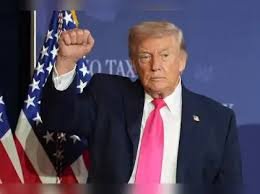
Trump renewed his push for the SAVE America Act, saying stricter voter verification measures are needed to protect election integrity, while Democrats accused him of undermining confidence in the electoral process.
BY PC Bureau
July 17: Washington: President Donald Trump used a nationally televised primetime address from the White House on Thursday to revive concerns about vulnerabilities in the U.S. election system, signalling that election integrity is likely to become a central pillar of his political strategy ahead of the 2026 congressional midterm elections.
Although the speech offered little in the way of major new revelations, it underscored Trump’s determination to keep election security at the forefront of national debate. He argued that recently declassified intelligence documents exposed significant weaknesses in America’s electoral infrastructure and accused previous administrations of concealing critical information from the public.
The address, however, stopped short of presenting evidence that foreign governments altered vote totals in recent U.S. elections. Instead, Trump framed the issue as one of systemic vulnerability, asserting that hostile foreign powers had both the capability and intent to exploit weaknesses in the American electoral process.
Newly Declassified Documents
Trump Says Election System Is Too Vulnerable to Defend 🇺🇸
President Donald Trump argued that newly released disclosures reveal serious vulnerabilities in the U.S. election system, citing alleged foreign access to voter data, cybersecurity risks, voter roll issues, and election…
— Politicols 🗞️ (@politicosCrypt) July 17, 2026
Trump said his administration had declassified intelligence material that had long been withheld from both him and the American public.
According to the President, the documents reveal an election system that is “catastrophically short” of necessary security standards and vulnerable to foreign interference.
Independent assessments published shortly after the speech suggested that much of the material revisited issues already examined in previous intelligence reviews. Several analysts noted that some of the documents appeared to contain raw intelligence that had not undergone the full verification process normally required before agencies reach formal conclusions.
Trump highlighted intelligence indicating that China had amassed hundreds of millions of records relating to American voters. Earlier intelligence assessments had acknowledged that Beijing has spent years collecting information on U.S. voters, politicians and public opinion to better understand—and potentially influence—American policymaking.
However, those assessments did not conclude that China or any other foreign government manipulated vote counts or successfully altered the outcome of the 2020 presidential election.
Following the address, conservative journalist John Solomon, who worked with the White House during the document release, said the intelligence community had found no evidence that any foreign power changed votes in the 2020, 2022 or 2024 elections, while maintaining that foreign efforts to gather data and influence public opinion remain a continuing national security concern.
Election Integrity Takes Centre Stage
The broader significance of Trump’s speech appeared less about the newly released documents and more about the political message it sends as Republicans prepare for what is expected to be a difficult 2026 midterm election cycle.
Trump described America’s election system as “broken” and “so vulnerable that no one can possibly defend it,” arguing that public confidence in elections cannot be restored without sweeping reforms.
He announced that the federal government would work more closely with state governments to strengthen cybersecurity protections, improve safeguards for voter registration databases and better protect election-related data from foreign cyber threats.
The President also renewed his demand that Congress pass the SAVE America Act, portraying the legislation as essential to restoring confidence in U.S. elections.
What Is the SAVE America Act?
The proposed legislation seeks to tighten federal election safeguards, particularly regarding voter eligibility.
Among its principal provisions are:
requiring documentary proof of U.S. citizenship when registering to vote in federal elections;
directing states to establish stronger procedures for verifying citizenship status;
improving coordination between federal and state agencies to identify ineligible registrations;
strengthening penalties for election fraud involving non-citizen voting; and
requiring states to maintain more up-to-date voter registration rolls.
Supporters argue that the bill would strengthen public confidence by ensuring that only eligible citizens participate in federal elections.
Opponents contend that existing laws already prohibit non-citizens from voting in federal elections and argue that additional documentation requirements could create barriers for eligible voters who lack readily available citizenship documents.
The legislation faces uncertain prospects in Congress, where Democrats remain firmly opposed and some Republicans have also questioned aspects of its implementation.
Sharp Democratic Response
Democratic leaders swiftly condemned Trump’s address, accusing him of attempting to undermine confidence in American elections.
The nation’s Democratic governors issued a joint statement arguing that repeated claims questioning election integrity risk discouraging voter participation and eroding trust in democratic institutions.
They maintained that U.S. elections remain secure and pointed to numerous court rulings, bipartisan election audits and state certification processes that have upheld recent election results.
Limited Discussion of the 2020 Election
Unlike many of his previous speeches, Trump devoted relatively little time to revisiting specific allegations surrounding the 2020 presidential election.
Instead, he focused on what he characterized as continuing structural weaknesses in election administration.
He did mention FBI files concerning alleged voter registration irregularities in Michigan during the 2020 election and instructed FBI Director Kash Patel to review those materials. Much of the information referenced has previously been publicly discussed.
Trump again criticized officials who had described the 2020 election as among the most secure in American history and alleged that elements within the federal bureaucracy had downplayed legitimate security concerns.
At the same time, he stopped short of explicitly repeating his longstanding claim that he won the 2020 election.
Election Security: An Ongoing Debate
Election security has remained one of the most polarizing issues in American politics since the 2016 presidential election, when U.S. intelligence agencies concluded that Russia conducted influence operations aimed at affecting public opinion.
Since then, federal and state governments have invested billions of dollars in strengthening election infrastructure. Measures have included replacing outdated voting equipment, expanding cybersecurity protections, conducting post-election audits, improving information-sharing between intelligence agencies and election officials, and enhancing defenses against foreign cyberattacks.
Federal agencies have repeatedly warned that while adversarial nations—including Russia, China and Iran—continue attempting to influence public opinion through cyber operations and disinformation campaigns, there remains no verified evidence that foreign governments have successfully altered vote tallies in modern U.S. presidential elections.
Looking Toward 2026
Political analysts believe the speech may represent the opening phase of Trump’s broader campaign strategy for the 2026 midterm elections.
Trump Uses Primetime Address to Renew Focus on Election Security Ahead of 2026 Midterms
Washington: President Donald Trump used a nationally televised primetime address from the White House on Thursday to revive concerns about vulnerabilities in the U.S. election system, signalling that election integrity is likely to become a central pillar of his political strategy ahead of the 2026 congressional midterm elections.
Although the speech offered little in the way of major new revelations, it underscored Trump’s determination to keep election security at the forefront of national debate. He argued that recently declassified intelligence documents exposed significant weaknesses in America’s electoral infrastructure and accused previous administrations of concealing critical information from the public.
The address, however, stopped short of presenting evidence that foreign governments altered vote totals in recent U.S. elections. Instead, Trump framed the issue as one of systemic vulnerability, asserting that hostile foreign powers had both the capability and intent to exploit weaknesses in the American electoral process.
Newly Declassified Documents
Trump said his administration had declassified intelligence material that had long been withheld from both him and the American public.
According to the President, the documents reveal an election system that is “catastrophically short” of necessary security standards and vulnerable to foreign interference.
Independent assessments published shortly after the speech suggested that much of the material revisited issues already examined in previous intelligence reviews. Several analysts noted that some of the documents appeared to contain raw intelligence that had not undergone the full verification process normally required before agencies reach formal conclusions.
Trump highlighted intelligence indicating that China had amassed hundreds of millions of records relating to American voters. Earlier intelligence assessments had acknowledged that Beijing has spent years collecting information on U.S. voters, politicians and public opinion to better understand—and potentially influence—American policymaking.
However, those assessments did not conclude that China or any other foreign government manipulated vote counts or successfully altered the outcome of the 2020 presidential election.
Following the address, conservative journalist John Solomon, who worked with the White House during the document release, said the intelligence community had found no evidence that any foreign power changed votes in the 2020, 2022 or 2024 elections, while maintaining that foreign efforts to gather data and influence public opinion remain a continuing national security concern.
Election Integrity Takes Centre Stage
The broader significance of Trump’s speech appeared less about the newly released documents and more about the political message it sends as Republicans prepare for what is expected to be a difficult 2026 midterm election cycle.
Trump described America’s election system as “broken” and “so vulnerable that no one can possibly defend it,” arguing that public confidence in elections cannot be restored without sweeping reforms.
He announced that the federal government would work more closely with state governments to strengthen cybersecurity protections, improve safeguards for voter registration databases and better protect election-related data from foreign cyber threats.
The President also renewed his demand that Congress pass the SAVE America Act, portraying the legislation as essential to restoring confidence in U.S. elections.
Trump Says Election System Is Too Vulnerable to Defend 🇺🇸
President Donald Trump argued that newly released disclosures reveal serious vulnerabilities in the U.S. election system, citing alleged foreign access to voter data, cybersecurity risks, voter roll issues, and election…
— Politicols 🗞️ (@politicosCrypt) July 17, 2026
What Is the SAVE America Act?
The proposed legislation seeks to tighten federal election safeguards, particularly regarding voter eligibility.
Among its principal provisions are:
requiring documentary proof of U.S. citizenship when registering to vote in federal elections;
directing states to establish stronger procedures for verifying citizenship status;
improving coordination between federal and state agencies to identify ineligible registrations;
strengthening penalties for election fraud involving non-citizen voting; and
requiring states to maintain more up-to-date voter registration rolls.
Supporters argue that the bill would strengthen public confidence by ensuring that only eligible citizens participate in federal elections.
Opponents contend that existing laws already prohibit non-citizens from voting in federal elections and argue that additional documentation requirements could create barriers for eligible voters who lack readily available citizenship documents.
The legislation faces uncertain prospects in Congress, where Democrats remain firmly opposed and some Republicans have also questioned aspects of its implementation.
Sharp Democratic Response
Democratic leaders swiftly condemned Trump’s address, accusing him of attempting to undermine confidence in American elections.
The nation’s Democratic governors issued a joint statement arguing that repeated claims questioning election integrity risk discouraging voter participation and eroding trust in democratic institutions.
They maintained that U.S. elections remain secure and pointed to numerous court rulings, bipartisan election audits and state certification processes that have upheld recent election results.
Limited Discussion of the 2020 Election
Unlike many of his previous speeches, Trump devoted relatively little time to revisiting specific allegations surrounding the 2020 presidential election.
Instead, he focused on what he characterized as continuing structural weaknesses in election administration.
He did mention FBI files concerning alleged voter registration irregularities in Michigan during the 2020 election and instructed FBI Director Kash Patel to review those materials. Much of the information referenced has previously been publicly discussed.
Trump again criticized officials who had described the 2020 election as among the most secure in American history and alleged that elements within the federal bureaucracy had downplayed legitimate security concerns.
At the same time, he stopped short of explicitly repeating his longstanding claim that he won the 2020 election.
READ: NEET Results Out: 11.21 Lakh Qualify; Over 58% Are Women
Election Security: An Ongoing Debate
Election security has remained one of the most polarizing issues in American politics since the 2016 presidential election, when U.S. intelligence agencies concluded that Russia conducted influence operations aimed at affecting public opinion.
Since then, federal and state governments have invested billions of dollars in strengthening election infrastructure. Measures have included replacing outdated voting equipment, expanding cybersecurity protections, conducting post-election audits, improving information-sharing between intelligence agencies and election officials, and enhancing defenses against foreign cyberattacks.
Federal agencies have repeatedly warned that while adversarial nations—including Russia, China and Iran—continue attempting to influence public opinion through cyber operations and disinformation campaigns, there remains no verified evidence that foreign governments have successfully altered vote tallies in modern U.S. presidential elections.
Looking Toward 2026
Political analysts believe the speech may represent the opening phase of Trump’s broader campaign strategy for the 2026 midterm elections.
Rather than focusing primarily on past disputes, the President sought to frame election security as an ongoing issue requiring legislative action and administrative reform before Americans return to the polls.
Whether that message resonates beyond Trump’s political base remains uncertain. Public opinion surveys continue to show deep partisan divisions over confidence in U.S. elections, with Republicans generally expressing greater concern about election integrity than Democrats.
For now, Trump’s address has ensured that election security—already one of the most contentious issues in American politics—will remain central to the national conversation as Washington moves toward another high-stakes election cycle.
Rather than focusing primarily on past disputes, the President sought to frame election security as an ongoing issue requiring legislative action and administrative reform before Americans return to the polls.
Whether that message resonates beyond Trump’s political base remains uncertain. Public opinion surveys continue to show deep partisan divisions over confidence in U.S. elections, with Republicans generally expressing greater concern about election integrity than Democrats.
For now, Trump’s address has ensured that election security—already one of the most contentious issues in American politics—will remain central to the national conversation as Washington moves toward another high-stakes election cycle.