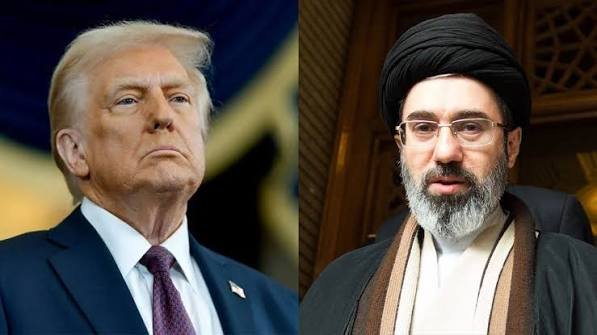
The United States struck more than 80 Iranian military sites after accusing Tehran of attacking commercial ships in the Strait of Hormuz, while Iran vowed retaliation and warned it would take “all necessary measures.”
BY PC Bureau
US President Donald Trump declared on Wednesday that the ceasefire between the United States and Iran was effectively “over” after American forces launched a fresh wave of airstrikes against Iranian military targets, dramatically escalating tensions in the Persian Gulf and raising fears of a return to full-scale conflict.
Speaking after the strikes, Trump said Washington had no interest in engaging further with Tehran, describing the Iranian leadership as “sick” while insisting the United States would respond decisively to any future attacks on its forces or international shipping.
“The ceasefire is over,” Trump said, while adding that the United States would remain open to negotiations if Iran changed its course.
🚨 BREAKING
🇺🇸 TRUMP SAYS THE U.S.-IRAN CEASEFIRE IS OFFICIALLY CANCELLED!
THE U.S. JUST LAUNCHED NEW STRIKES ON IRAN AND IMPOSED NEW SANCTIONS.
THE PEACE DEAL IS NOW OFFICIALLY CANCELLED AND OIL PRICES SURGED 10% IN 20 MINUTES.
THIS IS EXTREMELY BAD FOR THE MARKETS… pic.twitter.com/IWZSbIONOk
— 0xNobler (@CryptoNobler) July 8, 2026
US Launches Largest Strike Since Ceasefire
The latest escalation followed one of the largest US military operations against Iran since the April ceasefire.
American forces carried out precision strikes on more than 80 Iranian military targets after Washington accused Tehran of orchestrating attacks on three commercial vessels transiting the Strait of Hormuz.
US officials said the operation targeted Iranian air defence systems, anti-ship missile batteries, drone launch sites, command-and-control centres, coastal radar installations and dozens of fast attack boats operated by the Islamic Revolutionary Guard Corps (IRGC).
The White House said the objective was to degrade Iran’s ability to threaten commercial shipping and prevent Tehran from expanding crude oil exports in violation of US sanctions.
READ: US Pounds 80 Iranian Military Targets as Gulf Crisis Spirals
Iran Threatens Retaliation
Iran condemned the strikes as an act of aggression and warned it would “take whatever measures it deems necessary” to defend its sovereignty.
Iranian military officials accused Washington of violating the recently agreed memorandum of understanding that had temporarily halted hostilities and warned that American military bases across the region remained within range of Iranian missiles.
Earlier in the day, Tehran claimed it had launched retaliatory missile and drone attacks against US military facilities in Bahrain and Kuwait, although independent confirmation of the scale of those attacks was still awaited.
Bahrain, home to the US Navy’s Fifth Fleet headquarters, activated missile warning sirens several times and instructed residents to immediately seek shelter as regional militaries went on high alert.
Funeral of Khamenei Overshadowed by Renewed Conflict
The renewed fighting unfolded during the state funeral of former Supreme Leader Ayatollah Ali Khamenei, who was killed on February 28 during the opening phase of the US-Iran conflict.
Millions of mourners continued participating in funeral processions across Iran and Iraq as Khamenei’s coffin travelled through the holy city of Najaf before returning to Iran for burial.
Large crowds chanted “Death to America” and “Death to Israel” while waving Iranian and Hezbollah flags, reflecting widespread public anger over the latest US military action.
Iranian authorities said the funeral ceremonies would conclude on Thursday with burial rites in Mashhad.
Diplomatic Talks in Doubt
Before the latest military escalation, Washington and Tehran had been expected to resume negotiations following Khamenei’s burial.
The proposed talks were expected to focus on reopening the Strait of Hormuz to unrestricted commercial navigation, easing sanctions and addressing Iran’s nuclear programme.
Trump’s declaration that the ceasefire was over has cast serious doubt over those diplomatic efforts, with analysts warning that the latest military exchanges could derail any immediate prospects for a negotiated settlement.
China Calls for Restraint
China urged both Washington and Tehran to avoid further escalation, warning that renewed hostilities risked destabilising the entire Middle East.
Beijing called on both countries to exercise restraint and return to dialogue, saying the international community should work to prevent the conflict from reigniting.
IRGC Casualty Confirmed
Iran’s Revolutionary Guards confirmed that one of its members was killed during the US strikes in southwest Iran, though officials did not disclose further operational details.
Iranian media reported additional explosions near strategic military facilities along the Persian Gulf coast, while authorities continued assessing the extent of the damage.
Region on Edge
The latest confrontation has heightened concerns over the security of the Strait of Hormuz, through which nearly one-fifth of the world’s seaborne oil and liquefied natural gas exports pass.
The crisis comes amid multiple overlapping conflicts across the Middle East, including continued fighting involving Israel, Iran-backed armed groups, and regional militias, as well as the humanitarian crisis in Gaza.
With military forces across the Gulf on heightened alert, diplomatic channels under strain, and global energy markets closely monitoring developments, the coming days are expected to determine whether the region slides back into open war or whether international mediation can salvage the rapidly collapsing ceasefire.