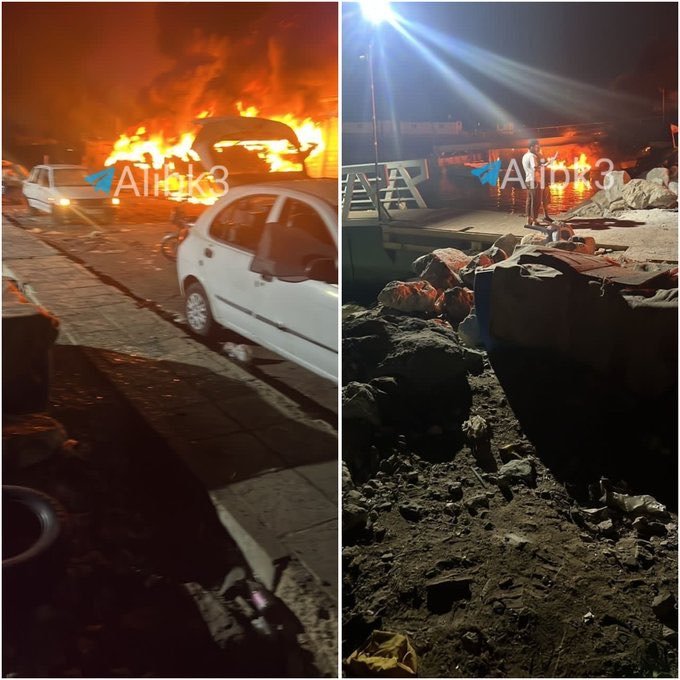
Iran condemned the strikes as a “blatant act of aggression” during the funeral of former Supreme Leader Ali Khamenei, vowing a crushing response and accusing Washington of violating the recent US-Iran memorandum.
BY PC Bureau
July 8, 2026: The United States launched its most extensive air campaign against Iran since the April ceasefire, carrying out precision strikes on more than 80 military targets across southern Iran in retaliation for a series of attacks on commercial vessels in the Strait of Hormuz. According to US officials, the operation—several times larger than the previous round of strikes conducted about ten days ago—could continue for hours as Washington seeks to cripple Iran’s ability to threaten one of the world’s busiest maritime trade routes.
The escalation comes at a highly volatile moment, with millions of Iranians participating in funeral processions for former Supreme Leader Ayatollah Ali Khamenei, who was killed in earlier US-Iran military strikes on February 28. The renewed bombardment has pushed the already fragile US-Iran memorandum of understanding (MoU), signed less than three weeks ago, to the brink of collapse.
Largest Strike Since April Ceasefire
US Central Command (CENTCOM) confirmed that American forces struck more than 80 Iranian military targets, describing the operation as a coordinated effort to degrade Tehran’s maritime strike capabilities.
The targets included Iranian air defence batteries, surface-to-air missile systems, coastal surveillance radars, anti-ship cruise missile launch sites, drone facilities, command-and-control centres, logistics hubs, port infrastructure, and more than 60 fast attack boats operated by the Islamic Revolutionary Guard Corps (IRGC).
A US official told the Associated Press that the latest operation struck roughly eight times more targets than the late-June air campaign.
“Iran hasn’t been listening, so we’re turning up the volume,” the official said, describing the strikes as punitive action against repeated attacks on international commercial shipping.
CENTCOM said in a statement that the objective was to “degrade Iran’s ability to continue attacking international commerce and threaten freedom of navigation through the Strait of Hormuz.”
According to Axios, the latest operation is four to five times larger than the previous US strike package launched earlier this month.
President Donald Trump reportedly authorised the operation while attending the NATO summit in Turkey.
Explosions Rock Southern Iran
Iranian media reported multiple explosions across strategic locations along the Persian Gulf coast.
The heaviest bombardment was reported in Bandar Abbas, Sirik and Qeshm Island—areas that host major naval facilities, missile batteries and IRGC maritime bases.
According to Al Jazeera, residents reported approximately ten explosions in Bandar Abbas, six on Qeshm Island and between seven and nine blasts around Sirik.
Several videos circulating on social media appeared to show secondary explosions consistent with ammunition storage sites being hit, although the footage could not be independently verified.
Triggered by Tanker Attacks
The strikes followed attacks on three commercial vessels transiting the Strait of Hormuz.
According to the UK Maritime Trade Operations (UKMTO), a liquefied natural gas tanker caught fire after being struck off the coast of Oman, while two oil tankers sustained minor damage. No casualties were reported.
Iranian state television acknowledged the LNG vessel had been warned but stopped short of claiming responsibility for the attack.
The incidents occurred near Omani and UAE territorial waters, indicating the vessels were using shipping lanes outside Iranian waters.
The United States simultaneously revoked a temporary sanctions waiver on Iranian oil exports, accusing Tehran of violating the recently signed memorandum aimed at reducing regional tensions.
The Strait of Hormuz handles nearly one-fifth of global seaborne oil and liquefied natural gas exports, making any disruption a major concern for global energy markets.
Iran Condemns ‘Blatant Aggression’
Iran’s Khatam-al-Anbiya Central Headquarters denounced the strikes as a “blatant act of aggression” carried out while millions of mourners were participating in funeral ceremonies for the late Supreme Leader.
The military warned of a “crushing response” and reiterated that only shipping routes approved by Tehran could be considered safe for commercial traffic passing through the Strait of Hormuz.
Iranian Parliament Speaker Mohammad Bagher Ghalibaf accused Washington of violating the memorandum of understanding through military action and renewed sanctions.
“The era of bullying and extortion is over. We don’t fold,” Ghalibaf wrote on X.
Deputy Foreign Minister Kazem Gharibabadi also described the attacks as a clear breach of the agreement and warned that the United States would bear full responsibility for the consequences.
Tehran dismissed allegations that it was responsible for the tanker attacks, calling the accusations politically motivated.
READ: Messi Magic! Argentina Rally from Two Goals Down to Beat Egypt 3-2
CENTCOM says the latest US strikes on Iran are over after hitting more than 80 military targets, including air defenses and IRGC boats pic.twitter.com/hI8ETFKVGq
— Ababeel (@AbabeelMilitary) July 8, 2026
Funeral of Khamenei Overshadowed by New Conflict
The renewed military confrontation unfolded as Iran held one of the largest funeral processions in its modern history for former Supreme Leader Ayatollah Ali Khamenei.
Iranian President Masoud Pezeshkian abruptly cut short his visit to Najaf in Iraq and returned to Tehran following news of the US strikes.
Khamenei’s coffin, along with those of three members of his family, is scheduled to travel from Najaf to Karbala before returning to Mashhad for burial on July 9.
Meanwhile, Ayatollah Mojtaba Khamenei, who succeeded his father as Supreme Leader, has remained absent from public ceremonies. Iranian sources say he is recovering from injuries sustained during the February strike that killed his father and is being kept at an undisclosed secure location.
Diplomacy on Hold
The latest escalation has effectively frozen diplomatic engagement between Washington and Tehran.
Officials from both sides confirmed that negotiations under the recently signed memorandum of understanding have been suspended until after Khamenei’s burial, raising fears that the agreement may collapse entirely if either side launches further military action.
With both governments hardening their positions and military forces remaining on high alert across the Gulf, analysts warn that the world’s most strategically important shipping corridor faces its gravest security crisis since the April ceasefire.