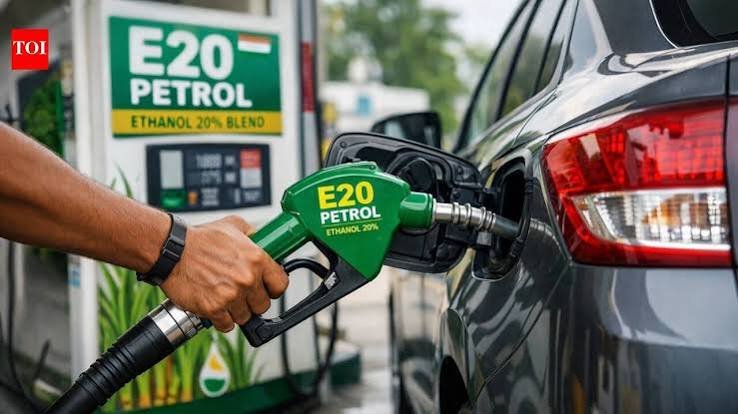
Nageswaran has not called for abandoning the E20 programme. Instead, he has suggested a dual-fuel arrangement under which motorists with older vehicles could continue buying E10 petrol, while newer vehicles compatible with higher ethanol blends use E20.
In an opinion article published in The Indian Express and co-authored with Akash Poojari, Nageswaran argued that such an approach could address concerns among owners of older vehicles while allowing India’s broader ethanol-blending programme to continue.
The proposal comes as millions of vehicles designed around lower ethanol blends remain on Indian roads. Nageswaran estimates that around 75-80 million two-wheelers alone were designed for E10. Many older vehicles, particularly those equipped with conventional fuel systems and components not specifically engineered for higher ethanol concentrations, may face compatibility and durability concerns.
Higher ethanol blends can also affect fuel efficiency because ethanol contains less energy per unit than petrol. Nageswaran said the impact, however, should not be overstated. Since E20 contains 20 per cent ethanol, he estimated the energy-related penalty at around 6-7 per cent, rather than the much higher reductions sometimes claimed.
At the same time, he acknowledged that compatibility remains a legitimate concern for older vehicles. Rubber seals and other components not designed to withstand ethanol exposure can deteriorate over time, potentially affecting fuel-system performance.
“Restoring a lower blend at the pump, say, E10, alongside the option to buy E20, would calm public concern, lower total ethanol use instead of raising it, and protect the existing fleet while the retrofit programme catches up,” Nageswaran wrote.
His proposal effectively positions E10 as a transition fuel for the legacy vehicle fleet rather than as an alternative to India’s long-term E20 policy.
The bigger E20 debate
The controversy over ethanol blending has increasingly shifted from the merits of ethanol itself to the pace of the transition and who should bear the associated costs.
India’s ethanol-blending programme is aimed at reducing the country’s dependence on imported crude oil while creating a domestic market for ethanol produced from feedstocks such as sugarcane and maize. Greater blending is also intended to support domestic agriculture and the biofuel industry.
For owners of older vehicles, however, the transition has raised concerns about mileage, maintenance costs and the long-term impact of higher ethanol concentrations on fuel-system components.
Nageswaran argued that policymakers need to account for the large number of older vehicles that will remain in service for years. Replacing millions of vehicles or retrofitting them for higher ethanol blends cannot happen overnight, he noted.
He also highlighted a broader policy dilemma involving the use of agricultural resources for fuel. Rising demand for ethanol feedstocks could have implications for land use, water consumption and food availability, making the food-versus-fuel question an important part of the debate.
Newer vehicles are increasingly being designed and certified for higher ethanol blends. But the existing fleet contains millions of cars, motorcycles and scooters that were developed when lower ethanol concentrations were the norm.
A separate E10 option, therefore, could provide a temporary bridge while the older fleet is gradually replaced or upgraded.
Kejriwal backs E10 proposal
The suggestion also triggered a political response, with former Delhi Chief Minister Arvind Kejriwal sharing Nageswaran’s article on X.
“Chief Economic advisor of Modi government advocates E10 for older vehicles. Will Modi ji listen? Or will he replace the Chief Economic Advisor as he always does to dissenting voices?” Kejriwal wrote.
The intervention added a political dimension to what had primarily been a debate over fuel policy, vehicle compatibility and energy security.
E20 DEBATE: GOVERNMENT’S OWN CHIEF ECONOMIC ADVISER SAYS BRING BACK E10!
Read this carefully.
The Chief Economic Adviser to the Modi government, V. Anantha Nageswaran, has written in The Indian Express that E10 should be brought back for older vehicles, particularly the… pic.twitter.com/zjIPtXnb9z
— Ravi Prakash Official (@raviprakash_rtv) August 17, 2026
Ethanol industry opposes rollback
The ethanol industry, however, has pushed back against the idea of making E10 available again, arguing that India should not dilute a policy that has been developed through years of testing and consultation.
Kushal Mittal, Vice President of the All India Distillers’ Association (AIDA), said the country should rely on scientific evidence and technical assessments rather than public sentiment when deciding its fuel policy.
“As a confident and forward-looking nation, we should not consider rolling back a carefully evaluated policy merely on the basis of sentiment or perception,” Mittal said.
He pointed to the development of India’s E20 roadmap, saying pilot trials began in 2016 and were followed by detailed evaluations in 2022 involving automobile manufacturers.
“The transition to E20 is a strategic imperative for India’s energy security and national security,” he said, arguing that the focus should remain on addressing genuine technical and operational concerns rather than reverting to a lower blend.
READ: 2 More Air India Pilots Grounded After Failing First Drug Test
Mittal also stressed the economic benefits of higher ethanol blending. Greater demand for ethanol creates a larger market for domestic agricultural feedstocks and supports farmers, distilleries and the wider biofuel industry.
“E20 significantly strengthens India’s energy security by reducing dependence on imported fossil fuels and building a strong domestic biofuel ecosystem,” he said.
According to Mittal, greater domestic ethanol use can also provide some protection against international oil-price volatility and external supply disruptions while generating additional economic opportunities across the agricultural and biofuel sectors.
The competing arguments highlight the central challenge facing India’s ethanol transition: balancing energy security and domestic biofuel production with the practical concerns of millions of motorists whose older vehicles were designed for lower ethanol blends.
Nageswaran’s proposal seeks to address that transition gap by giving owners of older vehicles a choice, while the ethanol industry maintains that the country should stay the course on E20 and resolve compatibility concerns through technology, testing and fleet modernisation.