Can lasting peace be built if victims are seen through an ethnic lens? An examination of recent incidents in Manipur highlights why equal condemnation, transparent investigations and impartial law enforcement are essential for restoring public trust.
By Navin Upadhyay
July 15, 2026: Manipur remains trapped in a cycle of ethnic violence that has devastated both the valley and the hills since May 2023. While successive governments have repeatedly promised impartial law enforcement, the state’s handling of recent incidents has renewed questions about whether justice is being applied uniformly across communities.
The torching of abandoned Meitei houses at Kanto Sabal near Leimakhong in Imphal West on July 11, 2026, prompted swift reactions from political leaders and security agencies. Yet the speed and visibility of that response stand in sharp contrast to the comparatively muted public reaction to a series of attacks in recent months that reportedly left numerous Kuki-Zo villages destroyed and at least 15 civilians dead.
The contrast has fuelled criticism from civil society groups and community leaders, who argue that inconsistent responses—whether real or perceived—undermine public confidence and deepen Manipur’s already fragile ethnic divide.
Swift Response to the Kanto Sabal Arson
Within hours of the attack at Kanto Sabal, Congress MP Angomcha Bimol Akoijam visited the affected locality. The incident reportedly involved a mob from adjoining hill areas setting fire to three to six abandoned Meitei houses.
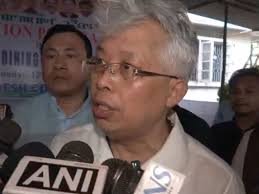
Addressing the media from the site, Akoijam questioned how a public gathering had been permitted in such a highly sensitive buffer zone adjoining Leimakhong military installations. He sought accountability from the authorities and expressed strong dissatisfaction with the conduct of central security forces stationed nearby, particularly given the proximity of the Army’s 57 Mountain Division.
Describing the episode as a failure of governance rather than merely another episode of ethnic conflict, the MP said such incidents should not occur in heavily secured areas. He also indicated that his office would prepare a detailed report for submission to senior central authorities, arguing that institutional accountability was essential if peace was to be restored.
The state government responded with similar urgency.
Chief Minister Yumnam Khemchand Singh responded promptly to the Kanto Sabal arson, condemning the attack and assuring that those responsible would be brought to justice. His intervention, along with the swift deployment of additional security forces and the prompt arrest of suspects, reinforced the government’s commitment to responding decisively to the incident.
However, the visibility and urgency of the Chief Minister’s response stand in contrast to the public record surrounding several reported attacks on Kuki-Zo villages during the same period. While Khemchand Singh has made broader appeals for peace and reconciliation, there is little evidence in the public record of similarly prominent condemnations or site-specific interventions following many of the reported burnings of Kuki-Zo villages and killings of Kuki-Zo civilians.
Home Minister Konthoujam Govindas described the arson as “highly unfortunate” and announced immediate reinforcement of security in the Leimakhong sector. Additional CRPF and state police personnel were deployed following a high-level review meeting.
Acknowledging that the attack had occurred despite significant security deployment near a military establishment, Govindas admitted that “something went wrong” and instructed all security agencies to remain on maximum alert. Within days, police announced the arrest of three suspects while searches continued for others allegedly involved.
The sequence of events—rapid political visits, strong public statements, additional security deployment, and prompt arrests—demonstrated that the state possesses the administrative capacity to react quickly when violence erupts.
A Different Response to Attacks on Kuki-Zo Villages
The response appears markedly different when viewed alongside a series of attacks reported in Kuki-Zo inhabited areas during 2026.
According to a Kuki-Zo Council documentation. suspected NSCN (IM) and ZUF-K militants were linked to repeated attacks across parts of Kangpokpi, Kamjong, Ukhrul and Noney districts between January and July.
Among the villages reported to have been attacked or burned were K. Songlung in Kangpokpi on January 26; Litan-Sareikhong and Songphel-Mullam in Ukhrul district during February and April; Loibol Khullen in Kangpokpi on June 5; and Kultuh and Phaimol in Kamjong district, along with several other settlements.
Many of the reported attacks followed a similar pattern: pre-dawn raids, burning of homes, destruction of property and targeted attacks on civilians.
Publicly reported incidents also indicate that at least 15 civilians lost their lives during these attacks.
Among those killed were church leaders Rev. V. Sitlhou, Rev. Paogoulen Sitlhou and Pastor Kaigoulun Lhouvum, who were reportedly ambushed while participating in peace efforts on May 13. Other victims included farmers and villagers allegedly killed during attacks on rural settlements, including Loibol Khullen. Some reports also alleged the involvement of armed elements operating from across the Myanmar border.
These incidents represented not isolated episodes but a sustained pattern of violence affecting multiple villages over several months.
Questions Over Consistency
The issue is not whether authorities condemned violence in general—they have repeatedly appealed for peace across Manipur—but whether comparable incidents received comparable levels of official attention.
A review of public statements available during this period does not show an equally visible series of site visits, repeated condemnations, rapid arrests or major security reinforcements specifically following many of the reported attacks on Kuki-Zo villages.
Similarly, while arrests in the Kanto Sabal arson case were announced within hours, there has been comparatively little public information regarding arrests or prosecutions in connection with several of the reported attacks on Kuki-Zo settlements.
The absence of publicly visible enforcement does not necessarily mean investigations were not conducted. However, limited public communication about investigative progress has contributed to perceptions of unequal treatment and impunity among affected communities.
Such perceptions matter in a conflict where trust in state institutions has already been severely eroded.
⚡Inner Member of Parliament, Manipur, India, Sir. Bimol Akoijam Accused Certain Units of Indian Army.
The speaker addressed a group of people gathered after the “Kanto Sabal” arson by Kukis to which he acknowledged specific incident or behavior of Indian Army.
He makes the… https://t.co/ElBV9KhCQT pic.twitter.com/joG3242orY
— 📍SHANGH CHE🚭 (@JosephNaga1986) July 12, 2026
Beyond One Community
Since ethnic violence erupted in May 2023, more than 250 people have been killed, thousands of homes destroyed and tens of thousands displaced. Both Meitei and Kuki-Zo communities—as well as other groups including Nagas—have suffered devastating losses.
READ: Manipur: Two Months On, No Arrests in Killing of Church Leaders
Political leaders, including Bimol Akoijam, have repeatedly criticised the Union government over its handling of the broader Manipur crisis and called for greater accountability. Yet lasting peace requires that the same standards be applied irrespective of the identity of the victims. While Akoijam has spoken forcefully against violence affecting the Meitei community and has consistently criticised failures of governance and security, there is little evidence in the public record of equally prominent statements specifically condemning the reported burning of Kuki-Zo villages or the killings of Kuki-Zo civilians during the period under discussion.
Elected by people or meitei confuse😕
I wish @Bimol_Akoijam spoke as strongly for the Kuki community as he does when Meitei suffer. Kukis have endured arson, killings, attacks, ambushes, and sexual violence for a long time, yet few speak up for them.@YKhemchandSingh pic.twitter.com/dvHUnLLOj0— K KIPGEN (@Son_Of_Kipgen) July 14, 2026
The absence of similarly visible interventions has drawn criticism from sections of the Kuki-Zo community and reinforced perceptions of unequal political advocacy at a time when every victim deserves equal empathy and justice.
When state institutions respond swiftly to one incident but appear slower or less visible in responding to others, the resulting perception of selective justice can become almost as damaging as the violence itself. It reinforces competing narratives of victimhood and perpetuates cycles of mistrust and retaliation.
The Kanto Sabal investigation demonstrates that the state’s administrative machinery can move rapidly when required. The challenge is ensuring that the same urgency, transparency and accountability extend to every part of Manipur—from Leimakhong to Kangpokpi, Ukhrul, Kamjong and Noney.
Restoring confidence will require more than appeals for peace. It demands consistent policing, transparent investigations, timely arrests where evidence exists, and equal compassion for every victim irrespective of ethnicity.
Only an unwavering commitment to equal justice under the law can begin to heal Manipur’s fractured social fabric and restore faith in the institutions entrusted with protecting all its citizens.