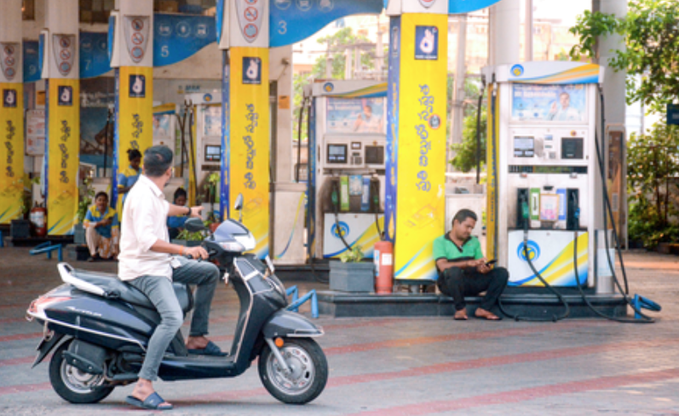
In Delhi, the price of CNG has been increased from Rs 77.09 per kg to Rs 79.09 per kg. Mumbai had witnessed a similar Rs 2 hike a day earlier, taking CNG prices across the Mumbai Metropolitan Region (MMR) to Rs 84 per kg.
Before the latest retail revision, oil marketing companies had already increased prices of premium petrol and diesel in March. State-run firms — Indian Oil Corporation Limited, Bharat Petroleum Corporation Limited, and Hindustan Petroleum Corporation Limited — had reportedly been absorbing massive losses for months.
Despite the earlier hikes, the three companies were collectively losing nearly Rs 1,600 crore every day as global crude oil prices surged following the Iran conflict. While crude was being purchased at elevated international rates, the increase was not being fully passed on to consumers.
According to reports, the Modi government had delayed a retail fuel price hike to avoid triggering a wider inflationary spiral, since any rise in petrol and diesel prices directly impacts transportation, logistics, and the cost of essential commodities.
India’s crude oil basket averaged around $69 per barrel in February, before tensions escalated in West Asia. In the months that followed, prices reportedly climbed to nearly $113–114 per barrel, significantly increasing the burden on oil companies.
VIDEO | Delhi: As petrol and diesel prices go up by Rs 3 per litre each and CNG prices rise by Rs 2 per kg, a consumer at a fuel station in Dhaula Kuan says, “It is making a big difference. It should be cheaper. We are not even getting enough fare. Customers are not willing to… pic.twitter.com/HTPJfXu5oW
— Press Trust of India (@PTI_News) May 15, 2026
Several economists, including Finance Commission Chairman Arvind Panagariya, had argued that fuel prices needed to be revised to reflect global market realities.
Revised Petrol Prices (Per Litre)
| City | New Price | Increase |
|---|---|---|
| Delhi | Rs 97.77 | +Rs 3.00 |
| Kolkata | Rs 108.74 | +Rs 3.29 |
| Mumbai | Rs 106.68 | +Rs 3.14 |
| Chennai | Rs 103.67 | +Rs 2.83 |
Revised Diesel Prices (Per Litre)
| City | New Price | Increase |
|---|---|---|
| Delhi | Rs 90.67 | +Rs 3.00 |
| Kolkata | Rs 95.13 | +Rs 3.11 |
| Mumbai | Rs 93.14 | +Rs 3.11 |
| Chennai | Rs 95.25 | +Rs 2.86 |
PM Modi Calls For Fuel Conservation
Earlier, Prime Minister Narendra Modi urged citizens to conserve fuel and work remotely wherever possible to reduce fuel consumption and preserve India’s foreign exchange reserves.
Backing the appeal, the Delhi government led by Chief Minister Rekha Gupta announced a 90-day awareness campaign encouraging people to adopt fuel-saving lifestyle changes. The government also introduced two work-from-home days for state government offices.
The Centre has repeatedly maintained that there is no fuel shortage in the country, noting that India currently holds nearly 60 days of fuel reserves and about 45 days of LPG inventories despite continued volatility in global energy markets.
READ: Hostage Swap Begins in Manipur After Ultimatums Expire
Inflation Concerns Likely To Rise
The increase in petrol, diesel, and CNG prices is expected to push inflation higher by raising transportation and logistics costs across sectors. Earlier this week, milk prices were also revised upward, adding to pressure on household budgets.
Economists warn that rising fuel and commodity prices reduce discretionary spending, weaken consumption demand, and eventually impact production and overall GDP growth.
However, with international crude and gas prices surging amid the ongoing Iran conflict, a domestic fuel price correction had become increasingly difficult to avoid.