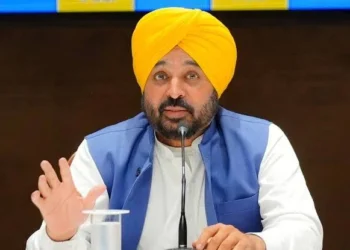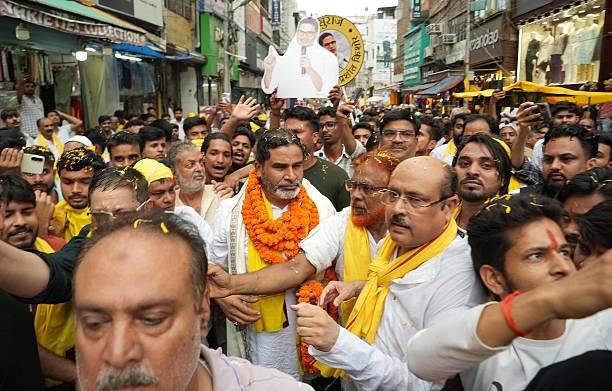
Winning one of Patna’s most prestigious constituencies, Prashant Kishor transformed years of grassroots campaigning into electoral success. The Bankipur verdict has strengthened Jan Suraaj’s claim as a serious political alternative in Bihar.
BY PC Bureau
Patna | August 3, 2026
In a result that could reshape Bihar’s political landscape, Jan Suraaj Party founder Prashant Kishor registered a resounding victory in the Bankipur Assembly by-election, defeating the Bharatiya Janata Party (BJP) in one of its traditional urban bastions. The victory marks Kishor’s first electoral success as a politician and provides a major breakthrough for the Jan Suraaj Party, which has sought to position itself as an alternative to Bihar’s established political forces.
According to the final results announced by the Election Commission, Kishor defeated BJP candidate Neeraj Kumar Sinha by nearly 19,000 votes, while the Rashtriya Janata Dal (RJD) candidate finished a distant third. The margin of victory surprised political observers, many of whom had expected a closely fought contest in the high-profile constituency.
For Kishor, who spent over a decade designing election strategies for leaders across the political spectrum before entering active politics, the victory is both symbolic and politically significant. It demonstrates that the man who once shaped campaigns from behind the scenes can now win elections in his own right.
Prashant Kishor has scored a major political victory. BJP has lost a seat that was represented by the BJP President, raising fresh questions and serving as a warning sign for the party. pic.twitter.com/1gDyQ4o2C9
— GFN (@GFNIND) August 3, 2026
A Victory Beyond One Constituency
The significance of the Bankipur by-election extends far beyond the election of a single legislator. The constituency, located in the heart of Patna, has traditionally been regarded as a BJP stronghold and one of the most politically influential urban seats in Bihar.
For years, Bankipur represented the BJP’s organisational strength among urban middle-class voters, professionals, traders and government employees. Winning such a constituency was considered a formidable challenge for any emerging political party.
Prashant Kishor’s victory therefore sends a powerful political message—that Bihar’s electorate is increasingly willing to consider alternatives to the traditional contest dominated by the BJP, RJD and JD(U).
Political analysts believe the verdict reflects not only support for Kishor personally but also growing public interest in governance-focused politics, particularly among educated urban voters.
READ: Prashant Kishor’s Win Could Rewrite Bihar’s Caste Politics
From Master Strategist to Elected Representative
Before entering electoral politics, Prashant Kishor had established himself as one of India’s most influential political strategists. Over the years, he worked with multiple national and regional parties, crafting election campaigns centred on data analysis, voter outreach and organisational planning.
However, after stepping away from political consultancy, Kishor launched the Jan Suraaj movement, travelling extensively across Bihar to engage directly with citizens. His statewide outreach programme focused on issues such as education, healthcare, employment, migration and governance rather than conventional identity politics.
The movement eventually evolved into the Jan Suraaj Party, with Kishor declaring that Bihar needed a political alternative capable of delivering development-oriented governance.
Although the party struggled to convert its organisational efforts into major electoral gains during earlier contests, the Bankipur by-election has changed perceptions dramatically.
A Campaign Built on Governance
Unlike conventional election campaigns dominated by large rallies and political rhetoric, the Jan Suraaj campaign relied heavily on sustained grassroots engagement.
Hundreds of volunteers conducted extensive door-to-door outreach, organised neighbourhood meetings, interacted with resident welfare associations and held discussions with traders, students, women and first-time voters.
Rather than focusing primarily on attacks against rival parties, Kishor repeatedly highlighted governance failures and presented his vision for administrative reforms.
His campaign centred on several key issues:
- Creating employment opportunities for Bihar’s youth.
- Improving the quality of government schools.
- Strengthening public healthcare infrastructure.
- Modernising urban civic amenities.
- Reducing corruption and increasing transparency.
- Improving law and order