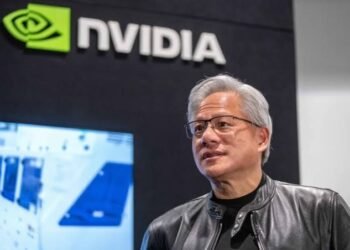


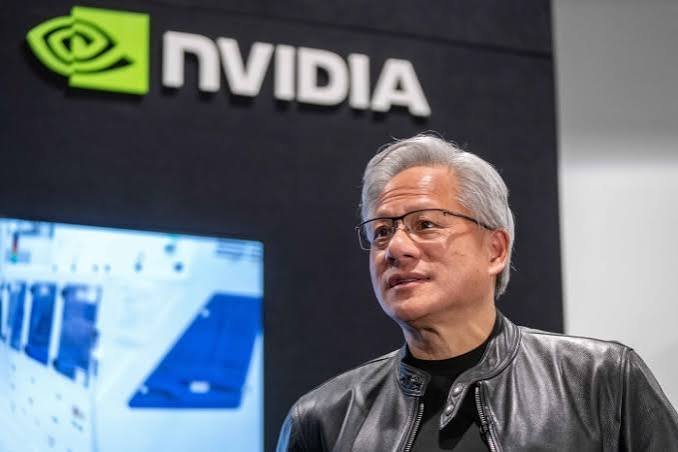
An internal employee petition attracting more than 1,600 comments reflects growing pressure on Nvidia board to reconsider Huang’s departure. Musk has even said hiring the former CEO would be an honour
By PC Bureau
An unusual wave of support has emerged for Jensen Huang following his resignation as Nvidia CEO, president and board member on November 12, with employees, Silicon Valley executives, investors, Elon Musk and US President Donald Trump expressing support for his return.
The backing reflects the difficulty of replacing the 63-year-old Nvidia co-founder, who led the chipmaker for 33 years and transformed it into the world’s most valuable force in artificial intelligence. Calls for his reinstatement have gathered momentum despite the controversy surrounding his departure.
Employee petitions put pressure on Nvidia’s board
An internal suggestion-box post by a longtime Nvidia engineer, urging the board to consider employees’ views, has attracted more than 1,600 comments. Most reportedly favour bringing Huang back.
Several employees have openly defended the former CEO, with one writing: “If you believe in the mission, bring back THE boss.” Another argued that everyone makes mistakes and that Huang deserved a second chance after decades of contribution to the company.
One employee also circulated a company-wide email declaring, “I stand by Jensen,” while around two dozen staff members expressed support publicly on LinkedIn.
An employee survey conducted before his resignation reportedly found that 88 per cent wanted Huang to remain CEO. Some employees have also questioned why he left before the board completed its investigation.
As a shareholder, I don’t care about Jensen’s personal life.
He was the heart and soul of Nvidia. That’s worth 100x more than soulless policies written by bureaucrats for bureaucrats.
I know it’s a pipe dream, but in my book, Jensen comes back and the whole board, including the vampire lawyers, leaves the room and the company.
— Pius the Banker (@PiusSprenger) November 13, 2026
Silicon Valley executives describe Huang as irreplaceable
Prominent venture capitalists and technology executives have also questioned the decision to part ways with Huang, describing his departure as a major loss for the American technology industry.
Sequoia partner Shaun Maguire has argued that Huang is indispensable to America’s leadership in artificial intelligence. Other investors have described his exit as a “generational fumble” and a dark day for the United States and the West.
Venture capitalist Sarah Guo argued that a founder who had spent three decades building a distinctive company had earned the presumption that he should continue leading it. Investor Antonio Gracias, meanwhile, maintained that one mistake should not erase a lifetime of leadership.
Some industry figures have even drawn parallels with the returns of Steve Jobs to Apple and Sam Altman to OpenAI, suggesting that Huang could eventually make a comeback. Others have indicated that they would welcome an opportunity to work with him.
‘BRING BACK THE BOSS’: NVIDIA EMPLOYEES PETITION BOARD TO REINSTATE JENSEN HUANG AFTER RESIGNATION: WIRED
More than 1,600 comments have reportedly flooded an internal employee suggestion-box post urging Nvidia’s board to consider staff sentiment over Jensen Huang’s exit.
A majority reportedly support his return, with employees defending his leadership despite the controversy surrounding his resignation.
One employee wrote: “If you believe in the mission, bring back THE boss.”
Another said: “We are all humans and can make mistakes. Jensen did so many good things and he needs a second chance.”
In a company-wide email, another employee declared: “I stand by Jensen,” adding that fairness should not mean distancing the company from a leader who had meant so much to it.
SOURCE: WIRED
— Subodh Kumar (@kumarsubodh_) November 13, 2026
Musk offers to hire Huang, Trump calls his exit ‘horrible’
Elon Musk has emerged as one of Huang’s most prominent supporters. Responding to a suggestion that he hire the Nvidia co-founder, Musk said: “That would be an honor.”
He also endorsed arguments that replacing a founder who has spent decades building a company is rarely straightforward, citing the experiences of Steve Jobs and former Uber CEO Travis Kalanick.
Musk’s companies are major Nvidia customers, and he and Huang have maintained longstanding professional ties.
Trump, too, had defended Huang during the controversy, describing him as an “honorable guy” who had done a “fantastic” and “incredible job”.
The US President said he believed Huang when he claimed he had no knowledge that the Chinese businesswoman at the centre of the controversy was suspected of having links to Chinese intelligence. Trump had also encouraged him to resist calls to step down.
Following Huang’s resignation, Trump described the development as “horrible” and “so sad”, while continuing to praise his record. He also floated former Apple CEO Tim Cook as a possible successor, saying: “A Legend replaces a Legend.”
Huang and Trump had developed a close working relationship on artificial intelligence policy, technology exports and US competition with China.
READ: Congress Seeks JPC Probe Into Adani Group After 99% Cut in Satara Project Cost
Why Nvidia may struggle to find a replacement
Huang co-founded Nvidia in 1993 and remained its central decision-maker for more than three decades. Under his leadership, the company moved from graphics processing chips to becoming a dominant supplier of the computing infrastructure powering the global AI industry.
His influence extended well beyond product development. He built relationships with major technology companies, investors, startups and governments, while personally engaging with policymakers in Washington on issues ranging from semiconductor exports to competition with China.
His combination of technical knowledge, commercial instincts, political access and personal relationships has made identifying a successor particularly difficult.
Huang also maintained close operational control of Nvidia, with a large number of executives reporting directly to him. The company now faces the task of finding a leader capable of maintaining its momentum amid an increasingly competitive AI market.
Controversy behind Huang’s resignation
Huang’s departure followed reports of extramarital relationships, including one involving a Chinese businesswoman whom US authorities reportedly suspected of having links to Chinese intelligence. Other reported relationships involved Nvidia employees, including a subordinate.
Huang publicly apologised, while Nvidia’s board initiated an investigation into the controversy.
The growing support for his return does not resolve the questions surrounding his conduct or the board’s decision. It does, however, expose a dilemma for Nvidia: how to separate the personal controversy surrounding its founder from the extraordinary institutional influence he accumulated over 33 years.
For employees, investors and some of Silicon Valley’s most influential figures, replacing Huang may prove considerably easier on paper than in practice.