More than 300 killed, thousands displaced and violence continues, but the Commission of Inquiry has yet to deliver its findings. With its deadline now extended to May 2027, accountability risks becoming another casualty of Manipur prolonged crisis.
By PC Bureau
More than three years after ethnic violence erupted in Manipur, claiming over 300 lives and displacing thousands, the search for answers has suffered another setback. The Commission of Inquiry appointed to investigate the bloodshed has received yet another extension, pushing the deadline for submission of its report to May 20, 2027 — well beyond the Assembly elections expected in March.
The latest extension, the seventh since the Commission was constituted, raises serious questions about the urgency with which the government and the inquiry panel have approached one of the most consequential investigations into the state’s recent history.
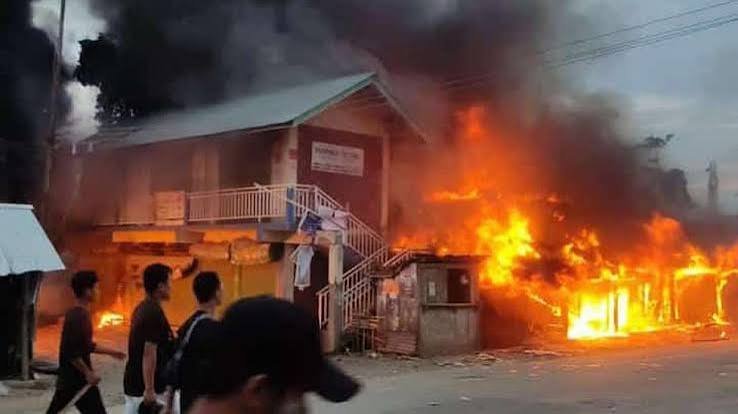
For the people of Manipur, the delay is particularly disturbing. More than 300 people have been killed, thousands have been forced from their homes, communities remain deeply divided and sporadic violence continues. Yet, more than three years after the first outbreak of large-scale violence on May 3, 2023, the Commission has not presented its findings on what triggered the conflict, how it spread and whether authorities failed to prevent or contain it.
The question is no longer simply when the report will be ready. It is whether the inquiry is being conducted with the seriousness and urgency demanded by the scale of the tragedy.
Seven extensions and still no answers
The Centre constituted the Commission on June 4, 2023, under the Commissions of Inquiry Act, 1952, shortly after violence broke out in Manipur. It was initially expected to complete its work within months, with November 2023 set as the first reporting deadline.
Since then, the deadline has been repeatedly extended.
The latest decision, announced on November 13, 2026, gives the Commission until May 20, 2027, to submit its report. This means an inquiry originally envisaged as a relatively short exercise will have taken almost four years to reach its reporting deadline.
The Commission was initially headed by former Gauhati High Court Chief Justice Ajai Lamba. Following his resignation, effective February 28, 2026, the Centre appointed former Supreme Court judge Justice Balbir Singh Chauhan as its new chairperson from March 1.
The change in leadership may have necessitated additional time, but it does not adequately explain the prolonged inability to complete an investigation that has already received multiple extensions.
Nor has the repeated postponement been accompanied by a convincing public explanation of what remains to be investigated, what evidence is still being examined or what obstacles have prevented the Commission from completing its mandate.
A mandate that goes to the heart of Manipur’s tragedy
The Commission was not established merely to compile a chronology of violent incidents. Its mandate is far more consequential.
It was tasked with examining the causes and spread of the violence that erupted on May 3, 2023, establishing the sequence of events and facts, and determining whether there were lapses or dereliction of duty by responsible authorities or individuals.
It was also required to assess whether the administrative measures taken to prevent and control the violence were adequate.
These are fundamental questions that go to the heart of the Manipur crisis.
Who failed to anticipate the scale of the violence? Were warnings ignored? Were security arrangements adequate? Did the administration act impartially? Were there failures in the response of the police and other authorities? Were there identifiable lapses in the protection of vulnerable communities?
These questions cannot be answered through political statements, competing community narratives or official claims of normalcy. They require an independent examination of evidence, testimony, official records and the conduct of those entrusted with maintaining law and order.
The Commission was specifically empowered to examine complaints and allegations submitted by individuals and organisations. It was also authorised to consider incidents brought to its notice by the Manipur government.
Yet, more than three years later, the public is still waiting for its findings.
Violence continues while the inquiry remains unfinished
The delay becomes even harder to defend against the continuing security crisis in the state.
Although the scale and character of violence have changed since May 2023, Manipur has not returned to normalcy. Fresh killings, armed confrontations, attacks on civilians and tensions between communities continue to expose the fragility of the security situation.
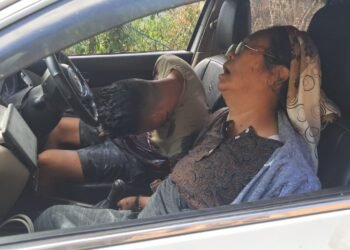
Recent clashes involving Kuki and Naga groups in the hill districts have added another dangerous dimension to the state’s instability. The November 13 killing of four Tangkhul Naga civilians, including a mother-son duo and two siblings, in an ambush in Ukhrul district is a grim reminder that ordinary people remain vulnerable to armed violence.
The broader Meitei-Kuki conflict also remains unresolved, with deep mistrust, displacement and competing demands over political and administrative arrangements continuing to shape the state’s crisis.
In such circumstances, an inquiry into the origins and handling of the violence is not a routine bureaucratic exercise. Its findings could help establish accountability, counter misinformation and provide a factual basis for rebuilding trust.
The longer the investigation remains inconclusive, the greater the space for competing versions of events to harden into permanent narratives.
READ: Four Naga Civilians Shot Dead by Alleged Kuki Militants in Manipur’s Ukhrul
The uncomfortable timing of the latest extension
The decision to extend the deadline until May 20, 2027, has another important implication: the Commission is unlikely to submit its report before the Manipur Assembly elections expected in March 2027.
The next election will take place against the backdrop of a conflict that has fundamentally altered the state’s political and social landscape. Questions of accountability, security, rehabilitation and the future relationship between the Meitei and Kuki-Zo communities are bound to remain central to political debate.
The Commission’s findings could have provided an important factual reference before voters are asked to judge the performance of political parties and governments during one of the darkest periods in Manipur’s history.
Instead, the inquiry is now set to continue beyond the electoral exercise.
This does not establish that the extension was politically motivated. But the timing raises legitimate questions about whether accountability has been allowed to drift beyond a crucial democratic milestone.
An investigation into violence of this magnitude should not become hostage to the electoral calendar. Equally, its findings should not arrive so late that they lose their relevance to public scrutiny of the decisions and failures that shaped the crisis.
Accountability cannot be postponed indefinitely
The Centre and the Commission owe the people of Manipur a clear explanation for the repeated extensions.
What progress has been made? How many witnesses have been examined? How many complaints and affidavits have been received and processed? What evidence remains to be collected? Have the authorities supplied all relevant records? What prevented the Commission from meeting its earlier deadlines?
These are reasonable questions, particularly when the inquiry concerns hundreds of deaths and allegations of serious administrative failures.
The replacement of the former chairperson may have disrupted the proceedings, but the Centre cannot indefinitely rely on administrative changes to justify the absence of findings.
The Commission, too, must demonstrate that the additional time is being used to complete a substantive investigation rather than merely move the reporting deadline from one date to another.
The people of Manipur do not need another promise of a report. They need answers about how the state descended into violence, why the administration failed to prevent its spread and who should be held accountable.
More than 300 people have died. Thousands have lost their homes and livelihoods. Families are still waiting for justice, while fresh violence continues to claim lives.
An inquiry that was supposed to help establish the truth has now been pushed beyond the next Assembly elections. The danger is that, by the time its findings finally emerge, another political cycle will have begun while the fundamental questions surrounding Manipur’s tragedy remain unanswered.
Justice delayed is not merely justice denied. In Manipur, prolonged delay also risks denying an entire generation the truth about one of the worst episodes of violence in the state’s history.