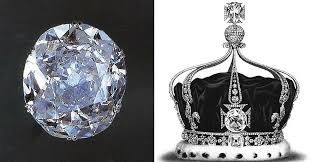
The Koh-i-Noor, taken by the British East India Company in 1849, remains one of the most contentious symbols of imperial legacy, now housed at the Tower of London.
BY PC Bureau
New Delhi, April 30, 2026: In a striking diplomatic intervention that has echoed across India and the global diaspora, New York City Mayor Zohran Mamdani has called on King Charles III to return the iconic Koh-i-Noor to its country of origin.
Mamdani, an Indian-origin politician, made the remarks on Wednesday during a press conference in the Bronx, just hours before he was scheduled to attend a wreath-laying ceremony alongside the British monarch at the National September 11 Memorial & Museum. When asked what he might say to the King in a private conversation, Mamdani responded candidly: he would “encourage him to return the Koh-i-Noor diamond,” a statement that quickly drew international attention.
The Koh-i-Noor—whose name translates to “Mountain of Light”—is among the world’s most storied and contentious gemstones. Once part of the treasuries of South Asian and Persian empires, it came into British possession in 1849 after the annexation of the Sikh Empire by the British East India Company. The diamond was taken from the young Maharaja Duleep Singh and later presented to Queen Victoria. Today, it is set in the crown of Queen Elizabeth The Queen Mother and displayed at the Tower of London.
For decades, India has sought the diamond’s return, framing the demand as part of a broader effort to address colonial-era dispossession. Successive governments—including that of Prime Minister Narendra Modi—have raised the issue diplomatically, though the United Kingdom has consistently maintained that the gem was acquired legally under the terms of the time and remains an integral part of British heritage.
Journalist: King Charles will be in New York. What will you say to him?
Mamdani: I would highly encourage him to return the Kohinoor Diamond if I were to speak with him pic.twitter.com/J0JhQ4syqf
— Shashank Mattoo (@MattooShashank) April 29, 2026
READ: Disabled Tribal Woman Forced to Crawl for Water in Bastar
Mamdani’s comments have sparked widespread approval in India, where political leaders, historians, and citizens have long viewed the Koh-i-Noor as a symbol of colonial extraction. Officials within India’s Ministry of External Affairs described the statement as reinforcing a “legitimate moral claim” rooted in historical justice.
Opposition leaders also welcomed the intervention. Congress leader Rahul Gandhi called it a timely reminder of the diaspora’s role in amplifying India’s cultural claims globally, stating that the diamond “belongs to the people of India.”
While there has been no official response from Buckingham Palace, Mamdani did meet King Charles III at the memorial event, though no discussion of the diamond was publicly confirmed. Analysts believe the mayor’s remarks could reignite global conversations around the restitution of colonial-era artefacts.
The Koh-i-Noor debate is part of a wider international movement seeking the return of historically contested treasures. High-profile examples include Greece’s demand for the Elgin Marbles from the British Museum and Nigeria’s efforts to reclaim the Benin Bronzes from European institutions.
As India continues to assert its cultural and historical legacy on the world stage, Mamdani’s intervention has injected fresh momentum into a decades-old demand—one that sits at the intersection of history, diplomacy, and the enduring quest for restitution.