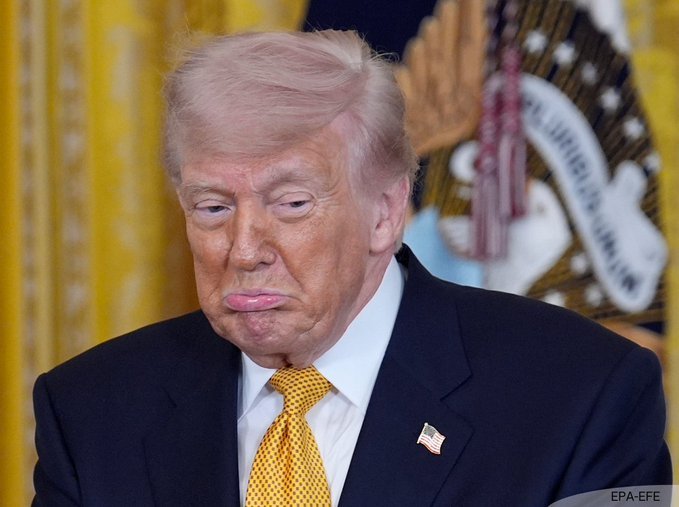
The Senate vote against Trump exposed divisions in the Republican Party, with four GOP senators joining Democrats while three Republicans did not vote, helping the measure advance.
BY PC Bureau
May 20, 2026— In a significant procedural breakthrough, the Senate on Tuesday advanced a Democratic-led resolution seeking to limit President Donald Trump’s authority to conduct military operations against Iran. The 50–47 vote marked the first successful advancement of such a measure after seven prior failed attempts, underscoring shifting dynamics within the Republican caucus.
Senators voted 50–47 on a motion to discharge the resolution from committee, bypassing traditional procedural barriers. Four Republicans joined most Democrats in support: Sens. Susan Collins (Maine), Lisa Murkowski (Alaska), Rand Paul (Kentucky), and Bill Cassidy (Louisiana). Sen. John Fetterman (D-Pa.) was the only Democrat to oppose advancement.
Three Republicans — Sens. John Cornyn (Texas), Tommy Tuberville (Alabama), and Thom Tillis (North Carolina) — did not vote, a factor that proved decisive in the outcome.
READ: Indian Protocol Officer Found Dead Inside Bangladesh High Commision
Cassidy’s support was particularly notable, marking his first backing of a war powers resolution. The move comes amid heightened political pressure following his recent primary setback in Louisiana, where Trump had endorsed one of his challengers. Together, the Republican defections reflect growing unease among some GOP lawmakers over open-ended military engagement in the Middle East.
Senate Minority Leader Chuck Schumer (D-N.Y.) framed the vote as evidence of increasing Republican fracture. “Vote by vote, Democrats are breaking through Republicans’ wall of silence on Trump’s illegal war,” Schumer said. “Republicans are starting to crack, and momentum is building to check him. We are not letting up.”
Senate just advanced a resolution to LIMIT President Trump’s war powers on Iran 50-47 vote after SEVEN failed attempts. RINO Bill Cassidy flipped and joined the Democrats for the FIRST time. Collins, Murkowski, and Rand Paul piled on with Tim Kaine too. They’re crying about gas… pic.twitter.com/4Hb7uoaCmK
— F-15 Eagle Vet🇺🇸 (@F15sRdaBest) May 19, 2026
The Resolution
The measure, led by Sen. Tim Kaine (D-Va.), reasserts Congress’s constitutional authority under Article I and the 1973 War Powers Resolution. It would require the president to terminate U.S. military involvement in “hostilities within or against Iran” unless Congress explicitly authorizes such action through a declaration of war or a specific Authorization for Use of Military Force (AUMF).
Even if passed by both chambers, the resolution faces a near-certain veto from President Trump. Supporters argue, however, that forcing a public vote carries symbolic and political weight, potentially constraining executive decision-making and shaping public debate.
The vote followed Trump’s announcement that planned U.S. strikes on Iran — reportedly scheduled for Tuesday — would not proceed. The president said he had been roughly “an hour away” from ordering the operation.
Kaine argued the pause created a timely opening for congressional intervention. “This is the perfect time to do what we should have done in February — have a congressional discussion about rationale, plan, and strategy,” he said.
He also pointed to domestic economic concerns, warning that renewed conflict in the Middle East could drive up fuel prices ahead of Memorial Day travel. “A lot of people are going to be driving, and they’re going to be paying a lot more for gas,” Kaine said, adding that public resistance to deeper involvement is “hardening.”
Analysis: Key Implications
Constitutional Power Struggle
The vote revives a longstanding dispute over war powers between Congress and the presidency. While the Constitution grants Congress the authority to declare war, presidents have increasingly relied on expansive interpretations of commander-in-chief powers. The 1973 War Powers Resolution was intended to curb that trend after Vietnam. This vote signals renewed congressional willingness — at least among some members — to reassert that authority.
Fractures Within the Republican Party
The defections of Collins, Murkowski, Paul, and Cassidy highlight ideological and political divisions within the GOP. Paul’s opposition to foreign interventions is longstanding, while Collins and Murkowski frequently break with party leadership on national security issues. Cassidy’s vote, coming after Trump-backed primary pressure, suggests electoral incentives are also shaping foreign policy positions.
The absence of three Republican senators further narrowed the margin, underscoring how procedural participation can be as consequential as outright opposition.
Electoral and Political Strategy
Democrats are seeking to frame Trump’s Iran posture as risky and economically damaging, particularly by linking military escalation to rising energy costs. Republicans, meanwhile, face competing pressures: supporting the president risks criticism over foreign entanglement, while opposing him may trigger primary challenges from Trump-aligned candidates.
Foreign Policy Signaling
Although largely symbolic, the vote signals division within Washington that could affect U.S. leverage abroad. Iran and regional actors may interpret the debate as evidence of limited domestic consensus. However, failure to override an expected veto would preserve presidential flexibility in the short term.
Domestic Economic Sensitivity
The emphasis on fuel prices reflects a broader political reality: Middle East tensions remain closely tied to global energy markets. Even limited escalation risks price volatility, which can quickly translate into political pressure at home.
The resolution faces an uncertain path in the House and an almost certain presidential veto. Still, repeated procedural advances may increase pressure on additional Republicans to take public positions, gradually reshaping the political landscape around war powers.
The Senate vote represents less an immediate policy shift than a test of institutional authority, party cohesion, and public appetite for military engagement. While unlikely to become law, it highlights growing congressional assertiveness and deepening divisions over the scope of presidential war powers — tensions that are likely to persist well beyond this vote.