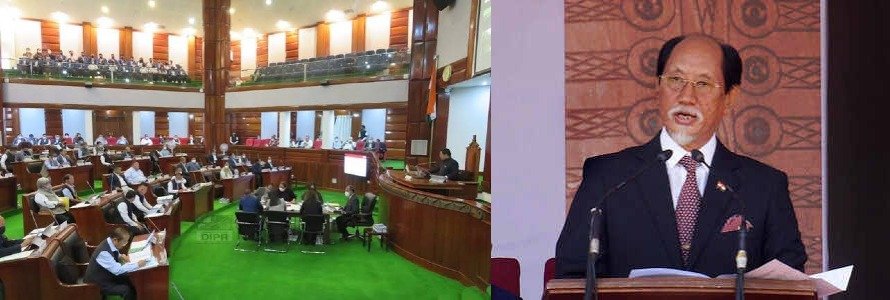
Chief Minister Neiphiu Rio said Nagaland’s unique social and historical circumstances must be considered as Parliament examines the Bill, which has been referred to a 31-member Joint Parliamentary Committee.
BY PC Bureau
September 1: The proposed Foreign Contribution (Regulation) Amendment Bill, 2026, came under sharp scrutiny in the Nagaland Assembly on Tuesday, with legislators warning that changes governing FCRA renewals and institutional assets could have far-reaching consequences for churches, charitable institutions and grassroots organisations working across the state.
The members broadly agreed that foreign contributions must remain subject to transparency, accountability and national-security safeguards, but argued that the regulatory framework should not end up disrupting legitimate work in education, healthcare, humanitarian assistance and social welfare.
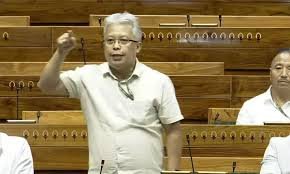
The discussion, taken up under Rule 50 as a matter of urgent public importance, was initiated by Advisor Achumbemo Kikon and supported by Advisor Temjenmenba and MLA Y. Mankhao Konyak.
Chief Minister Neiphiu Rio told the House that the proposed legislation had caused considerable concern, particularly among Christian organisations in Nagaland. He said he had held consultations with church leaders and representatives of the Nagaland Baptist Church Council (NBCC), the Bishop of the Diocese of Kohima and the Nagaland Joint Christian Forum, including a joint meeting on August 9.
Rio said the concerns raised during those consultations had been conveyed to Union Home Minister Amit Shah in writing. He said he had drawn the Centre’s attention to Nagaland’s “unique social, historical and development circumstances” and sought wider consultation and greater parliamentary examination of the Bill.
The Centre subsequently referred the proposed legislation to a 31-member Joint Parliamentary Committee (JPC) on August 12.
Rio welcomed the referral, saying it would provide an opportunity to examine the concerns raised by stakeholders and strengthen public confidence in the proposed regulatory regime.
“I am confident of the JPC providing an opportunity to address genuine concern, remove apprehensions, and build greater public confidence in the proposed regulatory framework,” he said.
The Chief Minister also stressed that FCRA renewal applications should be considered on their individual merits rather than through broad or generalised assessments.
The ninth session of the 14th Nagaland Legislative Assembly commenced today with the introduction of the revised Frontier Nagaland Territorial Authority Bill, 2026, replacing the earlier version to establish a special institutional arrangement for six Eastern Nagaland districts. pic.twitter.com/9ClKmSNFSL
— DD News Nagaland (@ddnewsnagaland) September 1, 2026
He said such an approach was necessary to ensure that genuine institutions engaged in charitable, educational, medical and social-welfare activities were not inadvertently affected by regulatory action.
Rio pointed to the long association of churches and Christian organisations with Nagaland, saying they had contributed not only to the spiritual life of the state but also to education, healthcare, poverty alleviation, livelihood support and assistance to vulnerable sections.
He noted that foreign contributions had helped sustain many such programmes, particularly in remote and economically disadvantaged areas.
At the same time, Rio acknowledged the Centre’s responsibility to ensure that foreign funds were used transparently and in accordance with the law.
“While we fully recognise and respect the responsibility of the Government of India to ensure transparency, accountability and compliance with the law in respect of foreign contribution,” he said, “it is equally necessary to ensure that genuine charitable education, healthcare, humanitarian institutions which have rendered exemplary service to our nation for generations are not inadvertently affected.”
Rio cited the case of the Missionaries of Charity, founded by Mother Teresa, whose FCRA renewal was denied in 2021 before being restored following public concern and review. He said the episode demonstrated the need for regulatory decisions to be applied carefully so that longstanding philanthropic work was not unnecessarily disrupted.
Concerns over assets, renewal powers
Kikon focused much of his intervention on provisions relating to the status of institutions and their assets after cancellation, cessation or non-renewal of FCRA registration.
He referred to the Diocese of Kohima, saying its FCRA renewal applications had been rejected in 2024 and 2025. The Bishop of Kohima subsequently approached the Deputy Chief Minister in charge of Home and the Governor seeking intervention, he said.
According to Kikon, similar representations had been received from Christian denominations and the NBCC, particularly over the renewal process, institutional assets and provisions that could potentially lead to government control following cancellation or non-renewal.
He said the proposed changes needed to be examined against constitutional guarantees, including Articles 25, 29 and 30, as well as Article 371A, which provides special constitutional safeguards for Nagaland.
Kikon said the NBCC had called on the state government to seek withdrawal of the Bill and press for a comprehensive consultation involving state governments, churches, faith-based organisations, civil society groups and development agencies.
He also warned that an increasingly complicated compliance regime could weigh disproportionately on smaller organisations that lack the administrative resources available to larger institutions.
READ:
Manipur Paralysed by Two Bandhs: NRC Row, Killing of Kuki-Zo Villagers
Advisor Temjenmenba said any changes to the FCRA framework must take Nagaland’s distinctive history into account.
He pointed out that churches and Christian organisations had been working in the state for more than 150 years and had established institutions and services in remote areas well before the expansion of modern government infrastructure.
Temjenmenba said he supported regulation and financial accountability but argued that institutions should be protected against arbitrary or disproportionate action.
He called for adequate notice, an opportunity to be heard, reasoned orders, sufficient time to comply with regulatory requirements and an effective appellate mechanism.
He also welcomed the creation of the JPC, saying it offered stakeholders an avenue to place their concerns directly before Parliament.
MLAs seek safeguards for smaller organisations
Y. Mankhao Konyak said organisations operating under the FCRA already faced extensive compliance requirements.
These included the use of designated bank accounts, filing of financial returns and restrictions on administrative expenditure, including the existing 20 per cent ceiling.
Any further changes, he said, should produce a renewal system that was “simple, affordable, transparent and clear”.
Advisor Kudecho Khamo cautioned that additional regulatory burdens could have a disproportionate impact on smaller churches and grassroots ministries.
He said many such organisations operated with limited administrative capacity while providing services to children, women, persons with disabilities, the elderly and economically weaker sections.
Khamo also warned that tighter provisions could strain longstanding relationships between Indian Christian organisations and their international partners.
He said the objective of regulating foreign contributions and protecting national security was legitimate, but the law should strike a balance between those objectives and the needs of institutions engaged in genuine public service.
P. Longon took the discussion beyond the immediate concerns of Christian organisations, saying the issue affected Nagaland as a whole.
He urged the Assembly to present a united position before the JPC and called for a wider consultation process.
Longon also sought a white paper on cases involving cancellation of FCRA registrations and demanded that proposed provisions concerning the designated authority and institutional assets be dropped.
He argued that the existing FCRA framework was already sufficiently stringent and warned that the proposed amendments, if enacted without safeguards, could lead to “disunity, disharmony and enmity” among communities.
Rio promises continued engagement
The discussion ended with broad agreement among members that the regulation of foreign contributions was necessary but should not undermine legitimate development and welfare activities.
Rio said the state government would continue to engage with churches, civil society organisations and the Union government to ensure that genuine concerns were taken into account during the parliamentary examination of the Bill.
The Assembly was later adjourned and will meet again at 9.30am on September 3.
Earlier, Speaker Sharingain Longkumer welcomed Daochier I. Imchen, the newly elected and youngest member of the 14th Nagaland Legislative Assembly, before the commencement of official business.
The House also paid an obituary tribute to former legislator G. Kughavi and observed a minute’s silence in his memory.