Saikul MLA Kimneo Haokip Hangshing and Saitu MLA Haokholet Kipgen’s return to the Assembly has triggered debate within the Kuki-Zo community, with Sadar Hills civil bodies leaving the decision to the legislators.
BY PC Bureau
September 2, 2026: The decision of two Kuki-Zo legislators to enter Imphal and attend the Manipur Assembly session on Wednesday has opened a new political fault line within the community, coming despite a directive from the Kuki Inpi Manipur (KIM) asking its legislators to stay away until a political settlement is reached on the demand for a separate administration.
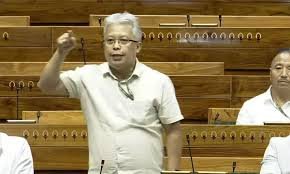
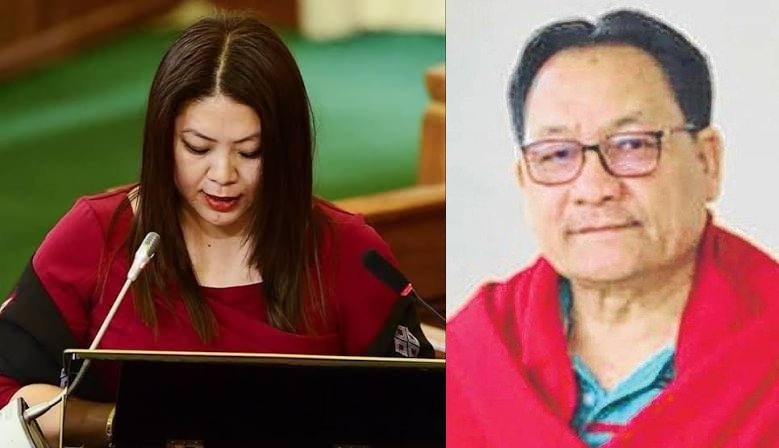
Saikul MLA Kimneo Haokip Hangshing of the Kuki People’s Alliance (KPA) and Saitu MLA Haokholet Kipgen, an Independent, were present at the opening sitting of the Assembly’s eighth session. Their physical presence in Imphal marks a significant departure from the position adopted by most Kuki-Zo legislators since the ethnic violence erupted in May 2023. Several have attended Assembly proceedings virtually rather than travel to the valley capital.
The development is politically significant because Kuki Inpi Manipur, the apex Kuki-Zo civil body, had on August 31 asked the community’s legislators not to attend the session until the demand for a separate administration was politically resolved. The organisation had argued that participation in the Assembly could create an impression of a return to “normalcy” even though the fundamental political dispute remained unresolved.
The Assembly session is scheduled for September 2, 3 and 7. Of the 60 seats in the House, nine are held by Kuki-Zo legislators following the death of BJP MLA Vungzagin Valte. Six Kuki-Zo MLAs had participated virtually in the March budget session. But appearing in person in Imphal crosses a political and psychological threshold that virtual participation does not.
#BREAKING For the first time since May 2023 violence, Kuki-Zo MLAs attend Manipur Assembly.
Saikul MLA Kimneo Haokip Hangshing & Saitu MLA Haokholet Kipgen arrive for 8th Session of 12th Manipur Legislative Assembly (Sept 2-7). #manipurlegislativeassembly pic.twitter.com/ojn7PHA6bi
— Poknapham / The People’s Chronicle (@PoknaphamNews) September 2, 2026
Sadar Hills gives MLAs political room
The two MLAs did not, however, enter Imphal without a fresh signal from the civil organisations in their own political backyard.
A joint statement issued on September 1 by Kuki Inpi Sadar Hills, the Committee on Tribal Unity (CoTU) and the Sadar Hills Chiefs’ Association acknowledged KIM’s August 31 directive but stopped short of endorsing a boycott.
The three organisations said the decision on whether to attend the Assembly should be left to the legislators themselves.
“Whether participating is good or staying away is better is in their own hands,” the statement said, adding: “Whatever path they take, the people of Sadar Hills will understand.”
The statement was signed by Thangminlen Kipgen, president of Kuki Inpi Sadar Hills; Lamminthang Kipgen, chairman of CoTU; and Haokholen Kipgen, president of the Sadar Hills Chiefs’ Association.
Politically, the statement is important. While KIM sought to establish a collective community position against attendance in Imphal, the Sadar Hills bodies effectively declined to enforce that position on the two legislators representing the area. It gave Hangshing and Kipgen room to make an individual political choice without an explicit confrontation with their local civil organisations.
That distinction matters because the Kuki-Zo political landscape is not controlled by a single organisation. KIM functions as an apex civil platform, but regional bodies, tribal organisations, student groups, church networks, elected representatives and armed groups have overlapping — and at times competing — influence.
For sections of the Kuki-Zo community that regard any return to political normalcy without a settlement as a betrayal of the cause, the decision by the two MLAs could nevertheless invite accusations of “treachery”. Supporters of their presence can counter that returning to the Assembly is not synonymous with abandoning the separate-administration demand and that elected representatives retain a constitutional responsibility to participate in the legislature.
READ: Opposition to ‘Compulsory’ Vande Mataram Grows in Nagaland
Who are the two legislators?
Kimneo Haokip Hangshing, 38, represents Saikul (ST), Assembly Constituency 46, in Kangpokpi district. She was elected in 2022 on the Kuki People’s Alliance ticket and was among the first legislators elected from the newly formed party.
Born at G. Songlung in Kangpokpi district, Hangshing lists Saikul Bazar as her permanent address and holds a master’s degree in political science. She is the daughter of former Saitu MLA and minister Ngamthang Haokip.
The KPA initially supported the BJP-led government after the 2022 election but withdrew its support after the outbreak of ethnic violence in May 2023. Hangshing later became vice-president of the party. The KPA also represents the Singhat constituency.
Haokholet Kipgen, 70, represents Saitu (ST), Assembly Constituency 51, also in Kangpokpi district. Born at Hengbung in 1956, he is a veteran of Manipur’s hill politics.
Kipgen entered the Assembly through a Tadubi by-election in 1998 on a Federal Party of Manipur ticket. He subsequently represented Saitu for the FPM and served as minister for transport and weights and measures. He later won the seat as an Independent in 2007 and returned to the Assembly as an Independent in 2022 after failing to secure a BJP ticket. He defeated BJP candidate Ngamthang Haokip by 2,694 votes.
Kipgen has also been associated with the BJP’s Scheduled Tribe Morcha at the national level. In April 2026, he hosted Chief Minister Yumnam Khemchand Singh at Hengbung during the Chief Minister’s first outreach to Kangpokpi since the 2023 conflict.
Why the return to Imphal matters
Since the May 2023 violence between Meitei and Kuki-Zo communities, Imphal has been largely inaccessible to Kuki-Zo political representatives because of security concerns and the broader political rupture between the valley and the hills.
The conflict killed more than 250 people, displaced large numbers of residents and resulted in serious allegations of human rights violations, including sexual violence. For Kuki-Zo organisations, the question of whether their elected representatives should physically enter Imphal has therefore acquired significance well beyond parliamentary attendance.
Virtual participation offered a compromise: legislators could remain engaged with the constitutional process without physically crossing into a valley that many Kuki-Zo civilians continue to regard as unsafe and politically hostile.
Physical attendance changes that equation.
It provides the state government with evidence that the Assembly can once again function as a common constitutional institution. But within the Kuki-Zo political constituency, it also raises the question of whether participation in that institution should precede a settlement on the community’s demand for a separate administration.
The SoO groups and the wider political equation
The calculations are further complicated by the role of Kuki-Zo armed groups that are parties to the Centre’s Suspension of Operations (SoO) agreements.
The Kuki National Front (President) is one of the principal SoO groups operating in the Kangpokpi region. Its chairman, S.T. Thangboi Kipgen, is the husband of Deputy Chief Minister Nemcha Kipgen. The KNF(P) is part of the United People’s Front, while the Kuki National Army is associated with the Kuki National Organisation, the other major umbrella of SoO groups.
The two umbrellas have agreements with the Centre and the state government, but negotiations over the political aspirations of the Kuki-Zo community have yet to produce a final settlement. Some Kuki-Zo voices have accused the armed groups of becoming too accommodating towards New Delhi and Imphal, while others continue to see the SoO framework as the principal channel through which a political settlement can eventually be negotiated.
There is also a deeper reading of the two MLAs’ decision within sections of the Kuki-Zo community. Some believe the legislators could not have “dared” to defy the Kuki National Front (KNF), which is widely regarded as having thousands of armed cadres, and enter Imphal for the Assembly session without at least tacit acceptance from the armed group’s leadership. Incidentally, the two MLAs attended the assembly days after nine Naga MLAs wrote to Home Minister Amit Shah seeking the arrest of KNF (P) chief.
The “compromise “angel also gains traction because Kimneo Haokip’s husband, David Hangshing, is the chairman of the Kuki Revolutionary Army (KRA), a Kuki armed group that is part of the Suspension of Operations framework with the government.
If that perception of “compromise” gains traction, the political implications could extend well beyond the two legislators. For a community that has been pressing the Centre for a separate political arrangement, including a Union Territory, any suggestion that elected representatives are now prepared to resume institutional engagement with Imphal could raise questions about the unity and negotiating position of the broader Kuki-Zo movement.
The episode could therefore have far-reaching consequences for the community’s political struggle. It may be interpreted by some as a cautious return to constitutional politics, while others could see it as a weakening of the collective position that has kept the demand for a separate administration at the centre of negotiations with New Delhi.