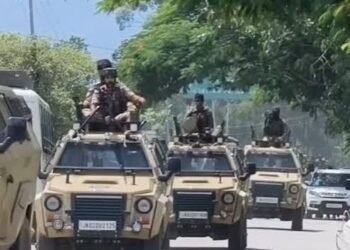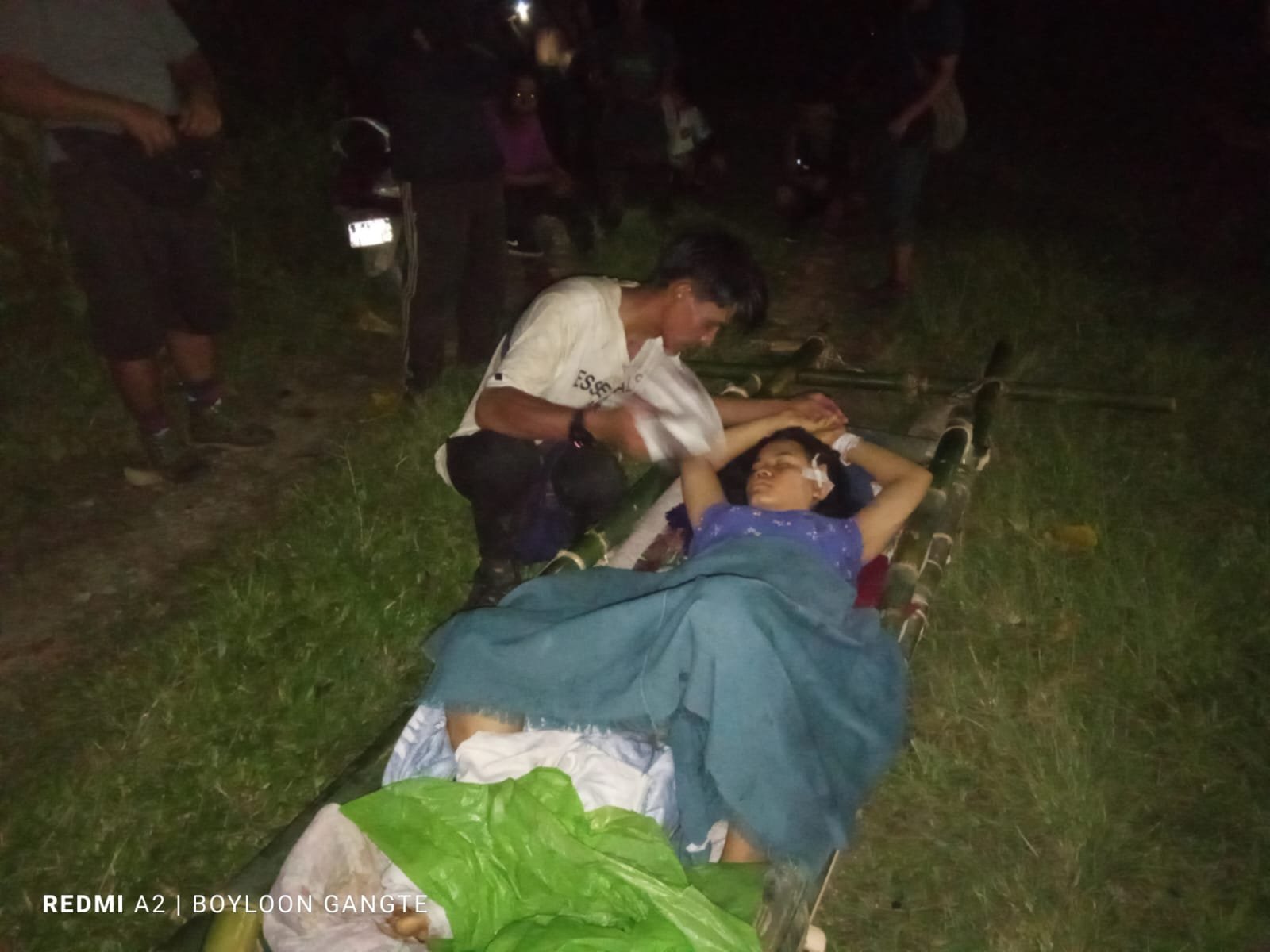
Manipur can move security forces into remote terrain, but a wounded civilian in Longpi had to be carried out on bamboo and cloth. Ms. Neiesther Gangte later slipped into a coma.
BY Navin Upadhyay
September 18
She survived the bullets. The map almost finished what they started.
On the afternoon of September 13, three people from Longpi village went out to buy rice and household essentials. Two never returned. Julie Singson, who was pregnant, and Roel Gangte were shot dead. The third, Miss Neiesther Gangte, was wounded.
Longpi sits in the southern reaches of Noney district, far removed from the towns and infrastructure that exist on a government map but barely function on the ground. Noney may be the nearest district headquarters, but that does not mean it is practically accessible from Longpi—especially for a gunshot victim.
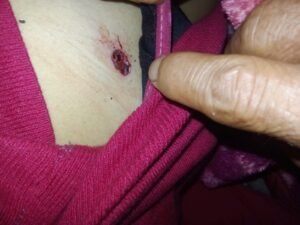
The village has a primary health centre. But a PHC in an isolated hill settlement is not a trauma centre. A bullet wound close to the chest requires urgent medical intervention. Neiesther Gangte needed to reach a hospital quickly. Instead, her survival depended on the strength of villagers’ shoulders.
They placed her on a makeshift palanquin and began walking.
The nearest place where she could receive anything resembling serious medical care was Phaijang, about 20 kilometres away. There was no usable road that could take an ambulance into the village. The route was not an evacuation corridor but a difficult stretch of hill terrain, mud and slopes.
According to reports, Neieshter Gangte, A young innocent woman is fighting for her life after NSCN-IM brutal attack in Longpi Village, Noney dist. Manipur..
Kuki-Zo bleed in silence, @narendramodi why don't you care about these innocent lives.@HMOIndia @YKhemchandSingh…
— Roshini Sen (@RoshiniSen_in) September 18, 2026
Every kilometre meant another delay.
Hours that should have been spent in an emergency ward were spent carrying a wounded woman from one bearer to another. Eventually, she was transported to Churachandpur Hospital, the first facility capable of attempting serious treatment. The next day, she slipped into a coma.
Her plight is not simply a story of remoteness. It raises a basic question about the reach of the state in a conflict zone where security forces are already deployed across difficult terrain.
CoTU spokesperson Ng Lun Kipgen questioned where the central forces meant to protect vulnerable Kuki-Zo villages in Naga-majority areas were when the attack occurred—and why an airlift was not arranged for a critically wounded civilian in terrain inaccessible to vehicles.
The question is difficult to dismiss. Manipur can move battalions into remote areas. Yet a wounded civilian in Longpi had to be carried out on a makeshift palanquin.
Hours earlier, on the same day, another Kuki family had come under attack at L. Tollen in Tamenglong. A mother was killed inside her home. Her husband later died of his injuries. Their young son was shot but survived.
It was Sahnit Ni, the community’s Black Day—a day of remembrance for past Kuki-Naga violence. Memory offered no protection to those who were attacked.
Kuki village bodies have blamed NSCN-IM and ZUF-K for the attacks. Police, however, have referred to the assailants as unidentified armed men. No group has publicly claimed responsibility. The question of who carried out the killings therefore remains contested and will have to be established through investigation.
The question of Neiesther Gangte’s evacuation is different.
READ: March 11 Ukhrul Killings: NSCN-IM Nailed in Police Report, MHA Order
Why did a critically wounded civilian have to travel roughly 20 kilometres on foot before she could reach a hospital? Why was there no road evacuation? Why was no air evacuation arranged?
These are questions of infrastructure, emergency response and state capacity—not questions of community narrative.
For people who have never stood in Longpi, the words “Noney district” may suggest that a hospital is reasonably close. On the ground, the reality is starkly different.
A district boundary does not create a road. A primary health centre does not become a trauma hospital because a map assigns it to a district. And a security presence does not automatically translate into emergency medical access.
That is the gap exposed by Neiesther Gangte’s journey.
She survived the shooting. Then she had to survive the geography.
She is now at Churachandpur Hospital. Whether she wakes is for her doctors to determine.
But whether a gunshot victim in Longpi should ever again have to be carried 20 kilometres over a mountain path to reach lifesaving care is a question for the government.