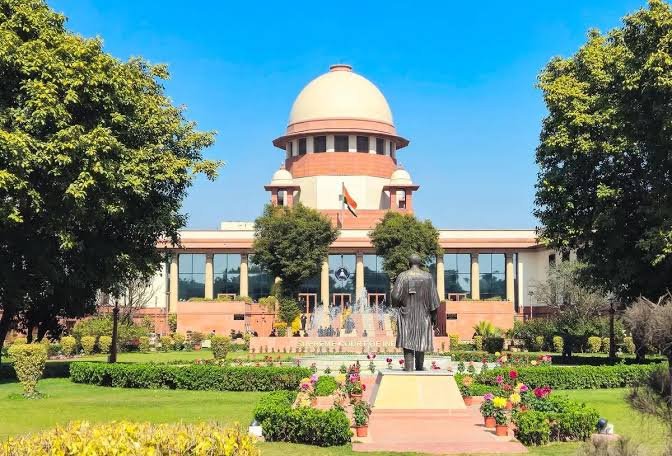
Two Gram Sabhas had rejected the proposed acquisition in January 2020, but authorities proceeded with the process. The Supreme Court held that this violated safeguards under the 2013 land acquisition law.
BY PC Bureau
November 19: The Supreme Court has quashed land acquisition proceedings for a proposed Dalmia Cement plant in the Scheduled Areas of Sundargarh district in Odisha, ruling that prior consent of the Gram Sabhas is a mandatory legal requirement under the Right to Fair Compensation and Transparency in Land Acquisition, Rehabilitation and Resettlement Act, 2013.
A Bench of Justices Dipankar Datta and Satish Chandra Sharma held that Section 41(3) of the Act makes the consent requirement compulsory for land acquisition in Scheduled Areas. Any acquisition carried out without meeting this requirement is legally invalid, the Court said.
The Bench rejected the Orissa High Court’s earlier interpretation that the consent provision was directory rather than mandatory. It said such an interpretation would reduce an important statutory safeguard to a mere formality and undermine the purpose and language of the law.
The case involved two Gram Sabhas that had expressly rejected the proposed acquisition through resolutions passed on January 26, 2020. Despite their opposition, the authorities proceeded with the process. The Court also noted that the prescribed consent in Form M under the Odisha Rules had not been obtained.
READ: Robots Roll Out the Welcome Dance for Trump and Putin in China
The judgment further addressed the additional safeguards applicable when land is acquired for a private company. Under Section 2(2)(b) of the 2013 Act, consent from at least 80 per cent of affected families is required, along with a proper Social Impact Assessment (SIA), before the government considers the acquisition proposal. The Bench made clear that consent obtained at a later stage cannot retrospectively cure an earlier violation.
The acquisition process suffered from other procedural defects as well. The Court found that no actual public hearing had been conducted as part of the SIA exercise. It also raised concerns over the independence of the Expert Group, noting that one of its advisers was linked to the company.
The Bench rejected the argument that the mining lease granted under the Mines and Minerals (Development and Regulation) Act, 1957, gave Dalmia Cement the authority to proceed with the project. A mining lease, it clarified, establishes a relationship between the State and the lessee but cannot override the independent property rights of landowners or displace protections available under the 2013 land acquisition law.
The Supreme Court accordingly allowed the appeal and set aside the acquisition notifications and consequential orders. It clarified, however, that the authorities remain free to initiate fresh acquisition proceedings, provided they comply fully with the law and its mandatory safeguards.