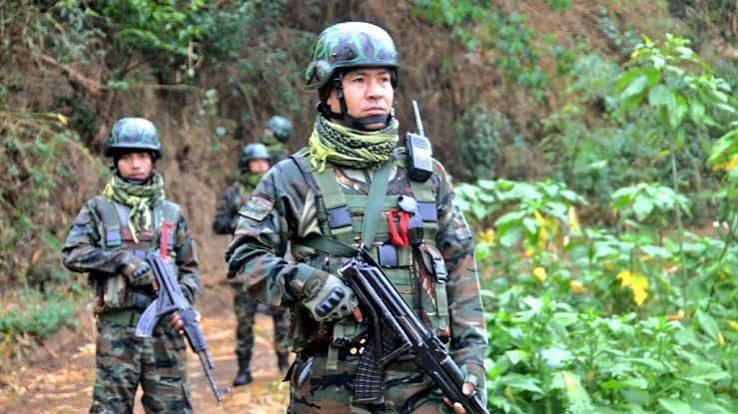
The MHA subsequently ordered an NIA probe under serious UAPA provisions, citing the gravity of the offence, national ramifications and possible larger conspiracy.
BY PC Bureau
NEW DELHI, Sept. 17 — Amid a growing clamour among Kuki-Zo armed groups and civil society organisations for the abrogation of the NSCN-IM ceasefire agreement with the Centre, government documents have revealed that the Naga militant outfit was officially held responsible for the planning and execution of an attack that killed at least two Kuki-Zo civilians in Ukhrul on March 11, with the Centre subsequently ordering an NIA probe into alleged terrorist offences and a possible larger conspiracy.
The finding by the Ukhrul Superintendent of Police, Babitarani Swain, IPS, came in a March 17 progress report, which stated that further investigation had established the involvement of NSCN-IM cadres in planning and executing the attack that led to the deaths of Thenghin Baite and Thangboimang Khongsai.
The police subsequently invoked Sections 16, 18 and 20 of the Unlawful Activities (Prevention) Act (UAPA), dramatically changing the character of the case.
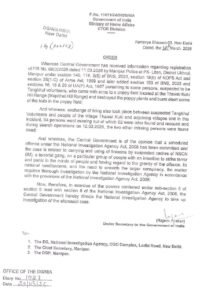
Three days later, on March 20, the Ministry of Home Affairs directed the National Investigation Agency (NIA) to take over the investigation, citing the gravity of the offence, its alleged national ramifications and the need to uncover a possible larger conspiracy.
The MHA order treated the case as involving a scheduled offence under the NIA Act, 2008 and referred to suspected NSCN-IM cadres allegedly using firearms against a particular group with the intention of creating terror and panic.
The case, subsequently registered by the NIA as RC-03/2026/NIA/IMP, therefore assumed a significance far beyond the original March 11 incident in Ukhrul.
READ: Manipur Camps: SC Flags 640 Deaths, Seeks Details of 25 Unnatural Deaths
Baite, from Thawai Kuki village, and Khongsai, from Shangkai Kuki village, went missing on March 11 while they were reportedly out to repair a water pipeline. Their bodies were recovered the following day from a forested area.
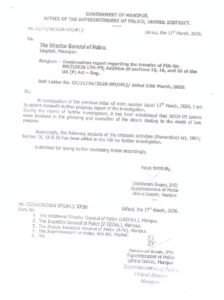
The case initially involved allegations of an armed confrontation and civilian deaths. It took on a radically different legal dimension when the March 17 police report explicitly named NSCN-IM cadres and invoked the UAPA.
The development is particularly significant because NSCN-IM has been under a ceasefire with the Government of India since 1997 and has remained engaged in political negotiations with New Delhi. The organisation has denied involvement in specific attacks and rejected the Centre’s characterisation of NSCN-IM in connection with the case.
The police and MHA documents have since become central to the demands of Kuki-Zo organisations seeking action against NSCN-IM and the termination of its ceasefire arrangement with the Centre. Naga organisations, meanwhile, have questioned the NIA takeover and disputed the allegations.
The documents do not independently settle every disputed fact surrounding the March 11 incident. They do, however, establish a significant official investigative trail: the Ukhrul SP recorded that NSCN-IM cadres were involved in planning and executing the attack; police then invoked serious UAPA provisions; and the MHA subsequently handed the case to the NIA, citing alleged terrorist dimensions, national ramifications and a possible larger conspiracy.
The March killings have thus become a new flashpoint in the already contentious debate over the Centre’s ceasefire and political engagement with NSCN-IM.