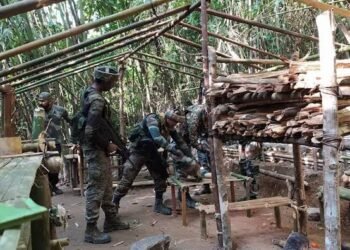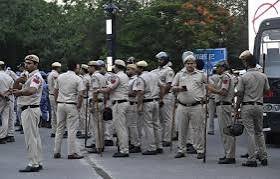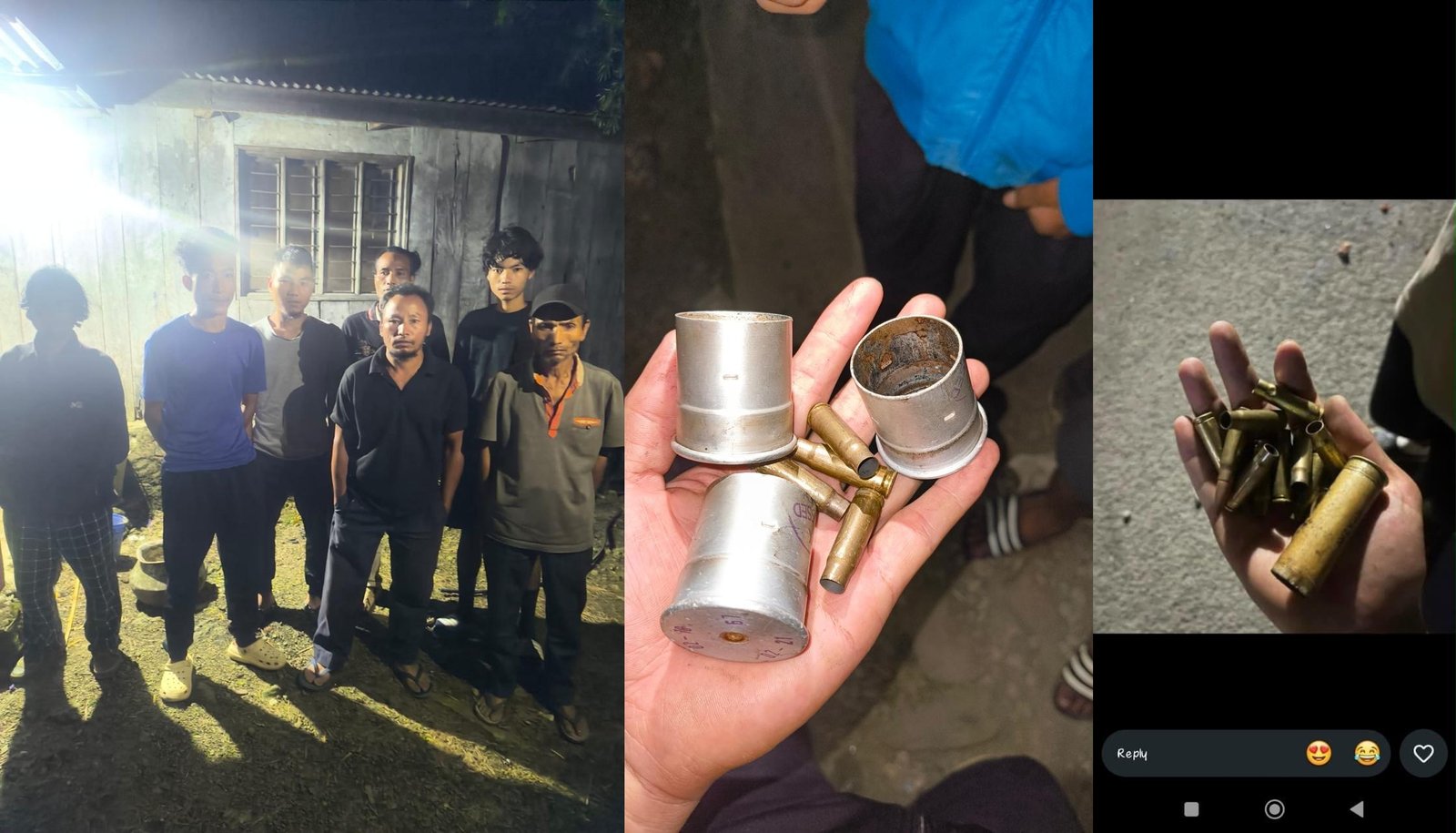
Security forces reportedly opened fire as protesters gathered across Kangpokpi and surrounding areas, with no casualties immediately reported. The confrontation came amid anger over what Kuki groups describe as unequal enforcement.
BY PC Bureau
September 19: Kangpokpi erupted in a dramatic confrontation on Saturday after security forces opened fire amid a mass mobilisation triggered by the detention of seven Kuki men. The seven were later released as protests intensified, with an Army vehicle set on fire, roads dug up and tyres burnt at several locations.
The seven men were detained by the CRPF’s CoBRA unit near Chawangkining village on suspicion of links to an alleged armed group. Locals identified them as Seilet, Manglem, Satho, Lenlal, Gin and Chuchung.
Their detention triggered a rapid mobilisation across Kangpokpi town and surrounding areas, including Keithelmanbi, Saparmeina, Motbung and Gamgiphai. Women, village volunteers and other residents took to the streets, blocked NH-2, allegedly pelted stones and burnt tyres, disrupting traffic as well as the movement of central security forces.
What began as a protest over six detentions quickly turned into a confrontation between demonstrators and security forces.
🚨 BREAKING: 𝗔𝗥𝗠𝗬 𝗩𝗘𝗛𝗜𝗖𝗟𝗘 𝗦𝗘𝗧 𝗢𝗡 𝗙𝗜𝗥𝗘 𝗜𝗡 𝗞𝗔𝗡𝗚𝗣𝗢𝗞𝗣𝗜 𝗔𝗦 𝗣𝗥𝗢𝗧𝗘𝗦𝗧𝗘𝗥𝗦 𝗥𝗔𝗜𝗦𝗘 𝗔𝗟𝗟𝗘𝗚𝗔𝗧𝗜𝗢𝗡𝗦 𝗢𝗙 𝗕𝗜𝗔𝗦 𝗔𝗚𝗔𝗜𝗡𝗦𝗧 𝗞𝗨𝗞𝗜
KANGPOKPI, September 19, 2026: An angry mob in Kangpokpi set fire to a moving Army vehicle during a… pic.twitter.com/0h6nKAau0f
— 𝐂𝐇𝐈𝐊𝐈𝐌-𝐓𝐄-𝐀𝐖𝐆𝐈𝐍 (@chinkukimizogin) September 19, 2026
As the crowd swelled, security personnel opened fire, with several rounds reportedly fired towards the protesters. No casualties were reported immediately. The circumstances surrounding the firing, including whether any warning was issued and whether other crowd-control measures were exhausted, were not immediately clear.
The firing further inflamed an already volatile situation, with protesters accusing the authorities of using force against civilians while failing to act with comparable urgency against those accused of killing Kuki-Zo civilians.
READ: Manipur: Swift Arrests Over Arson, No Arrests in Brutal Killings
Breaking News ⚡
As per the social media reports, CRPF #Cobra personnel have arrested six Kuki militants near Chawangkining Village in Kangpokpi District, #Manipur.
Following the report, Kuki Men & women volunteers and armed militants from Kangpokpi town mobilised to a large… pic.twitter.com/NwRQGICcrg
— 📍SHANGH CHE🚭 (@JosephNaga1986) September 19, 2026
Seven Arrests, Six Killings — and a Growing Sense of Unequal Justice
At the heart of Saturday’s anger was a stark comparison repeatedly raised by protesters.
Six Kuki men were detained over the Chawangkining violence, while no arrests have been publicly reported in connection with the killings of at least six Kuki-Zo civilians between September 13 and 15.
The victims were identified as Lhingzangai Singsit and her husband Seineh Singsit at L. Tollen; Julie Singson and Thangvel alias Roel Gangte at Longpi; and Phalneichong alias Chonga Sitlhou and Kimjalhing alias Kimneo Singson at Leisangphai.
A young boy was also injured in the L. Tollen attack.
Kuki organisations have alleged that Naga armed groups, including NSCN-IM and ZUF-linked elements, were involved in some of the killings. Those allegations have not been established through a public police finding or judicial determination, and the attackers have not been publicly identified.
For protesters in Kangpokpi, however, the issue was not simply the six arrests. It was what they described as a glaring disparity in the speed with which the state was responding to violence involving the two communities.
Chawangkining Becomes the Flashpoint
The immediate trigger for the arrests was the attack on Chawangkining, a Liangmai Naga village in Kangpokpi, following the September 15 killings.
The village came under sustained firing during an overnight attack, during which two houses were burnt and CRPF personnel engaged the attackers. No deaths were reported.
Village authorities accused Kuki armed groups of carrying out the attack. Kuki accounts, however, have presented the incident in the context of the preceding killings of Kuki-Zo civilians and the wider cycle of retaliatory violence.
It was after this incident that the six Kuki men were detained.
Their detention then became a new flashpoint.
From Protest to Confrontation
The protests spread rapidly across Kangpokpi and neighbouring areas. Demonstrators blocked roads and disrupted the movement of security personnel, while reports of stone-pelting and tyre burning added to the confrontation.
The use of live rounds against the protesters became the most explosive development of the day.
Protesters contrasted Saturday’s firing with the response to earlier unrest in Imphal in June last year, where large groups of Arambai Tenggol supporters had occupied streets and clashed with security personnel. They argued that security forces had relied primarily on tear gas and other crowd-control measures during those confrontations rather than opening fire.
Any comparison between the incidents, however, would depend on the circumstances, threat assessment and rules of engagement in each case.
Seven Men Released After Night-Time Confrontation
As the protests intensified, the security forces ultimately released the detained men later in the night.
The release dramatically changed the character of the day’s confrontation. What had begun with the detention of six suspected men ended with their release after a large-scale mobilisation involving residents, women and village volunteers.
The episode is likely to deepen questions over how security agencies are handling the competing claims of the Kuki-Zo and Naga communities in the latest cycle of violence.
The immediate questions are now threefold: why were the seven men detained, what evidence linked them to the Chawangkining attack, and why were they released after hours of confrontation with protesters?
Equally pressing for the Kuki-Zo community is the question of the recent killings: who killed the six civilians, why have the perpetrators not been publicly identified, and when will arrests be made?
Until those questions are answered through transparent investigations, Saturday’s events are likely to reinforce the perception among Kuki protesters that the state is applying different standards to violence involving rival communities.