



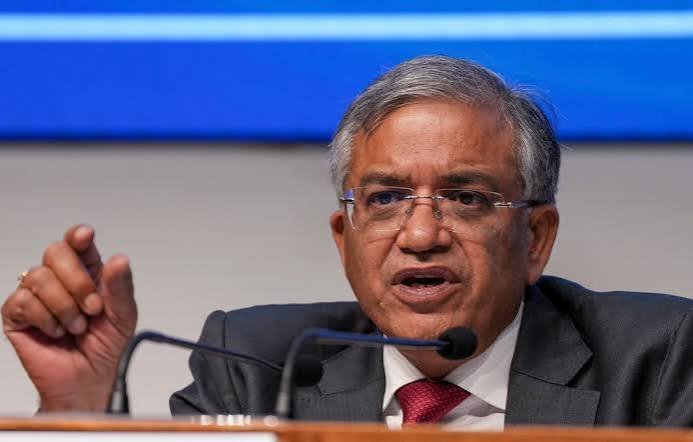
The timing is politically charged, with Kumar already facing opposition scrutiny over the Election Commission’s Special Intensive Revision. The new probe could force a fresh examination of what happened to the original 2006 Vigilance investigation and why it was never brought to a definitive conclusion.
BY PC Bureau
October 4, 2026: Kerala has reopened a 20-year-old vigilance controversy involving Chief Election Commissioner Gyanesh Kumar, ordering a preliminary inquiry into allegations dating back to his tenure as the state’s Public Works Department secretary in 2006.
Kerala Home and Vigilance Minister Ramesh Chennithala on Sunday directed the Vigilance and Anti-Corruption Bureau (VACB) to examine allegations relating to the Kerala State Transport Project (KSTP) and the death by suicide of a Malaysian civil engineer associated with the project. The Home Department had already sought the records of the earlier vigilance inquiry, and the latest order follows a complaint by KPCC leader Malayinkeezhu Venugopal.
The new inquiry is, at this stage, a preliminary investigation into old allegations. It is not a finding that Kumar committed misconduct, demanded bribes or was responsible for the engineer’s death. No conviction or judicial finding against Kumar in connection with the case has been reported.
The 2006 controversy
The case centres on the World Bank-assisted KSTP and, in particular, work involving the upgrading of the MC Road. The project involved the PATI-BEL consortium, and Malaysian civil engineer Lee See Been was associated with the project.
Lee died by suicide in Kuala Lumpur in 2006. His suicide note was subsequently reported to have named Kumar, who was then Kerala’s PWD secretary, amid allegations concerning corruption, harassment, delays and the handling of the project. Those allegations led to a vigilance inquiry at the time.
The original inquiry did not result in a publicly reported criminal conviction or a final judicial finding against Kumar. The case nevertheless remained politically contentious, with allegations that the earlier investigation was stalled or influenced.
The latest Kerala government order specifically brings that question back into focus. According to reports, the Vigilance Director has been asked to examine allegations that external pressure affected the earlier inquiry and to proceed on the basis of what the records establish.
That distinction is important. The government is not announcing that the allegations have been proved. It is asking the vigilance machinery to determine what happened and whether the old investigation was improperly halted.
READ: “How Netanyahu Is Turning an Indian Pilot’s Heroics Into Political Capital at Home
READ: Journalist Alleges Groping by Delhi Police ACP at Jantar Mantar, FIR Delay Triggers Protest
Why the case matters now
The revival comes at a particularly sensitive moment for Kumar.
He is no longer a Kerala bureaucrat. He is now the Chief Election Commissioner of India, and the Election Commission under his leadership is facing intense political criticism over the Special Intensive Revision of electoral rolls.
Opposition parties and civil-society groups have accused the Commission of allowing large-scale deletions and have demanded Kumar’s resignation. The Election Commission has rejected allegations of political manipulation and maintained that the electoral-roll exercise is being conducted under the law.
Against that backdrop, the decision by a Congress-led Kerala government to revive allegations from Kumar’s tenure as PWD secretary inevitably has a political dimension.
But the political timing does not, by itself, establish that the old allegations are false or that the new inquiry is politically motivated.
It leaves two separate questions.
First, what actually happened in the 2006 KSTP controversy?
Second, why is the Kerala government choosing to revisit it now, when Kumar is serving as the country’s top election official?
The complaint and the old files
The immediate trigger was a complaint by Malayinkeezhu Venugopal, a KPCC leader, seeking an investigation into alleged irregularities in KSTP contracts and the circumstances surrounding Lee’s death. The complaint also raises questions about the handling of the earlier investigation.
The Home Department’s decision to retrieve the old files is potentially more significant than the complaint itself.
If the original records show that the investigation was properly conducted and closed on the basis of evidence, the new exercise may establish little more than that an old controversy has been revisited.
If, however, the records reveal unexplained gaps, interference or an investigation that was stopped without resolving material allegations, the political and administrative implications could be considerably greater.
That is precisely why the government has ordered a preliminary inquiry rather than announcing a conclusion.
A 20-year-old controversy meets a present-day institutional battle
The significance of the development therefore lies less in what has already been proved than in what the revived inquiry could potentially establish.
For nearly two decades, the 2006 controversy surrounding the KSTP project has remained an unresolved political and administrative episode. The Kerala government is now asking whether the original investigation adequately dealt with the allegations — and whether outside influence prevented it from reaching a proper conclusion.
That question would be significant at any time.
It becomes considerably more consequential because the man at the centre of the old controversy is now the official presiding over India’s election machinery at a time when the Election Commission itself is under unprecedented political scrutiny.
The new inquiry does not prove the old allegations. But it does ensure that a controve









Comments 1