The ageing US telecommunications infrastructure buckled under mounting data traffic, forcing the FAA to suspend departures nationwide and divert hundreds of aircraft.
BY PC Bureau
November 14: A nationwide breakdown in air traffic control communications brought US aviation to a near standstill on Friday, forcing authorities to suspend all departures for more than four hours. The disruption triggered over 11,000 flight delays and cancellations, stranded tens of thousands of passengers and forced hundreds of aircraft to divert to alternative airports.
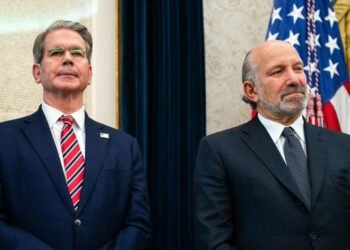
Homeland Security Secretary Markwayne Mullin attributed the outage to new technology overwhelming the country’s ageing air traffic control infrastructure. He ruled out any immediate indication of a deliberate attack, telling reporters outside the White House: “This isn’t another 9/11.” He said all aircraft already airborne had been accounted for, describing the incident as a telecommunications failure whose precise cause remained under investigation.
The Federal Aviation Administration (FAA) ordered the nationwide ground stop at 3:54 p.m. Eastern Time, citing “extraordinary circumstances” and safety concerns arising from communications failures at regional control centres. Aircraft already in the air were permitted to continue to their destinations, but departures from airports across the country were suspended.
The restriction remained in place for more than four hours before the FAA lifted it. However, the agency cautioned that a return to normal operations would take time as airlines and airports struggled to clear the accumulated backlog.
Flight-tracking data indicated nearly 10,000 delays and more than 1,000 cancellations. At least 827 aircraft were diverted, including approximately 670 that returned to their departure airports and 157 redirected to other destinations.
READ: Trump Admin Faces Growing Rift Over Nvidia Chip Diversions to China
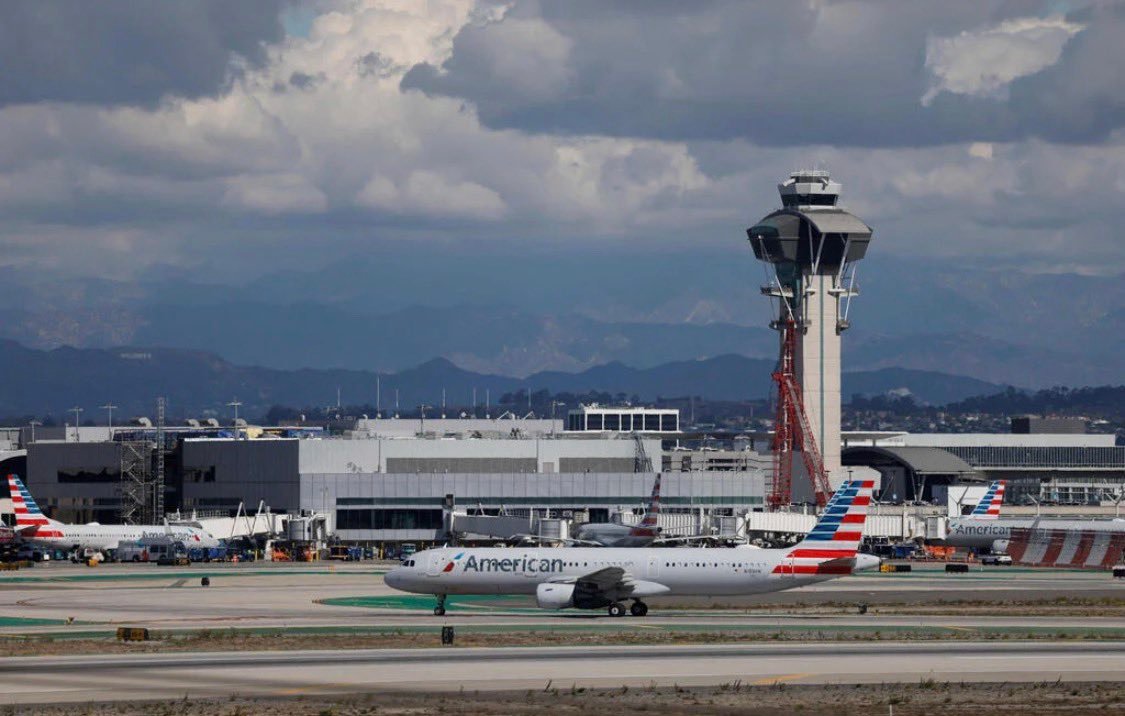
Washington Dulles, Los Angeles International, Cincinnati/Northern Kentucky and Nashville were among the airports that received diverted flights. Several airports faced mounting pressure on gates and ramp space as aircraft arrived unexpectedly. The disruption also spread to international operations, prompting airlines in Canada and Europe to cancel or reschedule services.
🚨 BREAKING: US GROUNDS FLIGHTS NATIONWIDE AFTER AIR TRAFFIC CONTROL OUTAGE
Air travel across the United States has been thrown into chaos after the Federal Aviation Administration (FAA) ordered a nationwide halt to departing flights following a major telecommunications outage affecting air traffic control centres.
The FAA said the decision was taken “out of an abundance of caution” for safety reasons. Aircraft already in the air were allowed to land, while incoming international flights were being handled case by case.
More than 1,000 flights have been cancelled and nearly 10,000 delayed, according to Reuters. US authorities say there is currently no indication the outage was caused by a cyberattack.
The cause of the communications failure remains under investigation.
#BreakingNews #USA #FlightDisruption #Aviation #AirTravel
— The Australia Today (@TheAusToday) November 13, 2026
US Transportation Secretary Sean Duffy blamed the failure on an outdated telecommunications network that could not cope with the volume of data passing through it. Overloaded switches and routers on the analogue system reportedly failed, disrupting communications between air traffic control facilities.
“Switches, routers actually got overloaded with data, and they went down,” Duffy said.
Although radar coverage was not entirely lost, the communications instability prompted the FAA to take the precautionary step of grounding departures nationwide. Emergency medical and law-enforcement flights were allowed to continue.
Duffy said approximately 3,500 aircraft were airborne when the ground stop began, with fewer than 400 remaining in the air by the time of his latest update. He warned that restoring normal operations would be a gradual process and renewed his appeal for Congress to finance a comprehensive overhaul of the country’s air traffic control infrastructure.
JUST IN: Transportation Secretary Sean Duffy announces U.S. airspace has reopened as of 8:15 p.m. ET after a nationwide ground stop leaves travelers stranded.
Officials have identified the problem and restored air traffic control operations, but Duffy warns delays will continue.
“It’s going to be slow,” he says, urging passengers to check with their airlines as carriers work to get flights back on schedule.
— Fox News (@FoxNews) November 14, 2026
The US administration is seeking approximately $50 billion for the modernisation programme, following an earlier allocation of $12.5 billion and a subsequent funding request of around $30 billion.
President Donald Trump told Fox News that there was no indication of a cyberattack or involvement of artificial intelligence in the incident. Microsoft also said the disruption was unrelated to its services.
Investigators were nevertheless examining whether the FAA’s recent introduction of an artificial intelligence tool, designed to identify potential problems and recommend alternative flight routes, had any connection with the communications failure. Mullin said investigators had not ruled out any possibility.
The outage has renewed concerns about the vulnerability of America’s air traffic control infrastructure, much of which relies on technology dating back several decades.
The FAA recently announced plans to phase out floppy disks still used to store weather and other critical information at more than 400 facilities by the end of 2028. The agency is also gradually replacing ageing copper wiring with fibre-optic connections.
Friday’s disruption was the first nationwide ground stop since a failure of the Notice to Air Missions (NOTAM) system in January 2023. It was also the longest nationwide aviation interruption since the September 11, 2001 attacks.
The latest breakdown comes after a separate communications failure in the northeastern United States in September and amid heightened scrutiny of aviation safety following the January 2025 mid-air collision near Ronald Reagan Washington National Airport, which killed 67 people.
The incident has once again raised questions about why the world’s largest aviation system continues to depend on ageing technology and whether the pace of modernisation has kept up with the demands of increasingly complex air traffic.