The Nvidia controversy is raising fresh questions about America’s ability to enforce restrictions on advanced semiconductor exports to China. Bessent has shifted attention away from Jensen Huang’s personal controversy, arguing that the central issue is whether Nvidia properly verified its customers and prevented unauthorised chip transfers.
BY PC Bureau
November 1`3: U.S. Treasury Secretary Scott Bessent has publicly criticised the Commerce Department for failing to place Singapore-based technology company Megaspeed on the U.S. trade blacklist, despite months of support for the move from several key government agencies.
Speaking to CNBC on Friday, Bessent said the Treasury Department, Pentagon, Office of the U.S. Trade Representative and State Department had supported adding Megaspeed to the Entity List for months. However, the proposed action was never implemented.
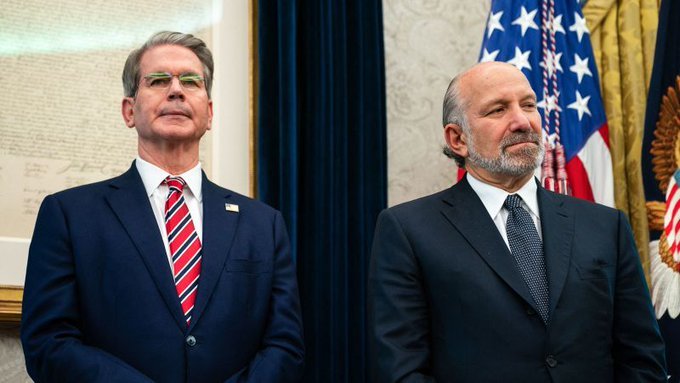
“Commerce has the pen. You will have to ask them about their internal processes,” Bessent said, placing responsibility squarely on the department led by Commerce Secretary Howard Lutnick.
The unusually public criticism from one senior Trump administration official towards another has intensified scrutiny of Washington’s export-control policies, particularly restrictions designed to prevent China from accessing advanced American artificial intelligence chips.
READ: Four Naga Civilians Shot Dead by Alleged Kuki Militants in Manipur’s Ukhrul
Megaspeed at the Centre of Nvidia Chip Controversy
Singapore-based Megaspeed has come under investigation over allegations that it helped Chinese companies bypass U.S. export restrictions by purchasing Nvidia AI chips for data centres in Southeast Asia and subsequently diverting them to China.
Reports indicate that the company handled more than $4 billion worth of Nvidia chips over a two-year period, raising concerns about potential weaknesses in America’s technology export-control system.
The United States has imposed strict restrictions on exports of its most advanced AI processors to China, citing national security concerns and the need to prevent Beijing from gaining access to critical computing capabilities.
Bessent reiterated that President Donald Trump had established a clear position that China should not receive Nvidia chips more advanced than the H100.
“Any leakage is very frustrating because it hurts our great companies, and in the AI race gives the Chinese an advantage,” he said.
The controversy has raised questions about whether existing safeguards are sufficient to prevent restricted technology from reaching Chinese companies through intermediaries and third-party buyers.
U.S. Treasury Secretary Scott Bessent blames Commerce Secretary Howard Lutnick over Nvidia chip mess: “Treasury, War, USTR and State were in favor of putting Megaspeed on the entity list for months.” https://t.co/0BTlHymwUY
— CNBC (@CNBC) November 13, 2026
Pressure Mounts on Commerce Secretary Howard Lutnick
Bessent’s remarks have placed Lutnick and the Commerce Department under renewed political pressure over the handling of the Megaspeed case.
According to media reports, some Trump administration advisers have questioned Lutnick’s position following the growing controversy surrounding Nvidia chips and export-control enforcement.
Concerns have reportedly also been raised with the president by outside advisers and administration officials. However, the White House has continued to support the Commerce secretary.
Before Bessent’s CNBC appearance, the White House said Trump “maintains complete confidence in the secretary and his ability to carry out the position as the most transformative Commerce Secretary in modern history.”
The president’s backing has so far protected Lutnick from immediate political consequences, although the controversy has exposed growing disagreements within the administration over export-control enforcement.
Bessent Shifts Focus from Jensen Huang’s Personal Controversy to Nvidia’s Responsibility
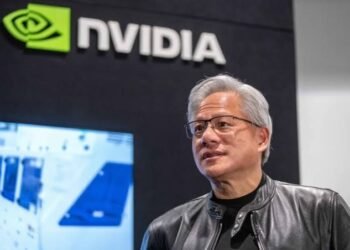
The Megaspeed investigation has attracted additional attention following reports involving Nvidia co-founder and CEO Jensen Huang and allegations surrounding his personal relationships.
Reports identified Alice Huang, a former Megaspeed director alleged to have links to Chinese intelligence, as having had a personal relationship with Jensen Huang. The two individuals are not related. Other reports have also discussed alleged relationships involving Huang and Nvidia employees, including Kimberly Powell, the company’s vice president of healthcare.
Huang acknowledged an extramarital affair in a letter to employees dated November 8, although he did not identify the individual involved. He stepped down from his leadership position on Thursday after more than three decades at the helm of the company.
Bessent, however, argued that the focus on Huang’s personal life was distracting from the more important questions surrounding Nvidia’s business practices and potential exposure to restricted transactions.
“The story thus far has been on Jensen Huang’s personal foibles,” Bessent said. “The real story here should be: Did Nvidia know their client, and was there a robust effort at Nvidia to make sure that there was no leakage.”
He also questioned whether Nvidia had conducted adequate due diligence before selling chips to what he described as “obviously pass-through shell companies”.
Bessent suggested that individuals responsible for any failure to prevent unauthorised transfers should be held accountable.
Export-Control Gaps Raise National Security Concerns
The dispute has highlighted broader concerns about the effectiveness of U.S. restrictions on advanced semiconductor technology.
Bessent acknowledged that there had been “a lot of leakage” within the wider system, adding that the administration was “constantly working to close that down.”
The concern is that restricted AI chips could reach Chinese buyers through complex networks of intermediaries, shell companies and overseas data-centre operators, undermining Washington’s efforts to limit China’s access to advanced computing technology.
The Megaspeed case has therefore become more than a dispute over one Singapore-based company. It has developed into a broader test of how effectively the Trump administration can coordinate its agencies, enforce export restrictions and hold technology companies accountable.
Bessent maintained that the effort to blacklist Megaspeed had been supported by multiple federal agencies long before the latest controversy involving Huang emerged.
The central unanswered question remains why the Commerce Department did not move forward despite that support.
For now, Lutnick retains Trump’s confidence, but the growing Nvidia controversy has intensified scrutiny of his department and exposed potential divisions within the administration over one of its most important technology and national security policies.