What began as an internet meme has transformed into one of India’s most talked-about youth movements. The Cockroach Janta Party (CJP), founded by Abhijeet Dipke, has quickly become a familiar name among socially active young Indians. The CJP Protest started from demanding education reforms to raising concerns over unemployment and government accountability.CJP has positioned itself at the center of a growing public debate.
The movement traces its origins to a Supreme Court remark that referred to certain unemployed youth as “cockroaches”. The comment triggered widespread outrage online and soon inspired the creation of CJP. Within days, the party’s Instagram account reportedly gained nearly twice the followers of the BJP’s official account. What started as satire soon evolved into a movement that many young people now see as a platform to voice their frustrations through the CJP Protest.
Why Has CJP Connected With India’s Youth?
India’s Gen-Z faces rising unemployment, fierce competition, expensive coaching, and growing uncertainty about the future. For many, finding a stable career has become harder than ever. These concerns created the perfect environment for CJP to gain momentum.
The biggest turning point came after the NEET UG 2026 examination held on May 3, 2026. Allegations surfaced that several “guess papers” circulated on WhatsApp and other platforms closely matched the actual examination paper. Reports claimed that more than 140 questions were identical. The National Testing Agency (NTA) later cancelled the examination and announced a re-exam.
The decision left thousands of students devastated. Months, and in many cases years, of preparation suddenly appeared meaningless. Reports of student suicides following the controversy intensified public anger and renewed questions about accountability within India’s examination system.
Many students and activists held the government responsible for failing to protect the integrity of one of the country’s most important entrance examinations. Education Minister Dharmendra Pradhan became the focus of protests, with demonstrators demanding his resignation and systemic reforms.
The Pressure Behind Competitive Exams
Competitive examinations in India have become increasingly demanding.
Education should develop critical thinking and prepare students to contribute to society. At the same time, professions such as medicine, engineering, and the civil services require years of disciplined study and exceptional academic performance.
Students willingly accept that challenge. The larger question is whether the system offers them fairness, transparency, and support in return.
A typical NEET aspirant spends six to eight hours every day studying. Many sacrifice hobbies, family time, friendships, and personal well-being for years in pursuit of a medical seat. Securing a score of 600+ out of 720, often considered necessary for admission to a government medical college, demands extraordinary consistency and commitment.
Private coaching institutes have built billion-dollar businesses by promising success in competitive examinations. While many genuinely help students, critics argue that some have increasingly focused on branding, entertainment, and online popularity instead of student welfare.
Even after years of preparation, aspirants continue to face uncertainty. Intense competition, allegations of unfair practices, repeated examination controversies, and debates surrounding reservation policies leave many students feeling that years of effort can disappear overnight.
It was this growing frustration that allowed CJP to connect with thousands of students across the country and hold the CJP Protest.
The Jantar Mantar Protest
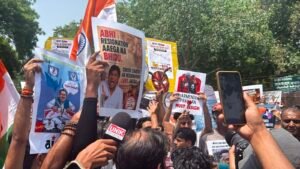
On June 6, 2026, CJP founder Abhijeet Dipke began a peaceful protest at Delhi’s Jantar Mantar. The movement demanded the resignation of Education Minister Dharmendra Pradhan and called for structural reforms in India’s education system.
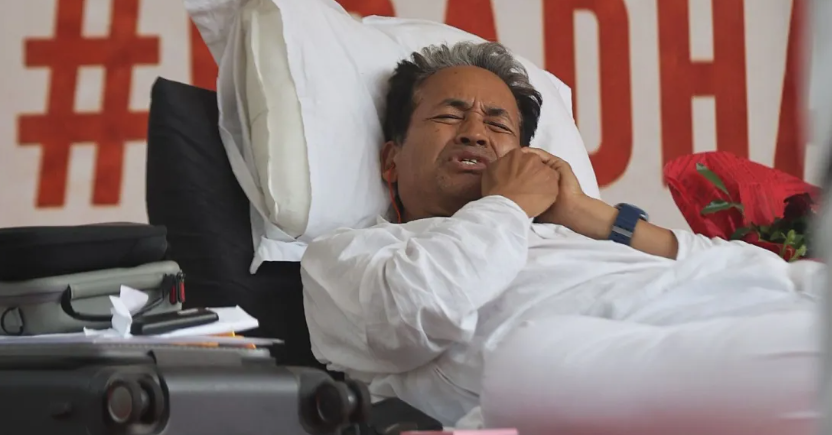
The CJP Protest gained national attention on June 26, when climate activist and educator Sonam Wangchuk joined the movement and announced an indefinite hunger strike until the government agreed to hold discussions.
Since beginning the fast, Wangchuk has reportedly lost more than eight kilograms and significant muscle mass. His deteriorating health has drawn widespread concern. Supporters argue that despite the seriousness of the situation, the government has not meaningfully engaged with the protesters.
Meanwhile, parts of social media have turned the issue into entertainment. Memes and jokes about Wangchuk’s health continue to circulate on X (formerly Twitter), shifting attention away from the concerns that sparked the protest.
A Public Interest Litigation (PIL), filed by activist lawyer Rakesh Kumar Saini, states that Wangchuk has lost approximately 8.5 kilograms since beginning his fast at CJP Protest. The petition argues that if the hunger strike continues, his life could face serious risk. It further claims that any harm to Wangchuk would bring “great shame for the country and the world.”
Revolution or Public Stunt?
As CJP has grown, so has the political debate surrounding it.
Supporters believe the movement has finally given India’s youth a platform to demand accountability on issues that directly affect their future. They argue that unemployment, examination reforms, and transparency deserve sustained public attention rather than temporary outrage.
Critics, however, question whether CJP can move beyond symbolism and social media campaigns. Some have alleged that the movement receives support from opposition parties and political groups, although no conclusive public evidence has established these claims. Others argue that large protests alone cannot solve deeply rooted structural problems without clear policy proposals and long-term engagement.
Yet, amid the political accusations, one issue often gets overshadowed—the reason the movement began in the first place.
The debate was never only about a political party or a social media campaign. It was about students who believed the system had failed them. It was about young people demanding transparency, accountability, and confidence that their years of hard work would not be undone by administrative failures.
The Bigger Question
Whether CJP becomes a lasting force for change or fades as another viral movement will ultimately depend on results, not slogans. Public support alone cannot reform institutions, but it can force uncomfortable conversations that governments can no longer ignore.
Regardless of political affiliations, the questions raised by the CJP Protest remain relevant. Can India’s examination system regain the trust of millions of students? Will accountability follow repeated controversies? Can the government restore confidence in institutions that shape the future of an entire generation?
The answers to those questions will determine CJP’s legacy far more than its follower count or its critics ever will. If meaningful reforms emerge from this movement, CJP may be remembered as the beginning of a new wave of youth activism. If nothing changes, it risks becoming another viral campaign that generated headlines but failed to deliver lasting impact.
Either way, the frustration that gave birth to CJP Protest is real. Until the concerns surrounding education, employment, and transparency are addressed, new movements will continue to emerge—because the problems that created this one have not disappeared.
BY- RISHI GUPTA