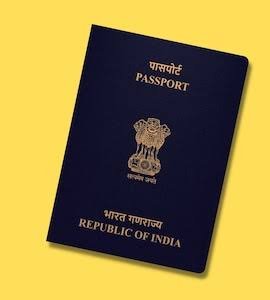
The Centre’s recent clarification has reignited debate over India’s citizenship framework, despite the rigorous verification process involved in issuing an Indian passport.
BY Navin Upadhyay
New Delhi, June 27, 2026 — Across most of the world, a passport is regarded as one of the strongest proofs of citizenship. Governments issue passports only after verifying an individual’s nationality through birth records, descent, naturalisation, or other legally recognised means. As a result, passports are widely accepted both domestically and internationally as evidence that the holder is a citizen of the issuing country.
India, however, follows a more nuanced legal position. The Ministry of External Affairs (MEA) has recently clarified that an Indian passport is primarily a travel document and should not be treated as conclusive proof of citizenship. While obtaining an Indian passport requires extensive document verification and police checks, citizenship itself is determined under the Citizenship Act, 1955, and not by possession of a passport alone.
The clarification has triggered widespread discussion because, in practice, an Indian passport is issued only after rigorous scrutiny of an applicant’s identity and nationality. Legally, however, it remains prima facie (presumptive) evidence of citizenship rather than irrefutable proof in the event of disputes.
READ: Pune Fort Murder: Siya Goyal’s Brother Reveals Cricket Link
Why India’s Position Is Different
The distinction stems from India’s legal framework. Under the Passports Act, 1967, passports are issued primarily to Indian citizens. However, Section 20 of the Act empowers the Central Government, in exceptional circumstances, to issue passports or travel documents to certain non-citizens. Although such cases are extremely rare, the provision prevents an Indian passport from automatically becoming conclusive proof of citizenship in every legal situation.
Courts have consistently maintained that citizenship is determined under the Citizenship Act, 1955, based on foundational documents such as birth certificates, proof of parentage, naturalisation certificates, or other statutory evidence. Unlike many countries, India also lacks a universal national identity card specifically certifying citizenship. While Aadhaar serves as a widely used identity and service-delivery document, it is not recognised as proof of citizenship.
United States: Passport Is Strong Proof of Citizenship
In the United States, a passport is one of the most authoritative documents establishing citizenship. Issued only after verification by the US Department of State, an American passport is widely accepted as definitive proof of citizenship in government, legal and administrative matters.
Although birth certificates, Certificates of Citizenship and Certificates of Naturalization remain foundational documents, the passport itself carries enormous legal and practical weight. For Americans travelling abroad or returning home, the passport effectively serves as the principal evidence of nationality.
Europe: Passports Backed by National Identity Cards
Most European countries—including the United Kingdom, France, Germany, Italy and Spain—treat passports as strong evidence of citizenship. Many European nations also maintain compulsory or widely used national identity cards that serve as the primary domestic proof of nationality.
In Germany, for example, the passport provides strong presumptive proof of citizenship, while the national identity card offers conclusive domestic verification. Across the European Union, passports and national identity cards together facilitate free movement between member states and are universally accepted as proof of nationality.
Japan: Citizenship Rooted in the Koseki System
Japan operates one of the world’s oldest civil registration systems. Citizenship is established through the Koseki, or family register, which records births, marriages, deaths and lineage. Japanese passports are issued only after verification against the Koseki.
Although the family register remains the legal foundation, the passport is universally accepted as reliable evidence of Japanese citizenship for virtually all practical purposes.
Singapore: National ID and Passport Work Together
Singapore combines a strict national registration system with one of the world’s strongest passports. Every citizen and permanent resident must possess a National Registration Identity Card (NRIC). The passport, issued only after verification of citizenship, serves as internationally recognised proof of nationality. Singapore also prohibits dual citizenship for most adults, further simplifying nationality verification.
South Korea and China
South Korea requires citizens to possess national identity cards, while passports are issued only after citizenship is verified. China follows a similar approach through its Resident Identity Card and Hukou (household registration) system. Chinese passports are issued exclusively to citizens and function as official proof of nationality for overseas travel and numerous administrative purposes.
Southeast Asia
Countries such as the Philippines, Indonesia, Malaysia and Thailand similarly issue passports only after verifying citizenship. Most also operate national identity systems that complement passports for domestic purposes. In practice, passports are rarely challenged as proof of nationality once officially issued.
Africa: Similar Principles Apply
Across Africa, passports generally function as strong evidence of citizenship.
South Africa
South Africa issues passports only after citizenship verification. The country’s Smart ID Card serves as the principal domestic identity document, while passports are accepted as official proof of citizenship, particularly in immigration and legal matters.
Nigeria
Nigeria has strengthened citizenship verification through its National Identity Number (NIN) system. Passports are issued only after applicants’ citizenship is confirmed, making them reliable evidence of nationality.
Kenya and Egypt
Kenya requires national identity cards for adult citizens, while passports serve as internationally recognised proof of nationality. Egypt similarly maintains a national identity system alongside passports that are issued exclusively to citizens.
Several African countries, including Ghana and Uganda, also regard passports as strong presumptive evidence of citizenship, although certificates of nationality may be required in specialised legal proceedings.
Common Global Practice
Despite differences in legal systems, several common principles emerge worldwide:
- Passports are issued only after governments verify citizenship.
- National identity cards often provide an additional domestic layer of proof.
- Birth records, civil registries and naturalisation certificates remain the foundational legal basis of citizenship.
- In everyday practice, passports are accepted almost universally as proof of nationality.
India’s Unique Position
India differs primarily because of its legal distinction between proof of citizenship and a travel document. Although an Indian passport is issued only after extensive verification, the government maintains that citizenship must ultimately be established through statutory provisions under the Citizenship Act rather than by possession of a passport alone.
The absence of a universal citizenship identity document similar to Singapore’s NRIC or South Africa’s Smart ID further distinguishes India’s system.
Implications
For international travel, the Indian passport continues to function as practical evidence of nationality and is recognised globally by foreign governments. Domestically, however, disputes relating to citizenship, electoral rolls, immigration or nationality claims may require production of foundational documents such as birth certificates, proof of parentage or naturalisation records.
Legal experts note that India’s recent clarification highlights the importance of strengthening civil registration systems and improving access to foundational citizenship documents.
The Global Picture
From Washington and London to Tokyo, Singapore, Pretoria and Abuja, passports remain far more than travel booklets—they are widely regarded as tangible proof that a government has verified the holder’s citizenship before issuing the document.
India’s legal position does not fundamentally alter that practical reality but draws a sharper distinction between administrative practice and statutory proof of citizenship than is commonly seen elsewhere.
As countries increasingly adopt digital identity systems and biometric documentation, experts believe harmonising citizenship records with passport issuance could further strengthen public confidence while reducing legal ambiguity surrounding nationality.