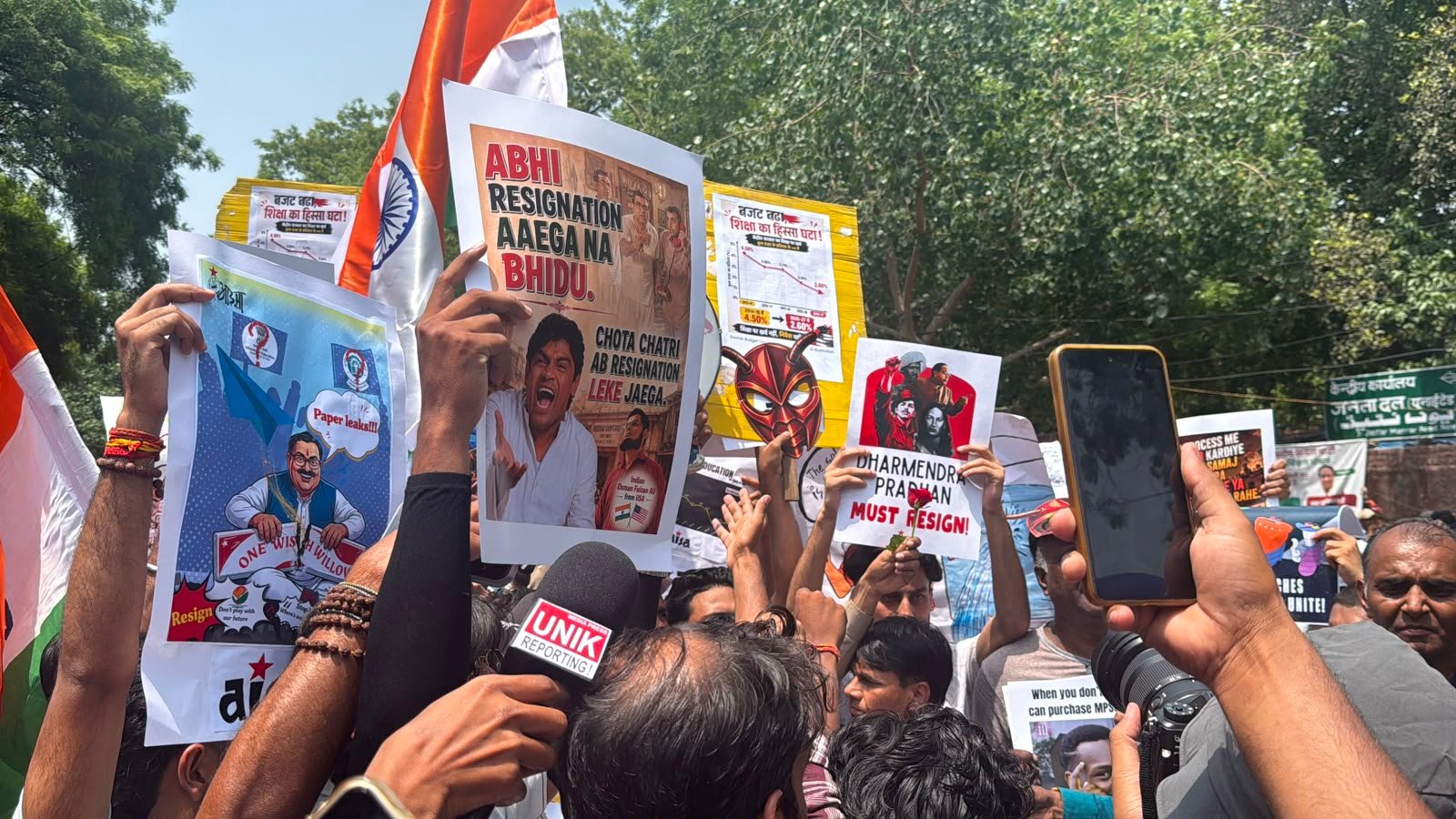
On June 20, 2026, the Cockroach Janta Party (CJP) organised a peaceful protest at Delhi’s Jantar Mantar, demanding the resignation of Union Education Minister Dharmendra Pradhan following the NEET UG 2026 paper leak controversy and the announcement of a re-examination after the cancellation of the exam conducted on May 3, 2026.
The decision to conduct a re-examination was reportedly taken after a 150-page guess paper was leaked and circulated on Telegram. Since the announcement of the re-test, more than twenty students have allegedly died by suicide due to the pressure of reappearing for an examination they had already cleared successfully, effectively nullifying years of preparation and effort.
Protesters Demand Educational Reforms and the Minister’s Resignation
The protest, organised by CJP, demanded reforms in the education system as well as the resignation of Dharmendra Pradhan. Representatives of the party, along with a large number of young participants, protested peacefully while criticising several political policies and institutions, claiming that the controversy reflected a massive failure of the authorities. Adding more fuel to this, a student based in Nagpur had his examination centre allocated in Abu Dhabi.
In light of the students who lost their lives, the protest aimed to seek justice and ensure that such incidents do not occur again in the future.
NEET Aspirants Highlight Mental Health Challenges
During a conversation with a young NEET aspirant representing Krantikari Youth Sangathan at the protest, she explained the intense psychological pressure associated with preparing for the NEET examination.
NEET is one of the most difficult entrance examinations conducted annually in India and serves as the basis for admission into medical colleges. Students often dedicate an entire year to preparation, and in many cases, take one or more drop years to improve their chances of success.
According to the aspirant, when incidents such as paper leaks and exam cancellations occur after years of preparation, they can render students’ efforts futile and lead to severe mental and psychological distress.
Protest Features Youth Voices, Artists, and Symbolic Demonstrations
Crowds at the protest were seen wearing cockroach masks and carrying posters largely inspired by internet memes. While the protest served as a symbol of justice and accountability, it also provided a platform for artists to express their views.
Several rappers, singers, and poets performed and dedicated their voices to the cause, using art and music to amplify concerns regarding the examination system and student welfare.
Calls for Accountability Grow Louder
The primary concern raised by the protesters was the perceived lack of accountability from those responsible for the incident.
“A simple sorry does not address anyone’s grievances. We need accountability,” protesters stated while demanding answers from the authorities. Demonstrators argued that negligence and failures within the system had serious consequences for students and their families.
Need for Stronger Security Measures in Competitive Examinations
For an examination as important and prestigious as NEET, protesters argued that the arrangements and security measures must be flawless. Given the significance of the examination and the large number of candidates who appear every year, stricter guidelines and preventive measures must be implemented to stop future leaks.
The impact of paper leaks extends beyond students. Teachers responsible for preparing question papers and others involved in the examination process are also affected when such incidents occur.
While protesters acknowledged that public anger over the controversy is justified, they emphasised that those directly responsible for leaking examination papers and engaging in unfair practices must also be held accountable.
BY-RISHI GUPTA