A memorandum submitted by a tribal organisation claims several culturally significant sites near the Line of Actual Control have come under Chinese occupation over the past six years. Authorities are yet to respond.
BY PC Bureau
June 29, 2026: A tribal organisation in Arunachal Pradesh has alleged that China’s People’s Liberation Army (PLA) has gradually occupied large parts of its ancestral lands along the India-China border in Upper Subansiri district, raising fresh concerns over border security and the impact of the unresolved boundary dispute on local communities.
In a memorandum submitted to the Deputy Commissioner of Upper Subansiri, the Nah Welfare Society (NWS) claimed that the PLA has, over the past six years, taken control of traditional grazing grounds, hunting areas and agricultural land used by the Nah community in the Taksing region. The allegations, reported by several media outlets, have not yet been officially confirmed by Indian authorities.
“Our ancestral lands, which were our hunting areas where we freely roamed, collected forest produce and grazed our cattle a few years back, are now under the occupation of the Chinese PLA,” NWS president Keru Chader wrote in the memorandum.
According to the organisation, Chinese activities in the region have intensified significantly over the past decade, with infrastructure construction steadily extending into areas traditionally used by the tribe. The memorandum alleges that Beijing is attempting to consolidate its presence by occupying strategically important locations close to the Line of Actual Control (LAC).
NAH Welfare Society, An Arunachal-based welfare organisation has raised a serious alarm over what it describes as systematic and accelerating encroachment by the Chinese People’s Liberation Army (PLA) deep inside Indian territory in the Taksing circle of… (1) pic.twitter.com/5ZXZ6fOzbe
— Pranjit Saikia (@SaikiaPranjit) June 27, 2026
READ: The Courtroom Twist That Revived the Adani Criminal Case
Five Areas Allegedly Under Chinese Control
The Nah Welfare Society identified five locations that it says were under the community’s traditional control until around 2020 but have since come under PLA occupation:
- Oying (Asaphila area)
- Paniar (Chujarta area)
- Marpan (Marnafe)
- Potrang Lake
- Tindingtang (TG)
Several of these locations, the organisation said, hold religious and cultural significance for the Nah community in addition to serving as grazing and hunting grounds.
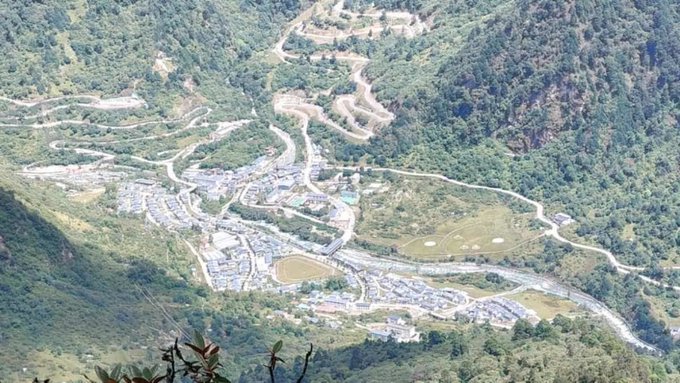
The memorandum further alleges that the PLA has constructed roads, bridges and military camps in these areas, fundamentally altering what were once traditional tribal lands.
“We Are Losing Our Land Inch by Inch”
While expressing confidence in the Indian Army, the memorandum voices growing concern over what it describes as the pace of Chinese activity.
“We do not doubt our Army and always have faith in them. They have been guarding our land for many years, but their efforts are not enough. The intention and speed of the present activities of the Chinese PLA in the Taksing area is very alarming. We are losing our land inch by inch day by day,” Chader wrote.
The tribal body has reportedly submitted photographs that it says document the alleged construction of Chinese infrastructure and military positions in the disputed areas.
Political Leaders Seek Official Verification
The allegations have drawn reactions from political leaders in Arunachal Pradesh, who have called for an official assessment of the claims.
Nacho MLA Nakap Nalo said the matter required urgent verification, describing it as an issue with clear national security implications.
Former MLA and National People’s Party leader Paknga Bage also expressed concern, saying the reports had created anxiety among residents living near the border. Referring to photographs circulating in the public domain, he urged the state government to take up the issue with the Centre and seek appropriate action after verification.
Despite the seriousness of the allegations, there has been no official statement from the Arunachal Pradesh government, the district administration, the Indian Army or the Ministry of Defence.
The absence of an official response has left unanswered questions about the status of the areas identified in the memorandum and whether any changes have occurred on the ground.
Border Communities at the Frontline
The Nah Welfare Society’s appeal underscores the challenges faced by communities living along India’s remote Himalayan frontier, where unresolved territorial claims often intersect with traditional patterns of land use.
Whether the allegations are borne out through official verification remains to be seen. However, the memorandum has renewed attention on the lived realities of border residents, whose livelihoods, cultural heritage and access to ancestral lands are closely tied to developments along the LAC.
The tribal body has urged the government to verify the claims, safeguard border communities and protect traditional lands. Given the strategic sensitivity of the region, any official findings are likely to carry significance beyond Upper Subansiri, touching on broader questions of border management and India’s security posture along the eastern sector of the LAC.