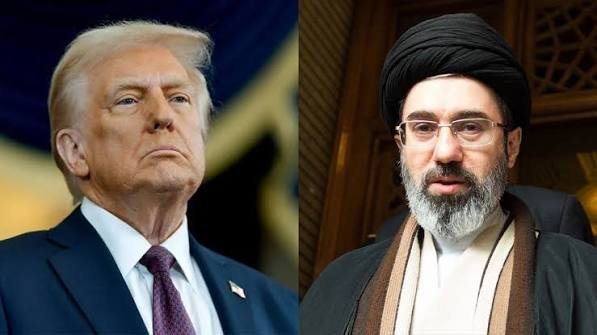
State-backed outlets in Iran say the ceasefire agreement proves the US was forced to end hostilities and lift its naval blockade after months of conflict.
BY PC Bureau
June 15, 2026: Iranian state media on Monday portrayed the newly announced Memorandum of Understanding (MoU) with the United States as a historic triumph for the Islamic Republic, describing the agreement as a “crushing victory” that forced Washington to accept Tehran’s terms after months of military confrontation and high-stakes diplomacy.
The narrative emerging from Tehran stood in stark contrast to Washington’s characterisation of the same agreement. While US officials have framed the accord as the outcome of sustained pressure that neutralised Iranian threats and opened the door to a broader settlement, Iranian leaders and state-backed outlets have celebrated it as proof of the effectiveness of the country’s resistance strategy.
In a statement released late Saturday, Iran’s Supreme National Security Council declared that the Islamic Republic had secured a decisive victory over what it referred to as the “American Zionist enemy” and had successfully concluded negotiations aimed at ending the conflict.
“The Islamic Republic of Iran… has completed its superiority over the American Zionist enemy and finalised the text of the memorandum of understanding regarding the end-of-war negotiations between Iran and the United States,” the statement said.
The council said the agreement provides for the immediate and permanent cessation of military operations on all fronts, including Lebanon, and the complete lifting of the US naval blockade imposed on Iranian ports.
According to Iranian officials, the memorandum will be formally signed in Geneva, Switzerland, on June 19. Discussions on a final and more comprehensive agreement are expected to continue afterwards, but only after Tehran verifies that Washington has fulfilled its commitments under the initial accord. Iran also publicly thanked Pakistan and Qatar for their role in facilitating the negotiations.
🚨🚨🇮🇷🇺🇸 BREAKING | If this is confirmed, we can say that the US has lost the war with Iran.
The Iranian news agency Mehr, citing the Iranian Ministry of Foreign Affairs, has published all 14 clauses of the Memorandum of Understanding (MoU) signed with the US:
1. Permanent and… pic.twitter.com/Rs64HyKxVr
— Visioner (@visionergeo) June 14, 2026
How Iranian State Media Framed The Deal
Iran’s state-run and semi-official media outlets presented the agreement as a strategic and ideological victory, emphasising that Tehran had managed to secure key demands without compromising its core positions.
IRNA, the official news agency of the Islamic Republic, prominently featured remarks by Foreign Minister Abbas Araghchi, who said the memorandum would “consolidate the victory of the Iranian people.” Araghchi argued that the agreement was designed to translate Iran’s perceived battlefield achievements into lasting diplomatic gains.
The agency reported that the negotiations were conducted from a position of strength and were intended to preserve what Iranian leaders regard as the strategic successes achieved during the conflict.
Tasnim News Agency, which is widely seen as being close to the Islamic Revolutionary Guard Corps (IRGC), echoed the Supreme National Security Council’s statement and stressed that the United States had accepted conditions long demanded by Tehran, including the immediate end to hostilities and the removal of the blockade.
Tasnim described the outcome as evidence that Iran’s policy of “resistance” had succeeded in compelling Washington to alter its approach.
Fars News Agency adopted an even more triumphalist tone, reporting that the Islamic Republic had “forced the American-Zionist enemy to end the war on all fronts.” The outlet highlighted scenes of celebration in parts of Tehran and portrayed the agreement as a tacit admission that the United States had failed to achieve its military objectives.
Iranian state television devoted extensive coverage to the announcement, broadcasting footage of crowds celebrating, interviews with officials praising the country’s armed forces, and commentary describing the deal as a vindication of Iran’s defiance in the face of international pressure.
READ: US, Iran To Sign Peace Deal In Geneva on June 19
BREAKING | Secretariat of Iran’s Supreme National Security Council
“In the Name of God, the Most Compassionate, the Most Merciful
To the noble people of Iran:
The Islamic Republic of Iran, under the leadership of its martyred leader, has completed its victory over the… pic.twitter.com/KcXGUUhS0c— The Cradle (@TheCradleMedia) June 14, 2026
Competing Narratives Of Victory
The sharply contrasting reactions in Tehran and Washington underscore how both governments are attempting to shape domestic and international perceptions of the agreement.
Iranian officials have framed the accord as a victory achieved through endurance, military resilience and diplomatic steadfastness. US leaders, meanwhile, have argued that sustained economic and military pressure compelled Tehran to negotiate and agree to de-escalation.
Analysts say the reality may lie somewhere in between.
Rather than representing a clear-cut military triumph for either side, the memorandum appears to be a pragmatic, face-saving arrangement that allows both governments to claim success while stepping back from a conflict that threatened to destabilise the wider Middle East and disrupt the global economy.
Questions Remain Ahead Of Geneva Signing
Although the ceasefire is now in effect and markets have responded positively to the prospect of renewed stability, major questions surrounding the agreement remain unanswered.
The full text of the memorandum has not yet been released publicly, leaving uncertainty over the scope and timeline of sanctions relief, the release of frozen Iranian assets, the future of regional military deployments and the mechanisms for monitoring compliance.
Iran’s nuclear programme is also expected to dominate the next phase of negotiations, with both sides still needing to resolve disagreements over uranium enrichment, inspections and Tehran’s existing stockpile of highly enriched material.
The prospect of restoring normal shipping through the Strait of Hormuz has already eased concerns in global energy markets, raising hopes that a prolonged disruption to oil and liquefied natural gas supplies can be avoided.
With the formal signing ceremony scheduled for June 19 in Geneva, attention will now turn to whether the momentum generated by the ceasefire can be transformed into a durable political settlement capable of ending one of the region’s most dangerous confrontations in recent years.