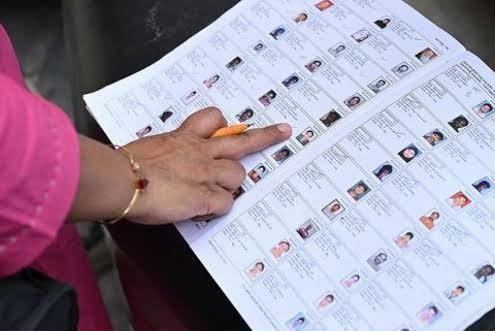
Women account for nearly 11 lakh of the net additions to Uttar Pradesh’s electoral rolls after SIR. Yet the difference between the projected adult female population and registered women voters stands at approximately 1.64 crore, prompting the Election Commission to intensify enrolment drives.
By PC Bureau
November 17: Uttar Pradesh’s electorate has increased by nearly 18.84 lakh since the conclusion of the Special Intensive Revision (SIR), taking the number of registered voters to 13.58 crore. Yet the draft electoral roll remains substantially below the state’s projected adult population, with a difference of about 2.58 crore, according to figures released by the Election Commission on Tuesday.
The draft roll for the Special Summary Revision (SSR) 2027 lists 13,58,68,905 electors, compared with 13,39,84,792 in the final roll published on April 10, 2026, after the SIR exercise. The increase represents a net addition of 18,84,113 voters.
Women accounted for a larger share of the increase. The number of male electors rose by 7.87 lakh to 7,38,58,510, while female electors increased by nearly 10.97 lakh to 6,20,06,353. The draft list also includes 4,042 third-gender voters.
The state’s projected adult population for 2026 is 16,16,85,000. The difference between this estimate and the draft electorate is approximately 2.58 crore. Officials, however, cautioned against interpreting this gap as the number of eligible voters excluded from the electoral rolls. The comparison is between a population projection and the number of people registered as electors.
VIDEO | Lucknow: Addressing a press conference, UP Chief Electoral Officer Navdeep Rinwa says, “Many people believe that voters are added or deleted only during the revision process. There is also a misconception that no Form 6 or Form 7 can be submitted, and no corrections can be made after April 10. I would like to clear this misconception. The electoral roll remains dynamic throughout the year. Forms 6, 7 and 8 are accepted during the revision process, and the changes are reflected in the electoral roll. Even after the revision process concludes and the final electoral roll is published, people can submit Forms 6, 7 and 8 from the very next day, and the changes start reflecting in the list. Therefore, our electoral roll was not static between April 10 and November 17. During this period, there was a net increase of 18,84,113 voters. While more voters may have been added during this period, some names would also have been deleted. The figure of 18,84,113 represents the net increase after accounting for both additions and deletions.
He adds, “The number of male voters increased by 7,87,449, while the number of female voters increased by 10,96,828. This means the increase in the number of female voters was significantly higher than that of male voters during this continuous updation process. Between April 10 and November 17, 2026, the number of third-gender voters decreased by 164. There was also a significant decline in the number of voters aged 18 and 19. Their number, which stood at 17,63,360 on April 10, fell to 11,83,352 on November 17, a decrease of 5,80,008. These figures may appear unusual and surprising, but the reason is that, as I explained, the electoral roll is dynamic. The age of voters is calculated with reference to January 1, 2026. Some voters who were 19 years old in the previous roll have now turned 20, while those who were listed as 18 or above have moved into the 19-plus category. In other words, voters who were earlier counted in the 18-plus category are now reflected in the 19-plus category. The decrease of 5,80,008 is therefore due to this age transition. Those who are currently 17 years old will become eligible and be included during the ongoing Special Summary Revision (SSR). Consequently, when the SSR concludes and we review the figures on January 4, there will be a substantial increase in the number of voters in the 18-19 age group.”
— Press Trust of India (@PTI_News) November 17, 2026
The gender-wise figures show a wider difference among women. Against a projected adult female population of 7.84 crore, the draft roll contains around 6.20 crore women electors, leaving a gap of approximately 1.64 crore. Among men, the projected adult population is 8.32 crore, compared with 7.38 crore registered electors — a difference of about 94.17 lakh.
The Election Commission has asked district administrations to intensify efforts to identify eligible women who have not yet enrolled. Anganwadi workers, ASHA workers, auxiliary nurse midwives, self-help groups and other community networks will be involved in the outreach campaign.
READ: EC Says Voter Rolls Have No Religion Data, Debunks Yogi Claim of Missing Hindu Voters
Sharp fall in young voters After SIR
The draft roll also shows a decline in the number of registered voters in the 18-19 age group, despite the overall increase in the electorate.
The category had 17,63,360 registered electors on April 10. The November 17 draft lists 11,83,352, a reduction of 5,80,008.
Against a projected population of 84,47,000 in this age group, the draft roll has a difference of 72,63,648. The Chief Electoral Officer’s office has directed district officials to intensify enrolment campaigns in schools, colleges, universities and Electoral Literacy Clubs.
The draft roll puts the state’s gender ratio at 840 and its elector-to-population ratio at 55.95.
Claims and objections open until December 16
The claims-and-objections period began on November 17 and will continue until December 16. The disposal of applications is scheduled to be completed by December 28, ahead of publication of the final electoral roll on January 4, 2027.
Special camps will be organised at polling stations on November 21, 22, 28 and 29. Booth Level Officers will be available with copies of the draft rolls and the relevant application forms.
Form 6 can be used to apply for fresh enrolment, while Form 6A is meant for eligible overseas Indian electors. Form 7 is used for objections to inclusion or requests for deletion, and Form 8 covers corrections, change of address, replacement of Elector Photo Identity Cards and marking of persons with disabilities.
Voters can check their names through Booth Level Officers, the ECINET app, the Uttar Pradesh Chief Electoral Officer’s website or the Election Commission’s voter services portal, voters.eci.gov.in. Copies of the draft rolls have also been provided to recognised political parties.
The Commission has deployed 403 Electoral Registration Officers and 2,042 Assistant Electoral Registration Officers to process applications and objections.
The enrolment drive will extend to ration shops, resident welfare associations, government and private establishments, labour organisations, trade bodies and professional associations. Schools will also designate officials to facilitate applications.
The Commission has directed authorities to ensure that no eligible voter is left out and no ineligible name remains on the rolls. The final electoral roll will be published on January 4, 2027, with January 1, 2027, serving as the qualifying date for enrolment.