

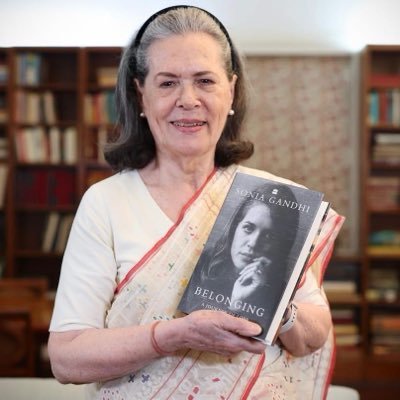
In an interview with The Guardian ahead of her memoir’s release, Sonia Ganhi recalled how Rajiv Gandhi had urged Indira Gandhi against imposing the Emergency, while Sanjay pushed for a tougher response.
BY PC Bureau
November 7: Nearly five decades after the Emergency, Sonia Gandhi has offered a fresh account of the family divisions that preceded one of the darkest chapters in India’s democratic history. In an interview with The Guardian ahead of the release of her memoir, Belonging: A Journey of Love, the Congress leader described the decision to impose the Emergency as a “mistake” and said much of the damage could have been avoided had Sanjay Gandhi been kept “in check”.
Sonia said her mother-in-law, former Prime Minister Indira Gandhi, was never comfortable with the Emergency. “I know that many would laugh at this, but I believe she was never comfortable in the course of the Emergency. I think it was sitting heavy on her,” she told the newspaper. She maintained that Indira was “a democrat at heart”.
This is not the first time Sonia has spoken about the period. In a 2016 interview with Rajdeep Sardesai, she had said Indira felt uncomfortable with the Emergency, citing her decision to call elections in 1977 as evidence. Her latest remarks provide a more detailed account of the disagreements within the family over the decision.
STORY | It was done constitutionally: Sonia weighs in on Emergency, says Rajiv had ‘different’ point of view
Weighing in on the Emergency, Congress Parliamentary Party chairperson Sonia Gandhi has said democratic rights had been curtailed but it was done constitutionally, and when she sees from Indira Gandhi’s point of view, the then prime minister was struggling to cope with the rapidly deteriorating prevailing circumstances including widespread organised unrest.
In an interview published in The Hindu on Saturday ahead of the launch of her book, ‘Belonging: A Journey of Love’, Gandhi also said that hindsight allows people to put things better in perspective and pointed out that Indira Gandhi herself later publicly expressed regret and apologised for excesses during the Emergency.
Asked about Sanjay Gandhi’s name becoming synonymous with the Emergency, and whether the excesses of that time could have been avoided had Indira Gandhi listened to her elder son Rajiv and to others, Sonia Gandhi said, “It was not only Sanjay, though in the public mind he is often seen as synonymous with the Emergency. There was a lot of pressure from some of her senior colleagues, and I think there were very few people around her like Rajiv who had a different point of view.”
“I think eventually my mother-in-law began to understand the situation through her own wisdom and took actions to remedy it,” she said.
READ: https://t.co/MaDo9Eo9w0
— Press Trust of India (@PTI_News) November 7, 2026
The Emergency was imposed in June 1975 and continued until March 1977. It followed widespread political protests and the Allahabad High Court verdict that invalidated Indira Gandhi’s election from Rae Bareli. During the period, civil liberties were curtailed, opposition leaders were jailed and press censorship was imposed.
According to Sonia, the decision divided the family. Her husband, Rajiv Gandhi, advised his mother to wait for the next election, while his younger brother Sanjay pressed for the Emergency. Although Sanjay held no formal government position, he wielded considerable influence and became one of the most powerful figures in the country during the period.
READ: Faridabad: 15 Bullets — Tech Executive Shot Dead Over Parking Row
Sonia recalled that the final push came from Sanjay during a family dinner. Referring to the opposition, he reportedly told Indira: “They must be stopped.” Rajiv attempted to challenge his mother’s decision, but she did not heed his advice.
“Keeping Sanjay in check could have prevented much of the damage that followed,” Sonia writes in her memoir, according to The Guardian.
In a separate interview with The Hindu, Sonia said pressure to impose the Emergency had also come from some senior Congress leaders. “There was a lot of pressure from some of her senior colleagues… There were very few people around her, like Rajiv, who had a different point of view,” she said.
Sanjay Gandhi exercised considerable behind-the-scenes authority during the Emergency. He was associated with controversial initiatives, including the forced sterilisation campaign carried out under the population-control programme and aggressive slum-clearance drives in parts of Old Delhi.
Sonia told The Hindu that Indira eventually recognised the excesses and took steps to address them. “Eventually my mother-in-law began to understand the situation through her own wisdom and took actions to remedy it,” she said.
Sonia added that she fully understood the scale of what had happened only after the Emergency ended. Referring to the curtailment of democratic rights and the suspension of habeas corpus, she said these measures had been carried out constitutionally.
Her memoir, Belonging: A Journey of Love, traces her early years in Italy, her marriage to Rajiv Gandhi and her subsequent journey in Indian public life. The book is scheduled for release on November 10.