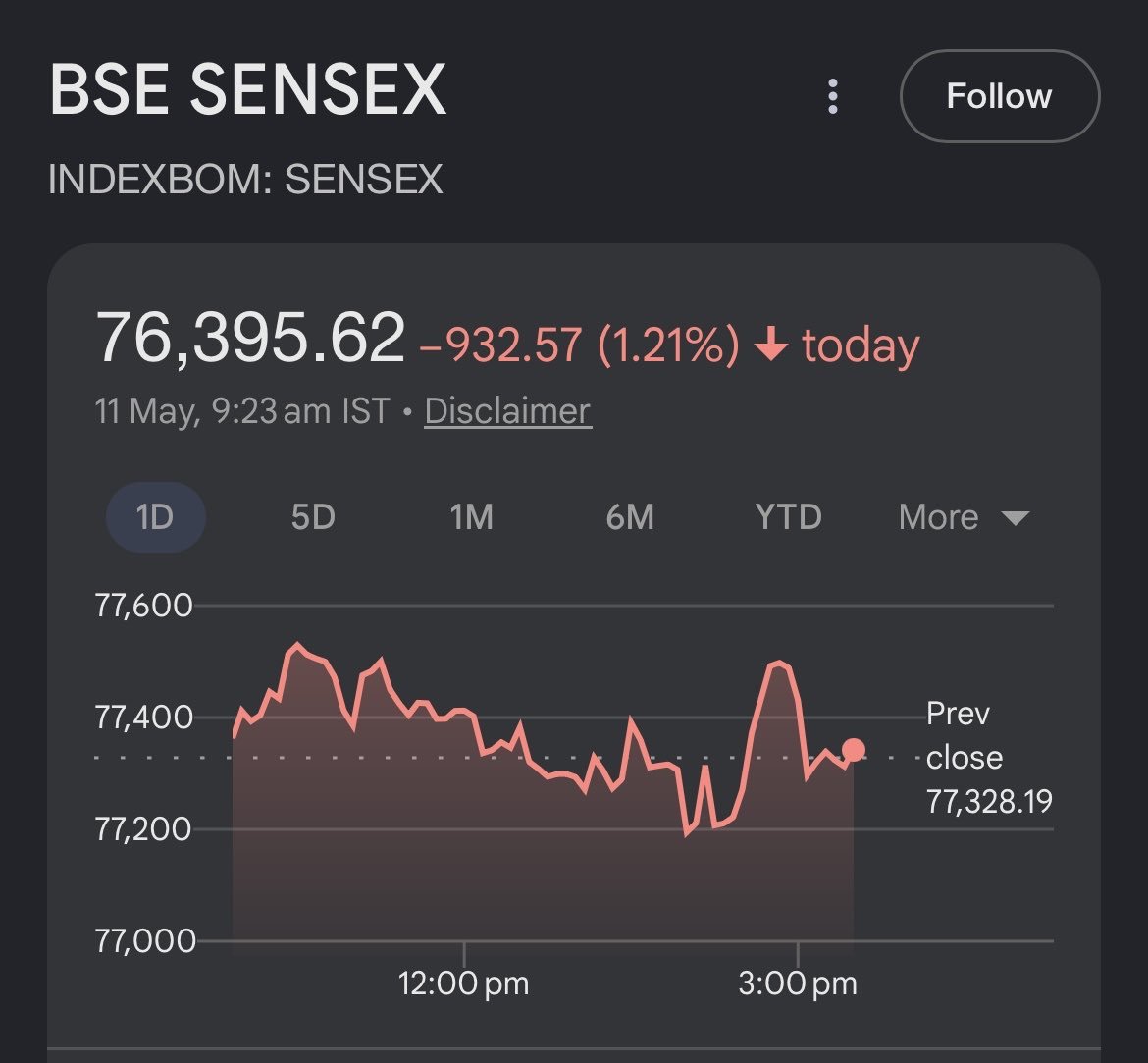
Rising tensions in the Middle East pushed Brent crude above $105 per barrel, dragging Sensex and Nifty deep into the red amid worries over inflation and economic slowdown.
BY PC Bureau
May 11: Indian stock markets opened sharply lower on Monday after a fresh escalation in tensions between the United States and Iran sent global crude oil prices soaring, deepening concerns over inflation and economic stability.
The selloff followed US President Donald Trump’s outright rejection of Iran’s latest proposal for ending the nearly 10-week-long conflict in the Middle East — a war that has severely disrupted shipping through the strategically critical Strait of Hormuz.
Trump, posting on his Truth Social platform on Sunday, described Tehran’s response as “TOTALLY UNACCEPTABLE” and accused Iran of attempting to manipulate negotiations while continuing to threaten regional stability.
Iran’s counterproposal reportedly included demands for war reparations, the lifting of naval restrictions, and recognition of Iranian sovereignty over the Strait of Hormuz — terms Washington refused to consider.
The collapse of hopes for an immediate diplomatic breakthrough rattled global markets, particularly energy traders already worried about prolonged supply disruptions in one of the world’s most important oil transit corridors.
READ: “We’ll Never Bow”: Iran Defies Trump’s Warning
Crude Oil Surges
Brent crude prices climbed more than 3 percent in early Asian trading, rising to around $105 per barrel, while US benchmark West Texas Intermediate (WTI) approached the $99 mark.
The latest spike added to gains recorded last week and intensified fears that the ongoing conflict could tighten global energy supplies further if shipping disruptions continue.
For India — the world’s third-largest importer of crude oil — higher energy prices pose a major economic challenge. Rising oil costs could fuel inflation, widen the current account deficit, weaken the rupee, and squeeze profit margins across sectors heavily dependent on fuel and transportation.
Markets Under Pressure
Reflecting the nervous sentiment, benchmark equity indices witnessed broad-based selling at the opening bell.
The BSE Sensex plunged more than 800 points in early trade, slipping below the 76,500 mark, while the Nifty 50 fell nearly 300 points to trade below 24,000.
Pre-market indicators had already signalled weakness, with GIFT Nifty pointing to a steep gap-down opening.
Heavy selling pressure was seen in oil & gas, automobile, banking, logistics, and consumer-focused stocks, as investors braced for the broader economic fallout of sustained high crude prices.
However, some defensive sectors, particularly IT and select export-oriented stocks, showed relative resilience amid expectations that a weaker rupee could support overseas earnings.
Midcap and smallcap indices also traded in negative territory, indicating widespread risk aversion across the market.
Rupee Weakens, FIIs Continue Selling
The Indian rupee also came under pressure, opening nearly 40 paise weaker against the US dollar as surging crude prices raised concerns about India’s import bill.
Foreign Institutional Investors (FIIs), who have already been net sellers in recent sessions, continued to weigh on sentiment as global uncertainty pushed investors toward safer assets.
Volatility Likely To Continue
Market analysts warned that volatility could remain elevated in the coming days as investors closely monitor developments in the Middle East.
Much will depend on whether Washington and Tehran resume negotiations, the possibility of further military escalation, and any intervention by OPEC+ producers to stabilize oil markets.
Analysts believe key support for Nifty lies near the 23,800–24,000 zone, while resistance remains around 24,300–24,500.
The ongoing crisis has once again highlighted India’s vulnerability to global energy shocks and the deep link between geopolitical tensions and financial market stability.
Investors are expected to closely track developments around the Strait of Hormuz, fresh statements from US and Iranian officials, movements in global crude prices, and the impact on corporate earnings in oil-sensitive sectors.