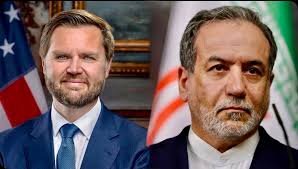
Iran has taken a firm stance against further negotiations for now, condemning the US action as a provocative breach of trust. Officials in Tehran have pointed to longstanding mistrust of Washington.
BY PC Bureau
April 20, 2026: Fresh uncertainty has gripped efforts to preserve the fragile US-Iran ceasefire as an American delegation is heading to Pakistan for possible negotiations, while Tehran says it currently has no plans for a new round of talks following the US seizure of an Iranian-flagged cargo ship near the Strait of Hormuz.
US President Donald Trump said an American team, reportedly led by Vice President JD Vance, is en route to Islamabad for talks aimed at salvaging diplomacy before the ceasefire expires. Pakistan has tightened security in the capital ahead of the possible negotiations, locking down parts of Islamabad and deploying around 20,000 security personnel amid heightened regional tensions.
But Tehran has signaled a hardening stance after the US interception of the Iranian vessel, which it has condemned as a provocation and a breach of the ceasefire framework. Iran’s Foreign Ministry said there is, for now, no plan for another round of talks, while President Masoud Pezeshkian pointed to “deep historical mistrust” toward Washington and warned that coercion would not force Iranian concessions.
READ: Rahul Gandhi Attacks BJP Over Manipur Unrest, Calls Situation a ‘Civil War’
Vice President JD Vance and the US delegation will land in Pakistan within hours, President Trump just told me — adding that he was willing to meet with senior Iranian leaders if a breakthrough is reached. https://t.co/AoYYJBBjJW
— Caitlin Doornbos (@CaitlinDoornbos) April 20, 2026
The seizure of the cargo ship has injected new volatility into the already fragile diplomatic track. The vessel was reportedly intercepted after Washington said it attempted to breach the US naval blockade linked to pressure on Iranian ports. Tehran has threatened retaliation, while the incident has fueled fears of renewed confrontation in the Gulf and sent jitters through global energy markets.
Meanwhile, the 10-day ceasefire between Israel and Lebanon continues to hold, with thousands of displaced residents returning to southern Lebanon even as diplomats race to prevent wider regional spillover. The coming days are now seen as critical, with the Islamabad channel potentially representing one of the last opportunities to keep the US-Iran truce from collapsing.
Why the Strait of Hormuz Matters: The Strait of Hormuz is one of the world’s most strategic maritime chokepoints, carrying roughly a fifth of global oil shipments. Any disruption there — whether through naval blockades, ship seizures, or military escalation — can rapidly drive up oil prices, disrupt global trade, and raise the risk of a broader regional conflict. That is why the latest seizure has become central to both the diplomatic crisis and the military tensions now unfolding.