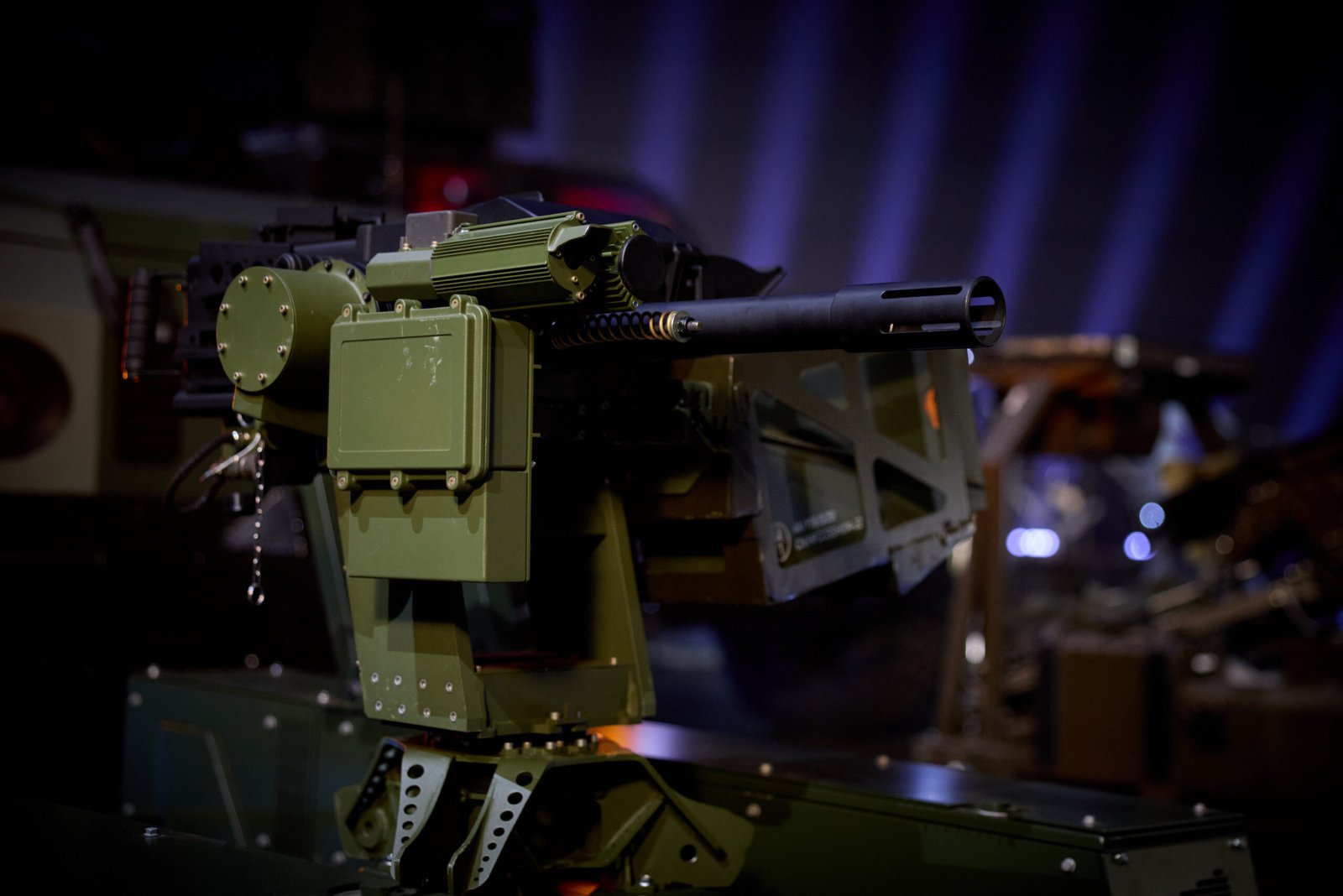
Ukrainian officials say the shift is driven by manpower shortages and increasingly deadly battlefields, with robots now handling logistics, evacuations, engineering work and even combat missions.
BY PC Bureau
April 20, 2026: In a striking evolution of modern warfare, Ukraine is rapidly expanding the use of unmanned ground vehicles (UGVs), deploying robots to take over some of the most dangerous frontline tasks once performed by soldiers in the war against Russia.
Driven by manpower shortages and increasingly lethal battlefields dominated by drones, artillery and precision strikes, Ukrainian forces are using remotely operated ground robots for logistics, casualty evacuation, engineering missions and, in some cases, direct combat assaults. Military commanders say the shift is not experimental but increasingly essential. As one Ukrainian commander put it bluntly: “Robots don’t bleed.”
UKRAINE SAYS ROBOTS ARE NOW ACCEPTING RUSSIAN SURRENDERS
Zelenskyy claims Ukrainian ground robots and drones overran a Russian position without humans present.
Earlier incidents showed Russian soldiers surrendering to drones and robots in similar situations.
Ukraine says… pic.twitter.com/iIckm47mSz
— NewsForce (@Newsforce) April 17, 2026
READ: US Team Heads to Pakistan, Iran Refuses Talks over Hormuz
President Volodymyr Zelenskyy recently said robotic systems had saved lives more than 22,000 times in the past three months by entering dangerous zones instead of troops. Ukrainian officials say the goal is not simply to supplement soldiers but to reduce human exposure in areas now considered near-suicidal for infantry movement.
The scale of deployment has grown sharply. Ukrainian forces reportedly carried out more than 21,500 ground robot missions in the first quarter of 2026, with March alone accounting for over 9,000 operations. The number of military units integrating UGVs has nearly tripled in recent months, while Kyiv plans to procure 25,000 additional systems in the first half of this year, with officials pushing toward a goal of fully robotic frontline logistics.
The robots are now performing a wide range of missions — delivering ammunition and supplies, evacuating wounded troops, clearing mines, laying obstacles, conducting reconnaissance, and carrying weapons systems or explosives for combat operations. In some contested sectors, commanders say robots are already handling the vast majority of logistics tasks.
Some of the most dramatic uses have come in combat. Armed UGVs equipped with machine guns or explosives have been used to defend positions, support assaults and strike enemy targets. In one widely cited operation, Ukrainian forces reportedly used a combination of ground robots and drones to seize a Russian-held position without deploying infantry into direct combat.
UKRAINE SAYS ROBOTS ARE NOW ACCEPTING RUSSIAN SURRENDERS
Zelenskyy claims Ukrainian ground robots and drones overran a Russian position without humans present.
Earlier incidents showed Russian soldiers surrendering to drones and robots in similar situations.
Ukraine says… pic.twitter.com/iIckm47mSz
— NewsForce (@Newsforce) April 17, 2026
Military leaders say the technology is also a strategic answer to Russia’s numerical advantage in troops. Rather than matching manpower, Ukraine is seeking to offset battlefield disadvantages through automation and mass deployment of relatively low-cost robotic systems, supported by a rapidly expanding domestic defense industry.
The rise of ground robots is also reshaping the character of warfare itself. With open terrain increasingly turned into drone-monitored “kill zones,” smaller and expendable machines are operating where soldiers often cannot survive. Analysts say the conflict is becoming a testing ground for a new era of semi-robotic warfare, where machines do far more than support troops — they increasingly fight alongside them, and sometimes in their place.
Even so, Ukrainian officials insist humans remain in control of critical decisions, particularly in combat operations. But with thousands more UGVs expected to reach the battlefield this year, Ukraine’s robotic push is increasingly being seen not as a futuristic concept, but as a central part of how modern war is being fought.