As high-level trade talks continue in New Delhi, Trump has declared that years of perceived trade imbalance have been reversed, with American businesses now benefiting significantly from expanded access to the Indian market.
BY PC Bureau
June 5, 2026: President Donald Trump has declared that the United States is now “making a lot of money with India,” signaling what he described as a dramatic turnaround in one of Washington’s most closely watched trade relationships. Speaking about ongoing negotiations with New Delhi, Trump expressed confidence that a long-awaited bilateral trade agreement is nearing completion, saying the deal is in its “final stages.”
The remarks come at a crucial moment for US-India relations, as both countries seek to deepen economic ties despite disagreements over tariffs, market access, and emerging trade barriers. According to Trump, years of what he viewed as an unfair trade imbalance have given way to a more favorable arrangement for American businesses.
“For years, India took advantage of the United States,” Trump said. “They charged us tremendous tariffs and paid virtually nothing. Now it is the exact reverse — and we are making a lot of money with India.”
President Trump: “For years, India took advantage of the United States… They charged us tremendous tariffs and paid nothing… Now it is the exact reverse and we are making a lot of money with India.” pic.twitter.com/pY3DZCbp5z
— Insider Paper (@TheInsiderPaper) June 4, 2026
A Shift in Trade Dynamics
Trump’s comments reflect a long-standing American complaint regarding India’s historically high tariffs on imported goods. Successive US administrations have criticized barriers affecting sectors ranging from agriculture and automobiles to consumer electronics and motorcycles.
During his earlier presidency, Trump frequently targeted India over its tariff regime, at one point referring to the country as the “tariff king.” However, he now argues that sustained negotiations and changes in trade practices have significantly improved the position of American exporters.
The United States has witnessed growing exports to India in strategic sectors such as energy, defense equipment, technology, aviation, and agricultural products. Increased purchases of American crude oil, natural gas, military hardware, and advanced technology have helped expand bilateral trade, which has crossed the $200-billion mark in recent years.
For the Trump administration, the evolving relationship represents a broader effort to secure better market access for American companies while reducing trade deficits with key partners.
READ: Fresh Violence Rocks Manipur; Three Kuki Civilians Killed, Village Torched
Trump’s Rapport With Modi
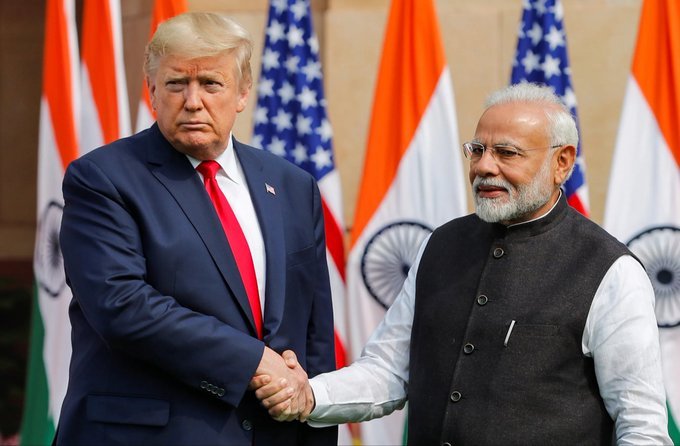
A major factor behind the positive outlook, Trump suggested, is his personal relationship with Prime Minister Narendra Modi.
“We will get to a deal because I like your Prime Minister a lot. He is a good friend of mine, and we get along well. We have a good relationship,” Trump said.
The two leaders have cultivated a close political relationship over the years, marked by high-profile public events, frequent diplomatic engagement, and strong cooperation on strategic issues. From the “Howdy Modi” event in Houston to the “Namaste Trump” rally in Ahmedabad, both leaders have repeatedly emphasized the importance of the US-India partnership.
Analysts believe this personal chemistry has helped maintain momentum in bilateral relations even during periods of trade friction.
Trade Talks Enter Final Stretch
Trump’s optimistic comments coincide with intensive negotiations between the two countries. A high-level US trade delegation visited New Delhi from June 2 to June 4 for discussions aimed at resolving outstanding issues and advancing a bilateral trade agreement.
The talks are taking place against the backdrop of a proposed additional 12.5 percent tariff on certain Indian exports to the United States. Washington has linked the measure to broader concerns over imports allegedly connected to forced labor practices, a policy that affects multiple countries beyond India.
Despite these tensions, officials on both sides remain engaged in efforts to finalize either a comprehensive trade pact or an interim agreement covering critical areas such as market access, digital trade, intellectual property rights, investment facilitation, and supply-chain resilience.
Concerns Within India
Not everyone in India shares the same enthusiasm regarding the ongoing negotiations.
Several former diplomats and trade experts have cautioned against rushing into an agreement while tariff threats remain on the table. Critics argue that New Delhi must carefully protect sensitive sectors and avoid concessions that could undermine domestic industries.
Agricultural imports, dairy products, data localization requirements, digital regulations, and India’s globally significant generic pharmaceutical sector remain among the most contentious issues.
Many policymakers also stress the need to ensure that any agreement aligns with India’s broader economic priorities, including the government’s Atmanirbhar Bharat initiative aimed at strengthening domestic manufacturing and reducing strategic dependencies.
Strategic Partnership Remains Strong
Beyond trade, the United States and India continue to cooperate across a wide range of strategic areas.
The two countries have expanded defense collaboration, strengthened technology partnerships through initiatives such as the Initiative on Critical and Emerging Technology (iCET), and worked closely through forums such as the Quad alongside Japan and Australia.
Shared concerns over regional security, supply-chain diversification, and China’s growing influence in the Indo-Pacific have further reinforced the partnership.
While disagreements persist, both governments view the relationship as one of the most important strategic partnerships of the twenty-first century.
Trump’s latest remarks suggest growing confidence that economic differences can be resolved without undermining the broader relationship. A successful trade agreement would not only boost commerce between the world’s largest and most populous democracies but could also reshape supply chains, expand investment opportunities, and create new avenues for cooperation in technology, defense, and energy.
As negotiations enter what Trump describes as the final phase, both Washington and New Delhi appear eager to secure an agreement that can be presented as a win-win outcome—one that strengthens economic ties while advancing their shared strategic interests in an increasingly uncertain global environment.