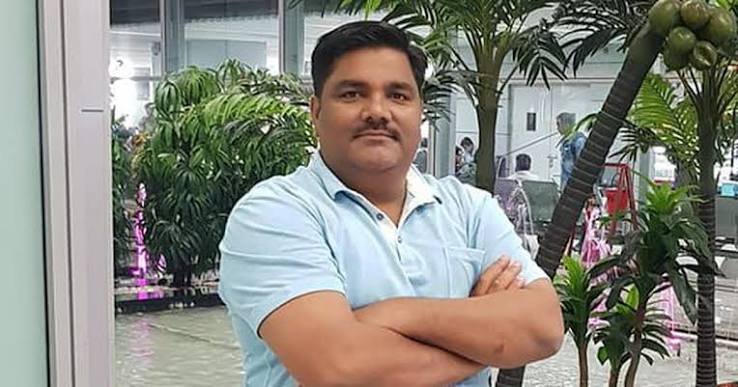
The court found Hussain guilty as part of an unlawful assembly that abducted and fatally assaulted Ankit Sharma, whose body bearing 51 injuries was recovered from a drain during the 2020 riots.
BY PC Bureau
New Delhi: A Delhi court on Friday sentenced former Aam Aadmi Party (AAP) councillor Tahir Hussain and four others to life imprisonment for the brutal murder of Intelligence Bureau (IB) staffer Ankit Sharma during the 2020 northeast Delhi riots, holding that while the crime was exceptionally gruesome, it did not fall within the “rarest of rare” category warranting the death penalty.
Additional Sessions Judge Praveen Singh of the Karkardooma Courts sentenced Hussain, Nazim, Kasim, Javed and Anas to imprisonment for the remainder of their natural lives for offences including murder, kidnapping, rioting and promoting communal enmity. The court also imposed fines on the convicts and directed that the compensation be paid to the victim’s family in accordance with law.
Rejecting the Delhi Police’s plea for capital punishment, the court observed that although the murder was “nauseating, sickening and brutal,” the possibility of reform and rehabilitation of the convicts could not be ruled out. The judge held that the prosecution had failed to establish that the case met the stringent legal threshold required for awarding the death sentence.
“The brutality of the offence alone cannot justify capital punishment unless the alternative option of life imprisonment is unquestionably foreclosed,” the court observed while declining to invoke the “rarest of rare” doctrine.
The five convicts had earlier been found guilty under several provisions of the Indian Penal Code, including Section 302 (murder) read with Section 149 (offence committed by an unlawful assembly), Section 365 (kidnapping), Sections 147 and 148 (rioting and rioting with deadly weapons), Section 153A (promoting enmity between communities), and Section 188 (disobedience of a public servant’s order). Six other accused were acquitted after the court held that the prosecution had failed to prove their involvement beyond reasonable doubt.
Court’s Findings
In its detailed judgment delivered earlier this month, the court held that Hussain was part of an armed unlawful assembly that gathered near Chand Bagh Pulia on February 25, 2020, with the common object of attacking members of the Hindu community during the communal violence that engulfed northeast Delhi.
The court found that the mob intercepted 26-year-old Intelligence Bureau Security Assistant Ankit Sharma, forcibly dragged him towards Chand Bagh Pulia, abducted him and subjected him to what the judge described as a “savage and relentless assault” before dumping his body in a nearby drain.
The judgment noted that Sharma suffered 51 external injuries, including 18 caused by sharp-edged weapons, indicating extreme brutality.
While the court did not conclude that Tahir Hussain personally inflicted the fatal blows, it held him criminally liable under Section 149 IPC, ruling that every member of the unlawful assembly shared responsibility for offences committed in furtherance of its common object.
According to the court, Hussain played a significant role in mobilising and instigating the mob that carried out the attack.
However, the court acquitted Hussain of the charge of criminal conspiracy under Section 120B IPC, observing that although there were suspicious circumstances—including damaged CCTV cameras and evidence suggesting prior preparation—the prosecution had failed to establish the conspiracy charge beyond reasonable doubt.
Prosecution vs Defence
During the sentencing hearing, Special Public Prosecutor Madhukar Pandey urged the court to award the death penalty, describing the killing as “heinous, barbaric and cold-blooded.”
The prosecution argued that Sharma was tortured with exceptional cruelty, assaulted even after he had succumbed to his injuries, and that his nearly unclothed body reflected the inhumanity of the attack. It contended that the offence shocked the collective conscience of society and therefore qualified as a “rarest of rare” case.
The defence opposed the plea, arguing that Hussain had not been proven to have personally inflicted the fatal injuries. Senior advocate Rajiv Mohan, appearing for Hussain, submitted that several co-accused had been acquitted, the prosecution had failed to prove conspiracy, and the court should consider mitigating circumstances, including Hussain’s conduct during incarceration and the possibility of reformation.
After considering socio-economic reports, jail conduct records and submissions from both sides, the court concluded that life imprisonment would meet the ends of justice.
The Murder of Ankit Sharma
Ankit Sharma, who served as a Security Assistant with the Intelligence Bureau and lived in Khajuri Khas, went missing on the evening of February 25, 2020, when communal riots erupted across northeast Delhi during protests against the Citizenship (Amendment) Act.
His body was recovered the following day from a drain near Chand Bagh Pulia.
The FIR was lodged by Sharma’s father, Ravinder Kumar, who accused Tahir Hussain and members of the mob of abducting and murdering his son.
READ: CJP Hits Out at FIR Against Ruchika, Alleges Misuse of Law
Political Background
The 2020 northeast Delhi riots claimed 53 lives and left hundreds injured while causing widespread destruction of homes, businesses and places of worship.
Tahir Hussain, then an AAP councillor from Nehru Vihar ward, was suspended by the party after his name surfaced in connection with the riots. He later joined the All India Majlis-e-Ittehadul Muslimeen (AIMIM) and contested the 2025 Delhi Assembly elections.
Apart from the Ankit Sharma murder case, Hussain also faces proceedings under the Unlawful Activities (Prevention) Act (UAPA) in the larger conspiracy case related to the Delhi riots, as well as a money laundering investigation by the Enforcement Directorate.
The conviction is widely regarded as one of the most significant verdicts arising from the 2020 Delhi riots, as dozens of other riot-related cases—including several murder prosecutions—are still pending before various courts. The life sentence brings to a close one of the most closely watched trials stemming from the communal violence that scarred the national capital more than six years ago.