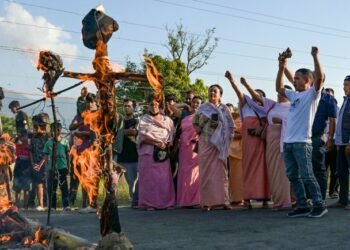
The Imphal West SP’s claims of petrol bombs, catapults and drug use among some protesters have intensified scrutiny of the ongoing Meira Paibi-led agitation.
BY PC Bureau
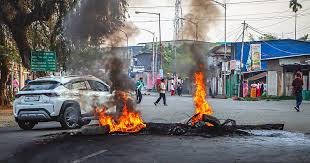
April 19, 2026: In a startling disclosure that could intensify the debate over the ongoing Meira Paibi-led agitation, Imphal West Superintendent of Police Ksh. Shivakanta Singh has alleged that many protesters involved in recent night rallies attacked security forces using petrol bombs, catapults fitted with iron projectiles, and stones. He said many protesters were under the influence of drugs and alcohol.
The disclosure marks a significant escalation in the official narrative surrounding the Meira Paibi protests, which have largely been projected as women-led torch rallies demanding justice over the April 7 Tronglaobi attack that killed two children. The Meira Paibis — literally “women torch-bearers” — have historically been regarded as a powerful grassroots women’s movement in Manipur, known for social vigilance, human rights activism, and political mobilisation. The police allegations, if substantiated, raise serious questions about whether anti-social or organised elements may have infiltrated or exploited the movement.
“Over the past few days, several Meira rallies have been taking place in different parts of the city. However, in multiple instances, anti-social elements posing as protesters have engaged in violent activities,” the SP said, alleging the use of petrol bombs, slingshot-like catapults armed with iron projectiles, and coordinated stone-pelting targeting security personnel. He further claimed that “many participants in these rallies were found to be under the influence of liquor or other intoxicants,” and alleged that certain instigators had been supplying petrol or kerosene bombs and other improvised weapons ahead of the gatherings.
READ: Shutdown Season in Manipur: After Meiteis, It’s the Turn of Nagas and Zomis
According to the SP, crude incendiary devices lit up the night sky in parts of Imphal during clashes, while security forces exercised “maximum restraint” in dispersing crowds despite repeated attacks. He warned of strict legal action against both those involved in violence and those instigating it.
Those who loudly moralize about drugs are now being exposed for the very behavior they condemn. Imphal West SP confirms many of the Meitei protestors came prepared with weapons, was drunk and high on drugs and attacked security forces. pic.twitter.com/NaAUWW0zW4
— Araambhai (dissolved) (@araambhaixposed) April 19, 2026
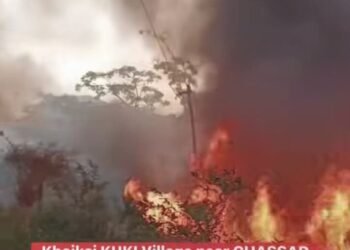
The allegations come against the backdrop of Manipur’s prolonged ethnic conflict, in which tensions among Meitei, Kuki-Zo and Naga groups have repeatedly flared into violence, blockades, shutdowns and competing mobilisations. The present unrest has seen multiple parallel protest movements intensify simultaneously across the state.
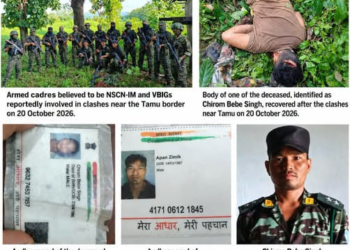
Compounding the crisis, the United Naga Council (UNC), along with allied Naga bodies, has announced a three-day total bandh across all Naga-inhabited areas from midnight of April 20 to midnight of April 23 following the killing of two Naga civilians in an ambush near T.M. Kasom in Ukhrul district. Naga organisations have also announced candlelight vigils and temporary suspension of social and economic ties with Kuki communities during the mourning period.
Meanwhile, Meira Paibis continue a seven-day shutdown that began April 17, while Zomi groups have called a separate bandh in Churachandpur on April 22 over the Vungzagin Valte case. Together, the overlapping shutdowns have pushed large parts of Manipur towards paralysis, with transport disrupted, markets shut and public anxiety mounting.
The SP’s disclosure — particularly the allegation that some protesters were intoxicated and armed with improvised incendiary devices — is likely to trigger sharp political and social reactions, especially given the historic stature of the Meira Paibi movement in Manipur’s civil society. It also raises broader questions over whether spontaneous public anger is being manipulated by more organised or political forces, a suspicion that has increasingly surfaced as unrest deepens.
Security forces remain on high alert as authorities appeal for restraint, even as they vow strict action against those indulging in or instigating violence.