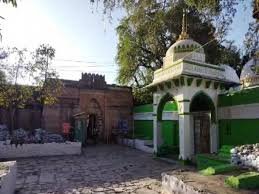
The court struck down the 2003 ASI arrangement that allowed Muslims to offer Friday prayers while restricting Hindu worship rights. The verdict relied heavily on the ASI’s scientific survey, which found evidence of a pre-existing Paramara-era temple structure linked to Raja Bhoj.
BY PC Bureau
Indore/New Delhi: In a landmark verdict delivered on May 15, 2026, the Madhya Pradesh High Court declared the disputed Bhojshala Temple–Kamal Maula Mosque complex in Dhar district a temple dedicated to Goddess Saraswati (Vagdevi), quashing the 2003 arrangement of the Archaeological Survey of India (ASI) that had permitted Muslims to offer Friday prayers at the site.
A division bench comprising Justices Vijay Kumar Shukla and Alok Awasthi held that the religious character of the disputed structure was that of Bhojshala — an ancient centre of Sanskrit learning and a temple associated with the 11th-century Paramara ruler Raja Bhoj.
The court observed that historical records, inscriptions, architectural features, and evidence of continuous Hindu worship established the site’s identity as a Saraswati temple.
VIDEO | Indore: Madhya Pradesh High Court declares disputed area of Bhojshala Complex a temple.
Advocate Vishnu Shankar Jain said, “Today, a very historic judgment has been delivered by the Indore Bench of the Madhya Pradesh High Court. I would like to point out that after the… pic.twitter.com/KPu3LwlbZU
— Press Trust of India (@PTI_News) May 15, 2026
The bench struck down the relevant portions of the ASI’s 2003 administrative order that restricted Hindu worship while allowing namaz on Fridays. However, it clarified that the ASI would continue to retain complete authority over the preservation, conservation, and management of the protected monument under the Ancient Monuments and Archaeological Sites and Remains Act, 1958.
The court also urged the Muslim community to approach the Madhya Pradesh government for the allotment of suitable alternative land in Dhar district for the construction of a mosque or prayer facility. It directed the state to consider such requests in accordance with law to ensure “complete justice.”
Key Observations of the Court
The High Court recorded that Bhojshala historically functioned as a Sanskrit learning centre and temple of Goddess Saraswati during the Paramara dynasty period.
The bench relied on historical literature, inscriptions, archaeological findings, and the ASI’s scientific survey to conclude that the original structure predated later Islamic additions.
The court further directed the Central government and the ASI to take appropriate decisions regarding the future administration and management of the Bhojshala temple and Sanskrit learning centre.
In another significant observation, the bench asked the government to consider efforts for the repatriation of the ancient idol of Goddess Saraswati — believed to have originally been installed by Raja Bhoj and currently housed in the British Museum in London.
ASI Survey Findings
The judgment heavily referenced the ASI’s scientific survey conducted in 2024 following High Court directions.
The ASI carried out a 98-day survey beginning March 22, 2024, and later submitted a detailed report exceeding 2,000 pages. According to the findings, a large pre-existing structure from the Paramara period existed beneath or before the present mosque complex.
The report stated that several components of the current structure appeared to incorporate reused temple materials, including intricately carved pillars, sculptures, architectural fragments, inscriptions in Sanskrit and Prakrit, lotus motifs, deity carvings, and other iconographic features commonly associated with Hindu temple architecture.
The ASI also reportedly identified evidence of a grand educational and religious complex linked to the reign of Raja Bhoj, the celebrated Paramara king known for promoting Sanskrit scholarship, architecture, philosophy, and learning in central India during the 11th century.
READ: Poll Over, Petrol, Diesel, CNG Prices Rise
The Bhojshala complex, protected by the ASI since 1904, has long remained a subject of dispute between Hindu and Muslim groups.
Hindus revere the site as a temple and centre of learning established by Raja Bhoj between 1010 and 1055 AD in honour of Goddess Saraswati, the deity of knowledge and wisdom.
Muslim groups, however, have maintained that the structure has functioned as the Kamal Maula Mosque for centuries and that namaz has historically been offered there.
Under the ASI’s 2003 arrangement, Hindus were permitted to worship on Tuesdays, while Muslims were allowed to offer Friday prayers.
The legal challenge intensified after Hindu petitioners sought exclusive worship rights and questioned the legality of the 2003 arrangement. Meanwhile, Muslim parties contested the ASI survey findings, alleging bias and disputing the interpretation of archaeological evidence.
After extensive hearings spanning several weeks, the High Court reserved its verdict on May 12, 2026, before delivering the judgment on Friday.
The verdict is expected to be welcomed by Hindu organisations as recognition of the site’s historical and religious identity, while several Muslim bodies have indicated that they are likely to challenge the ruling before the Supreme Court.
Heavy security deployment has been made in Dhar district and surrounding areas as authorities monitor the law-and-order situation.
The judgment is likely to add to broader national debates surrounding contested religious heritage sites in India, with the court emphasising both archaeological preservation and adjudication of religious claims based on historical evidence.