BY PC Bureau
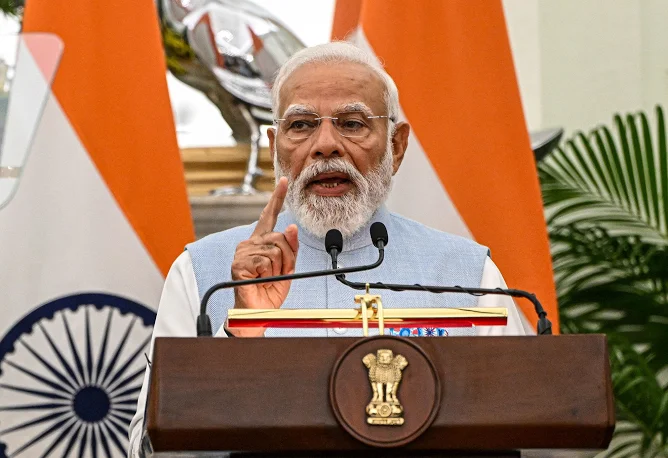
New Delhi, July 24, 2026: Prime Minister Narendra Modi on Friday thanked young people across the country for what he described as their overwhelming response to his late-night video message on examination paper leaks, saying their feedback and suggestions had further strengthened his bond with the nation’s youth.
In a fresh video message posted on social media, the Prime Minister expressed gratitude to students who had engaged with his appeal.
“Thank you, friends. Last night, I got an opportunity to connect with you. The way you responded to the video I had posted and gave positive suggestions, thanks to everybody. Your love will continue, and our relationship will become even stronger. Thank you, thank you, friends,” Modi said.
The message came hours after the Prime Minister released an unusual late-night video at 11:52 pm on Thursday, directly addressing students amid nationwide protests over alleged examination irregularities, including the NEET-UG paper leak controversy.
In the nearly three-minute address, Modi described paper leaks as a “grave sin” that had shattered the aspirations of lakhs of students and caused immense distress to their families. Acknowledging the anger among young aspirants, he said the government was committed to ensuring that such incidents never recur.
The Prime Minister announced that the Union Cabinet would consider a draft legislation aimed at establishing fast-track courts for paper leak cases and introducing stricter punishments for those involved in leaking examination papers or manipulating recruitment examinations.
He said the government would make every effort to secure Parliament’s approval for the proposed law during the ongoing Monsoon Session, describing the legislation as a crucial step towards restoring confidence in India’s examination and recruitment system.
Modi also said that after allegations of irregularities in the NEET-UG examination surfaced, the government’s immediate priority was to ensure that students did not lose an academic year. He pointed to the decision to conduct a re-examination for affected candidates and said agencies had been instructed to expedite investigations and prosecute those responsible.
The Prime Minister noted that multiple arrests had already been made in connection with the alleged paper leak network and assured students that every individual involved—from masterminds to intermediaries—would face strict legal action.
Prime Minister Narendra Modi thanked young people for their overwhelming response to his late-night video message, saying their positive suggestions had strengthened his bond with the nation’s youth.
VIDEO | PM Modi (@narendramodi) shares a video message on his Instagram handle.
“Thanks to the youngsters who watched my video yesterday and sent insightful suggestions,” he said in the post.
Watch Video: pic.twitter.com/H7i6VVMAoY
— Press Trust of India (@PTI_News) July 24, 2026
Proposed Draft Law
According to government sources, the proposed legislation is expected to include several stringent provisions to deter examination fraud and speed up prosecution. These include:
Establishment of special fast-track courts for paper leak and examination fraud cases.
Time-bound investigation and trial to ensure swift justice.
Enhanced punishment, including longer prison terms and higher monetary penalties, for those involved in paper leaks, organised cheating and recruitment scams.
Stronger legal provisions against organised criminal syndicates involved in examination fraud.
Measures to improve coordination between investigating agencies, examination bodies and state governments.
The proposed law is expected to complement the existing Public Examinations (Prevention of Unfair Means) Act, while strengthening enforcement mechanisms and ensuring faster disposal of cases.
Background: NEET-UG Paper Leak Controversy
The controversy erupted after allegations of question paper leaks and irregularities in the NEET-UG 2026 examination, one of India’s largest entrance tests for undergraduate medical admissions. The allegations triggered widespread protests by students demanding accountability, cancellation of compromised examinations, reforms in the National Testing Agency (NTA), and action against those responsible.
The issue has since snowballed into a nationwide movement, with student organisations holding demonstrations across several states and staging prolonged protests at Delhi’s Jantar Mantar. Opposition parties have also intensified their attack on the government, accusing it of failing to safeguard the integrity of competitive examinations.
The Centre has maintained that while isolated criminal networks attempted to compromise the examination process, it acted swiftly by ordering investigations, arresting suspects and conducting re-examinations where necessary. The government has also reiterated its commitment to strengthening the examination system to ensure transparency and fairness for millions of students.
With Parliament currently in session, the proposed anti-paper leak legislation is expected to become one of the government’s key legislative priorities in the coming days.
READ: MEA Says No Info on Foreign Funding, Blow to CJP Smear Campaign