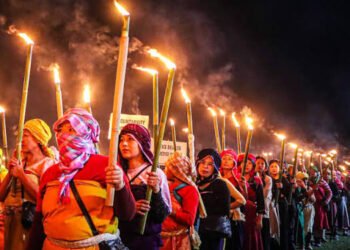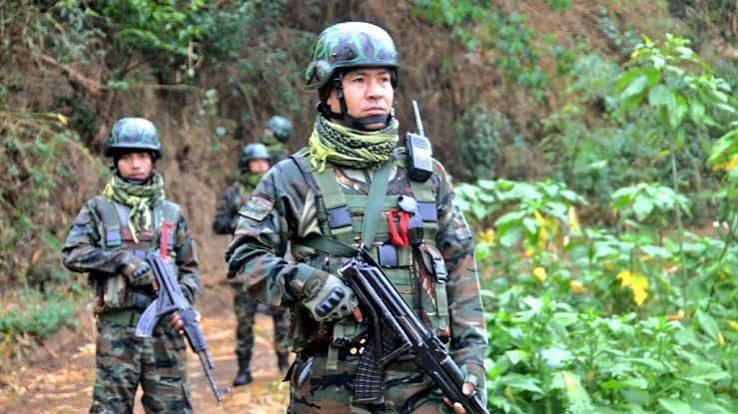
The NSCN (I-M) linked its allegations to the unresolved political dialogue with New Delhi, accusing the Centre of applying “double standards” by advocating dialogue internationally while pursuing a different approach in Manipur.
BY PC Bureau
September 14: The National Socialist Council of Nagalim (Isak-Muivah) has accused the Government of India of using Kuki armed groups as “proxy forces” against Naga communities in Manipur, linking the allegation to what it described as New Delhi’s failure to pursue a genuine political solution to the Naga issue.
In a statement issued by its Ministry of Information and Publicity from Camp Hebron, the NSCN (IM) alleged that the Centre was supporting and arming the Kuki National Army and coordinating with KNA (B) across the Myanmar border to “destabilise the region” and weaken Naga political resistance.
The NSCN (IM) alleged that these moves were stoking ethnic conflict in order to weaken and suppress the Naga political movement.
The allegations echo comments made earlier this year by NSCN (IM) general secretary Thuingaleng Muivah, who accused India of using Kuki groups against the Nagas.
Kuki-Zo groups have all along rejected the NSCN (IM)’s similar narratives and have themselves accused the Naga outfit of attempting to turn the wider Manipur conflict into a Naga-Kuki confrontation.
Kuki groups have also alleged that security forces have increased pressure on camps operated under the Suspension of Operations agreement while NSCN (IM) camps in Manipur have faced comparatively less scrutiny.
The competing allegations have added another layer to Manipur’s already complex conflict, which began as a Meitei-Kuki-Zo confrontation but has increasingly involved questions concerning Naga areas, armed groups and competing territorial claims.
NSCN-IM links Manipur to Naga peace process
The statement came against the backdrop of the 18th BRICS Summit in New Delhi, where the government endorsed language calling for dialogue, diplomacy and peaceful resolution of conflicts.
The NSCN (IM) said the Centre was applying “double standards” by advocating such principles internationally while, in its view, pursuing a different approach in Manipur and the Naga political negotiations.
It urged New Delhi to “end colonialism in ALL its forms—including your own.”
At the heart of the NSCN (IM)’s criticism is its long-running disagreement with New Delhi over the political status of Naga-inhabited areas.
The group signed the Framework Agreement with the Centre in August 2015 after years of negotiations following the 1997 ceasefire. The NSCN (IM) has maintained that the agreement recognised the “unique history” and political identity of the Nagas.
However, no final settlement has been reached.
One of the most contentious issues is the NSCN (IM)’s demand for an arrangement covering Naga-inhabited areas beyond present-day Nagaland, including parts of Manipur.
The Centre has consistently maintained that the Naga ceasefire does not imply acceptance of territorial claims beyond Nagaland.
The NSCN (IM)’s latest statement suggests that the Manipur conflict is increasingly being viewed by the group through the larger lens of the unfinished Naga political settlement.