

Rahul Gandhi has warned that expanding the Lok Sabha to 850 seats could undermine democracy, but MK Stalin has reaffirmed the DMK support for the revised proposal.
BY PC Bureau
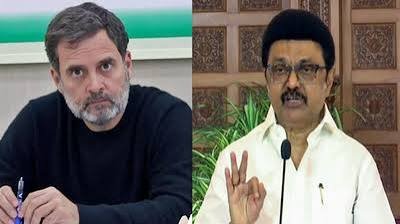
NEW DELHI, November 29: A last-minute attempt by the Congress to prevent the DMK from backing the Centre’s revised Delimitation Bill has exposed a widening gap within the INDIA bloc. Leader of Opposition Rahul Gandhi has made a direct appeal to Tamil Nadu Chief Minister M.K. Stalin, invoking their political relationship and warning that the proposed expansion of the Lok Sabha to 850 seats could undermine Indian democracy. Stalin, however, has thanked him while making it clear that the DMK will stand by its decision.
In a post on X, Gandhi described Stalin as a leader who had consistently resisted forces hostile to Tamil Nadu and urged him to join the Congress in defeating the legislation.
“An expansion to 850 seats will finish democracy in India. It will give BJP-RSS unlimited space to redraw India’s entire electoral map to their advantage. Brother Stalin has always stood like a rock against anti-Tamil forces. In the national interest, in Tamil Nadu’s interest and to protect the Constitution, we have to defeat this bill together,” Gandhi wrote.
He also confirmed that senior INDIA bloc leaders were travelling to Chennai to persuade the DMK to withdraw its support for the proposed constitutional amendment.
Senior leaders of the INDIA bloc and I are going to Chennai to meet Thiru @mkstalin and request him and the DMK to oppose the delimitation Constitutional amendment bills.
An expansion to 850 seats will finish democracy in India. It will give BJP-RSS unlimited space to redraw India’s entire electoral map to their advantage.
Brother Stalin has always stood like a rock against anti-Tamil forces. In the national interest, in Tamil Nadu’s interest and to protect the Constitution, we have to defeat this bill together.
— Rahul Gandhi (@RahulGandhi) November 29, 2026
Stalin responded warmly to Gandhi’s remarks but gave no indication of changing his party’s position. Thanking the Congress leader for recognising the DMK’s role in defending the Constitution and the rights of states, he said the party would continue to put Tamil Nadu’s interests first.
READ: Sonia Gandhi’s Political Return to the Forefront: The Delimitation Factor
“We have always made every decision keeping the interests of Tamil Nadu and our Tamil people as the foremost consideration. We will not compromise on this path and I’m confident that history will judge us as Kattabommans and not Ettappans,” Stalin said.
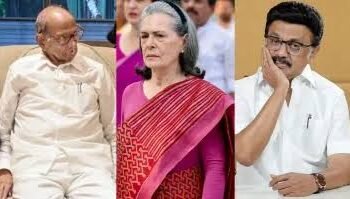
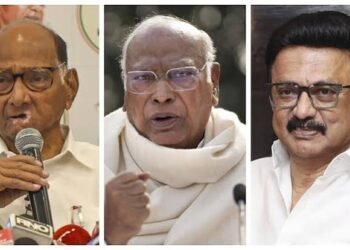
The exchange came ahead of a high-level Congress-led delegation’s meetings with regional Opposition leaders. Rahul Gandhi, Congress president Mallikarjun Kharge and Sonia Gandhi are scheduled to meet Stalin in Chennai between 2 pm and 5 pm. The delegation will then travel to Mumbai for an 8 pm meeting with NCP (SP) chief Sharad Pawar.
Senior leaders of the INDIA bloc and I are going to Chennai to meet Thiru @mkstalin and request him and the DMK to oppose the delimitation Constitutional amendment bills.
An expansion to 850 seats will finish democracy in India. It will give BJP-RSS unlimited space to redraw India’s entire electoral map to their advantage.
Brother Stalin has always stood like a rock against anti-Tamil forces. In the national interest, in Tamil Nadu’s interest and to protect the Constitution, we have to defeat this bill together.
— Rahul Gandhi (@RahulGandhi) November 29, 2026
Telangana Chief Minister Revanth Reddy, Karnataka Deputy Chief Minister D.K. Shivakumar, Trinamool Congress leaders Mamata Banerjee and Abhishek Banerjee, and representatives of the RJD and Samajwadi Party are also expected to participate in the outreach.
The Congress is seeking to prevent the DMK and NCP (SP) from backing the revised proposals, arguing that the legislation could have far-reaching consequences for federal representation and the balance of political power among states. The DMK and NCP (SP), however, have indicated that they are prepared to support the new draft after securing assurances from the Centre.
The Samajwadi Party has issued a three-line whip to its Lok Sabha MPs ahead of the special parliamentary sitting scheduled from November 30 to December 3.
What the revised proposal says
The Union Cabinet cleared the revised delimitation-linked legislation on Friday. The proposal seeks to increase the strength of the Lok Sabha from 543 to a maximum of 850 seats through a uniform 50 per cent increase across states.
It also proposes to freeze the state-wise share of parliamentary seats on the basis of the 1971 Census until 2051, while using the 2011 Census for redrawing constituency boundaries.
The legislation is intended to facilitate the implementation of 33 per cent reservation for women in the Lok Sabha and state Assemblies before the 2029 general elections.
Why the DMK changed its position
The DMK has backed the revised draft after securing assurances on two key demands: that Tamil Nadu’s existing share of Lok Sabha seats, approximately 7.18 per cent, would not be reduced and that the state-wise proportion of representation based on the 1971 Census would be retained.
Stalin has described the revised proposal as “feasible in practice and beneficial to us”. DMK leader A. Raja has said Tamil Nadu’s share would marginally increase from 7.18 per cent to 7.21 per cent under the proposed arrangement.
The party’s position marks a sharp departure from its opposition to the earlier version of the legislation. In April, Stalin had raised a black flag and burnt a copy of the bill, calling it a “black law” that could turn Tamils into “refugees” in their own land.
The NCP (SP), which has eight Lok Sabha MPs, has also signalled support for the revised proposal. The DMK has 22 MPs in the Lok Sabha.
The parliamentary numbers
The NDA is estimated to have around 320 MPs in the Lok Sabha, including the BJP’s 241 members and those of its allies. Support from the DMK and NCP (SP) would add another 30 MPs to the potential vote in favour of the legislation, taking the tally to around 350.
That would strengthen the government’s position but would still leave it short of the two-thirds majority required for a constitutional amendment, depending on the strength of the House and the number of members present and voting.
The Congress’s challenge, therefore, is twofold: to build a common Opposition position on a bill it considers consequential for India’s federal structure, and to prevent regional allies from pursuing their own negotiated arrangements with the Centre. Gandhi’s appeal to Stalin shows how urgently the party wants to avoid a split before the special parliamentary sitting.