The transfer of severely wounded patients from one of Manipur’s premier medical institutions under public pressure has intensified concerns over how deepening ethnic divisions are beginning to penetrate spaces traditionally considered beyond the reach of communal conflict.
BY PC Bureau
June 17, 2026: In scenes that many fear represent a disturbing collapse of the principle that hospitals remain sanctuaries above conflict, three young Kuki-Zo men with severe gunshot wounds were removed from the Regional Institute of Medical Sciences (RIMS), Imphal, shortly after midnight on Wednesday under heavy security, following days of mounting protests and threats by Meitei and Naga groups demanding their transfer.
The injured youths were reportedly shifted to Churachandpur, a Kuki-Zo-majority district. The midnight transfer came after protesters warned they would storm the hospital if the patients were not removed.
Some of the patients were battling life-threatening injuries when they were wheeled out of hospital wards and into waiting vehicles at around 12:15 a.m. as authorities sought to defuse the volatile situation outside the state’s premier medical institution. It was an extraordinary and chilling development in which critically wounded patients receiving emergency medical care became the focus of ethnic and political confrontation.
READ: Without Naming US, Modi Raises Indian Seafarers Death at G7
The episode has prompted grave concerns over whether the neutrality of healthcare can survive amid Manipur’s deepening ethnic divisions.
The injured youths — Genlenmang Vaiphei (18), Paogoulal Chongloi (18), and Lunliandan Vaiphei (20) — had been admitted to RIMS after sustaining gunshot wounds in an incident near Leilon Vaiphei village in Kangpokpi district on June 15. The transfer was carried out in coordination with the state government and hospital administration under heavy security escort.
3 injured Kuki patients undergoing treatment at #RIMS, #Imphal,were shifted out of the hospital around 12:15AM on June 17 under tight security following sustained public protests & demands from civil society groups. Authorities have not disclosed their destination#Manipur #Kuki pic.twitter.com/F8sqh3XvCA
— The Northeast Post (@thenepost) June 17, 2026
According to medical sources, all three sustained serious injuries. Genlenmang Vaiphei suffered a gunshot wound to the right shoulder, with the bullet exiting through the lower chest. Paogoulal Chongloi, reportedly the most critically injured, sustained a gunshot wound that traversed the left side of his chest and lower abdomen, causing severe internal injuries. Lunliandan Vaiphei suffered gunshot wounds to his left buttock and right forearm.
The youths initially received emergency treatment before being referred to RIMS for specialised care.
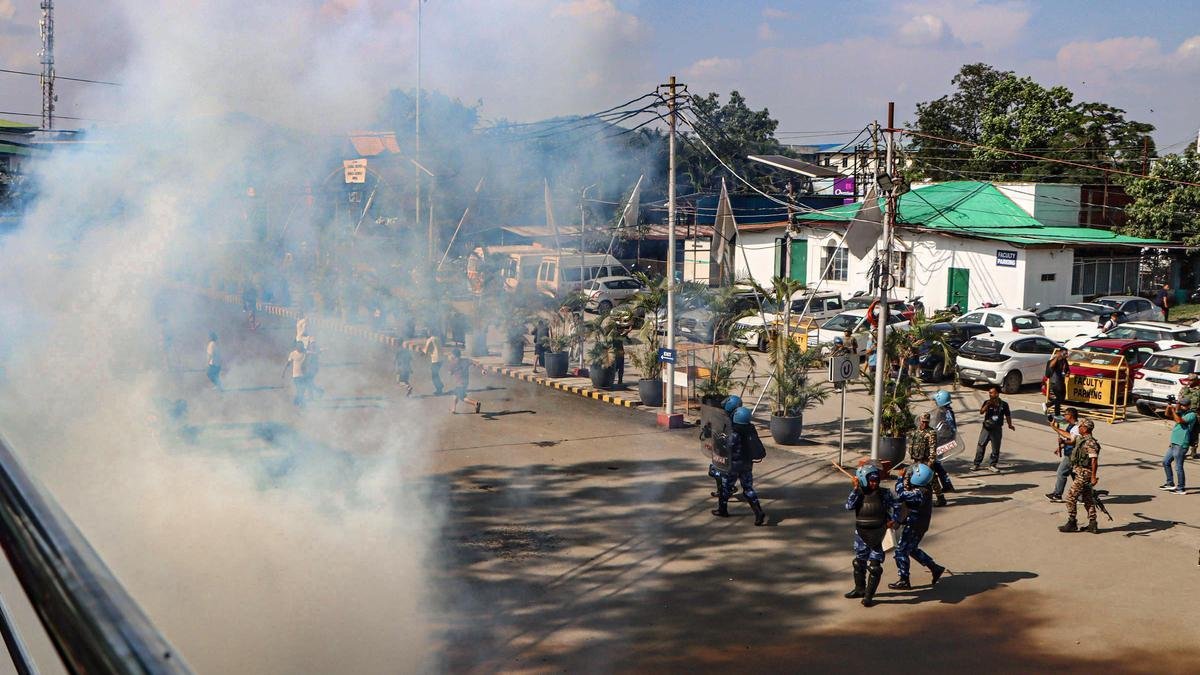
Protests erupted soon after their admission, with demonstrators from Meitei and Naga communities questioning the identities and alleged affiliations of the injured men. Protesters claimed the patients were militants injured during intra-group clashes rather than civilians and demanded greater transparency from the authorities. Security personnel deployed at RIMS used tear gas on multiple occasions to disperse crowds attempting to breach the hospital compound.
Members of the Kuki-Zo community have strongly rejected the allegations, maintaining that the three are civilians. Community representatives said that one of the injured youths was a promising footballer who had been visiting his village when the shooting occurred.
The well-orchestrated protest followed the recent killing of six Naga civilians, whose bodies remain at the Jawaharlal Nehru Institute of Medical Sciences (JNIMS) mortuary. Protesters have criticised the authorities over the absence of arrests despite claims that witnesses had identified those responsible.
When the injured were first brought to RIMS, Imphal, Chief Minister Yumnam Khemchand Singh reportedly assured protest leaders that the patients would be shifted soon from there. Demonstrations resumed on Tuesday after the transfer did not take place as expected, continuing until the midnight operation was completed.
Neither the state government nor hospital authorities have issued a detailed statement explaining the transfer or addressing the broader concerns raised by protesters.
The episode highlights the continuing strain of ethnic tensions in Manipur involving Meitei, Kuki-Zo and Naga communities. Despite repeated assurances from healthcare institutions that medical treatment should remain impartial and accessible to all, the relocation of the injured youths underscores how the state’s ongoing conflict has begun to erode even the most fundamental humanitarian norms governing emergency healthcare.
No immediate update has been released regarding the current medical condition of the three