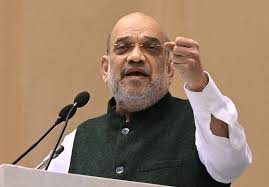
Amit Shah said the new framework will avoid purely population-based redistribution, aiming to address concerns of southern states over fairness.
BY PC Bureau
New Delhi, April 16, 2026 — Union Home Minister Amit Shah on Thursday defended the government’s proposed delimitation exercise and expansion of Lok Sabha seats, assuring that no state—particularly in southern India—will lose representation or influence in Parliament.
Speaking in the Lok Sabha during a special session convened to discuss the implementation of the 33% women’s reservation, Shah addressed concerns raised by opposition parties and southern leaders about the potential impact of delimitation on regional balance.
He said the government’s plan envisages a significant increase in the total number of Lok Sabha seats—from the current 543 to an estimated 815–850, including Union Territories. According to Shah, all states will see their seat count rise by roughly 50%, ensuring that their existing proportional share remains intact.
Reassuring southern states, Shah emphasised that those which have successfully controlled population growth will not be penalised. Instead, they will see an increase in absolute seat numbers without any reduction in their relative standing. He stressed that the proposed framework is designed to maintain fairness and avoid fuelling north-south tensions.
वर्तमान में कर्नाटक राज्य का लोकसभा में 543 सदस्यीय सदन में 28 सीटों का प्रतिनिधित्व है, जो कुल संख्या का लगभग 5.15 प्रतिशत है।
यह विधेयक पारित होने और उसके बाद संविधान में संशोधन के उपरांत कर्नाटक की सीटों की संख्या 28 से बढ़कर 42 हो जाएगी। नई 816 सदस्यीय लोकसभा में कर्नाटक का… pic.twitter.com/WdxTRVPBzQ
— SansadTV (@sansad_tv) April 16, 2026
READ: Priyanka Gandhi questions linking women’s quota to delimitation
READ: Modi Assures No Bias in Women’s Reservation, Delimitation
The Home Minister also underlined that seat allocation would follow a pro-rata approach, preserving current proportions rather than relying solely on population-based redistribution that could disproportionately favour high-growth northern states.
Responding to opposition demands, Shah confirmed that caste enumeration would be conducted alongside the next population census, expected in 2027. However, he reiterated that reservation on the basis of religion is unconstitutional and will not be permitted.
The government has introduced a set of key legislative measures to operationalise these changes. These include the Union Territories Laws (Amendment) Bill, 2026, along with the Constitution (131st Amendment) Bill, 2026 and the Delimitation Bill, 2026, moved by Law Minister Arjun Ram Meghwal. The proposals aim to establish a new Delimitation Commission and update laws governing Union Territories such as Delhi, Puducherry, and Jammu & Kashmir, paving the way for implementing women’s reservation from the 2029 elections.
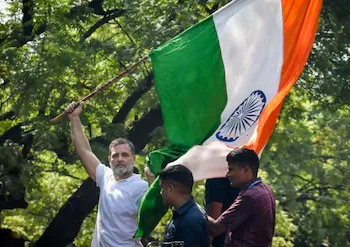
The announcement sparked sharp exchanges in Parliament, with opposition leaders—including those from the Congress and southern parties like the DMK—raising concerns that even with an increase in seats, the relative share of southern states could decline. Protests were also held outside Parliament, with leaders such as M. K. Stalin warning of potential injustice to the region.
Shah dismissed the criticism as politically motivated, accusing the opposition of raising “technical excuses” to stall reforms. He reiterated that the government is committed to both women’s empowerment and maintaining the federal balance, citing assurances from Prime Minister Narendra Modi on fairness.
Delimitation in India has been frozen since 1976, based on the 1971 Census, to encourage population control measures. The government argues that a fresh delimitation—alongside an expanded Lok Sabha—is essential to implement the Women’s Reservation framework while ensuring equitable representation across regions.
With voting on key provisions expected soon, the debate marks a significant moment in reshaping India’s electoral structure, balancing demographic realities with regional equity and political representation.