The Manipur Police has yet to arrest anyone in connection with the killing of three Baptist church leaders allegedly murdered by suspected Tangkhul Naga militants on May 13.
BY Navin Upadhyay
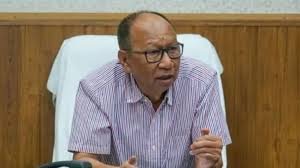
May 26, 2026: When Yumnam Khemchand Singh assumed office after the lifting of President’s Rule in Manipur, he attempted to project himself as a leader committed to healing the wounds of the ethnic conflict. The Chief Minister reached out to different sections of society and even initiated talks with the Kuki-Zo Council in Guwahati. For a brief period, it appeared that the new administration wanted reconciliation over confrontation.
But the present crisis, triggered by the brutal killing of three Baptist church leaders on May 13, has abruptly shattered that image. The government’s response since then has increasingly appeared selective, raising serious questions about whether the Chief Minister is more interested in appeasing the United Naga Council (UNC) than ensuring equal justice for all communities.
This is not the first such case. In the past too, whenever Nagas have been victims, the full might of the security forces was swiftly deployed against the Kukis, followed by arrests and probes. But when Kuki-Zo houses were burnt and their civilians killed, the administration largely looked the other way, with neither arrests nor major investigations following.
The renewed tensions between Tangkhul Nagas and Kuki-Zo groups escalated soon after Khemchand Singh took office, almost as though unseen forces were determined to prevent the new Chief Minister from stabilising his government. On multiple occasions, the state’s Home Minister, Govindas Kathoujam, publicly hinted at a larger conspiracy aimed at destabilising the state administration.
Against that backdrop came the shocking killing of the three Baptist church leaders — an incident widely blamed by Kuki-Zo groups on suspected Tangkhul Naga militants. The Home Minister again referred to the possibility of a conspiracy, and his remarks did not seem entirely unreasonable given the rapidly deteriorating security situation.
Following the abduction of six individuals on 13/05/2026 from Leilon Vaiphei in Kangpokpi district, series of operations were launched to trace the individuals and apprehend the accused involved in the incident.
In one such operation launched today i.e. on 25/05/2026, the joint… pic.twitter.com/axbUrESwCY— Manipur Police (@manipur_police) May 25, 2026
READ: KZC Appreciates Manipur CM, Seeks Dialogue With Govt It Once Accused Of Betrayal
READ: Four Kuki-Zo Village Volunteers Held for Abduction of Men from Naga Tribe
The killings were followed by reports of abductions involving civilians from both Naga and Kuki-Zo communities. Yet it is the state government’s response afterward that has exposed the deep imbalance in its approach.
Instead of first identifying and arresting those behind the murder of the church leaders — arguably the spark that intensified the present hostage crisis — the government swiftly moved against members of the Kuki-Zo community. Ironically, the Kuki-Zo community was the first victim in this cycle of violence, as the slain church leaders belonged to their community.
To date, the Manipur Police has not arrested a single individual in connection with the killing of the church leaders. Nor has the government ordered any major probe into allegations that at least 30 Kuki-Zo civilians were abducted by suspected Naga militants, with 14 reportedly still missing.
In sharp contrast, the alleged abduction of six Liangmei Naga civilians from Leilon Vaiphei in Kangpokpi district received immediate state attention. Following a meeting between the UNC delegation and the Chief Minister, the government promptly announced a probe by the National Investigation Agency (NIA). Within 24 hours, four Kuki-Zo men were arrested by joint security forces.
The arrested individuals — Thangkhomang Khongsai, Seikholet Khongsai, Lunminthang Dimngel, and Kamgoulal Khongsai — were detained during an operation conducted by the Manipur Police, the Central Reserve Police Force (CRPF), and the Assam Rifles in Kangpokpi district.
Security officials alleged that the four were linked to armed village volunteer groups and may have been involved in extortion, criminal intimidation, and illegal possession of arms. Their role in the alleged abduction case, officials said, would be determined during the investigation.
So first arrest them, and then establish their culpability later. Nothing could more clearly reflect an attempt to placate the United Naga Council, which had been demanding the arrest of Kuki-Zo suspects in the alleged kidnapping of Naga civilians.
The inevitable question is: why has no one been arrested in the killing of the church leaders or in the alleged abduction of Kuki-Zo civilians? After all, the Manipur Police was clearly not waiting for conclusive evidence before making arrests in the Naga abduction case.
Are there no suspected Naga militants, no Naga village volunteers, no possible Naga accused? Or is the state suggesting that no one killed the church leaders and no one abducted the Kuki-Zo civilians? Did the church leaders commit suicide, and did the missing civilians simply disappear on their own?
Such selective justice is not merely politically dangerous; it could also face legal scrutiny if affected families approach the courts seeking equal investigation standards.
What makes the situation even more troubling is the silence — or cautious positioning — of sections of the Kuki-Zo leadership. Despite repeatedly accusing the state government of betrayal in the past, many among the leadership now appear reluctant to directly challenge the administration over the unequal response.
Meanwhile, ordinary civilians and village volunteers continue to bear the consequences of a conflict increasingly shaped by political calculations, ethnic mobilisation, and competing narratives of victimhood.
The government may believe it is containing the crisis through selective accommodation. But in deeply fractured societies, justice perceived as unequal often deepens distrust rather than restoring peace.