While Kuki-Zo leaders appear to have surrenderd befiore the government on highway access after more than three years of disruption, four major Naga organisations have refused to dilute their position, citing security concerns after an alleged confrontation at Gamgiphai Gate.
BY PC Bureau
August 9, 2026: Efforts to reopen Manipur’s highways and restore unrestricted movement after more than three years of ethnic conflict appear to have exposed a sharp divide in the positions being taken by the Kuki-Zo and Naga communities.
While Kuki-Zo leaders and community organisations appear to have succumbed to pressure and lure of office ( in case of Deputy CM Nemcha Kipgen) and accepted arrangements aimed at restoring free movement along the state’s major highways, prominent Naga civil organisations in Senapati have made it clear that they are not prepared to compromise on what they regard as their community’s security and collective interests.
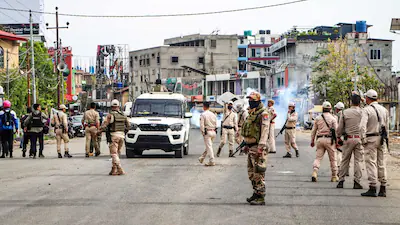
In a significant escalation, four major Naga organisations in Senapati district on Saturday announced an immediate restriction on the movement of Kuki individuals within the district, declaring that the measure would remain in force until further notice.
The decision came as the Manipur Government intensified efforts to reopen major road corridors and restore normal inter-district movement, including the resumption of passenger bus services between Imphal and Dimapur.
The contrasting positions underline the difficulty facing the state government’s attempt to bring Manipur back to normalcy after more than three years of ethnic violence. Any reopening of the highways requires cooperation among communities that remain deeply divided, while local organisations continue to exercise considerable influence over movement on the ground.
🌐OFFICE OF THE WORKING COMMITTEE
Ukhrul HeadquartersRef. No. ……………………
Date: …………………..PRESS COMMUNIQUÉ
The 8th of August 2026TNL WC WELCOMES CM’S DECLARATION FOR FREE MOVEMENT, REMAINS FIRM ON DEMANDS OF THE MANIPUR’S NAGAS
—The Chief Minister… https://t.co/gqXBI6U67l pic.twitter.com/5Y0clcTVZd
— CJP-NAGALIM (@CJPNAGALIMP4RTY) August 8, 2026
Nagas Refuse to Follow the Highway Opening
The restriction in Senapati was announced following an emergency consultative meeting held at the conference hall of the Naga People’s Organisation (NPO).
The resolution was endorsed by the Naga People’s Organisation, Tribe Hoho, Senapati District Women’s Association and Senapati District Students’ Association.
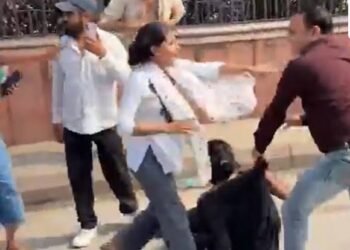
The organisations linked their decision to an incident on August 4 at Gamgiphai Gate, where, according to their joint statement, representatives of the NPO, SDWA, SDSA and an oversight supervisory committee were allegedly stopped by Kuki volunteers while attempting to pass through the area.
The Naga representatives said they had identified themselves and explained the purpose of their journey but were nevertheless prevented from proceeding.
For the Naga organisations, the incident went beyond a routine dispute over passage. They described the denial of movement as a threat to their collective safety and institutional dignity.
READ: Amid Manipur’s Normalcy Push, Kuki-Zo Leaders Mum on Political Demand
Their response was uncompromising.
They announced that the movement of Kuki individuals within Senapati district would be restricted with immediate effect and that the measure would continue until further notice.
The decision effectively signals that the Naga leadership in Senapati is unwilling to accept a return to unrestricted movement on terms that it believes could compromise the security or interests of the Naga population.
A Sharp Contrast With the Highway Opening
The development is particularly significant because it came on the same day that the state government stepped up efforts to reopen Manipur’s major transportation arteries.
Chief Minister Yumnam Khemchand Singh, accompanied by Deputy Chief Minister Nemcha Kipgen and Saitu MLA Haokholet Kipgen, visited Kangpokpi district headquarters on August 8 as part of the government’s initiative to restore normal movement.
The political leadership announced plans to remove blockades affecting major routes and facilitate the movement of people from different communities.
The government also announced steps towards restoring the Imphal-Dimapur passenger bus service, a move intended to signal a return to normal public transportation after years of disruption.
National Highway-2 and National Highway-37 are particularly important because they connect Manipur with neighbouring states and serve as lifelines for the movement of people, food, fuel and other essential commodities.
But the Senapati decision demonstrates that reopening the roads administratively is one thing; securing community acceptance of unrestricted movement is another.
Three Years of Blockades and Counter-Blockades
Since ethnic violence erupted in Manipur on May 3, 2023, the state’s road network has effectively become part of the conflict.
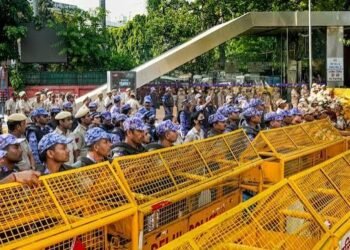
Checkpoints, blockades, community-controlled stretches of roads and counter-blockades have repeatedly disrupted movement between the valley and the hills. At different stages, security forces have had to deploy escorted convoys to ensure the passage of vehicles along vulnerable stretches.
The consequences have extended well beyond politics and security.
Commercial transportation has been disrupted, inter-district travel has become difficult and residents have frequently faced uncertainty over whether they could safely cross areas controlled or influenced by another community.
The highways have therefore acquired a significance far beyond their function as transportation routes. For competing communities, control over movement has also become a question of security, political influence and territorial confidence.
Kuki-Zo Accommodation, Naga Defiance
The latest developments point towards an emerging political contrast.
The Kuki-Zo leadership, faced with the broader demand for restoration of highway connectivity and mounting pressure for normal movement, appears to have moved towards accommodation on the issue of road access.
That accommodation, however, has not been matched by the Naga organisations in Senapati.
Instead, the Naga bodies have chosen to draw a clear line, making their latest restriction a demonstration that highway reopening cannot automatically be interpreted as a wider political settlement or as acceptance of the status quo by all communities.
For the Nagas, the Gamgiphai incident appears to have reinforced rather than weakened their determination to maintain their own safeguards and negotiating position.
Their message is essentially that normal movement cannot come at the cost of what they regard as their security and collective rights.
Government Faces a Delicate Balancing Act
The contrasting positions present the Khemchand Singh government with a difficult balancing act.
The administration wants the highways reopened, public transport restored and economic activity normalised. But any attempt to impose unrestricted movement without addressing the security concerns of local communities risks provoking fresh confrontation.
The challenge is particularly acute in areas where the authority of the state has competed with strong community institutions for control over movement and local security.
The government must therefore persuade communities that reopening the highways will not expose them to renewed violence while simultaneously preventing roads from becoming instruments of political or territorial control.
For ordinary residents, the stakes are immediate. Reliable highways mean access to markets, hospitals, schools, jobs and essential supplies. For the communities involved in the conflict, however, the same roads remain symbols of security and vulnerability.
The reopening of Manipur’s highways, could become an important first step towards restoring normal life, but the Senapati resolution is a reminder that physical connectivity cannot be separated from the unresolved political and security questions underlying the conflict.
The apparent willingness of Kuki-Zo leaders to facilitate the return of highway movement may help the state government reopen important corridors. This is also seen as first step towrads ending the Kuki-Zo-Meitei divide as both deputy chief minsiter Nemcha Kipgen and another Kuki-Zo MlA Haokholet Kipgen yesterday talked about forgetting the past and making a new beginning. But the Naga organisations’ decision shows that other communities are not necessarily willing to follow the same path without stronger assurances.
For the moment, therefore, Manipur’s highways may be moving towards reopening, but the political positions surrounding them remain sharply divided.
The message from Senapati is unmistakable: while one side appears increasingly willing to yield ground on unrestricted highway movement, the Nagas are signalling that they will not surrender their own position merely in the name of a return to normalcy.