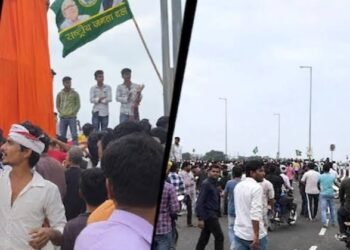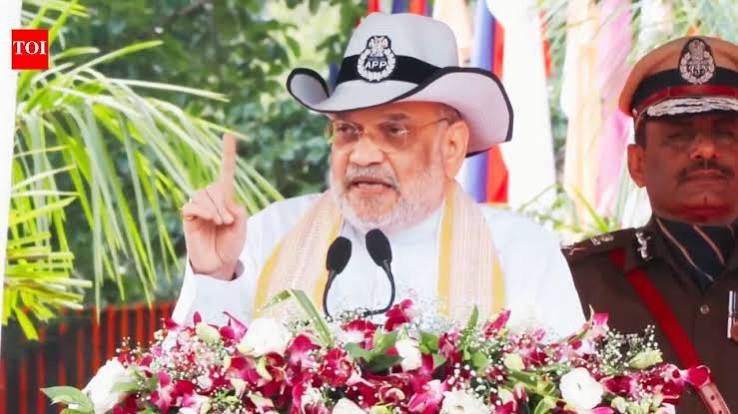
Visiting Arunachal Pradesh amid protests against the proposed 11,200-MW Siang project, Amit Shah acknowledged the apprehensions of communities in Siang and Upper Siang districts and promised to find a way forward through constructive engagement.
BY PC Bureau
NEW DELHI/ November 21 : Facing growing opposition to the proposed 11,200-MW Siang Upper Multipurpose Project in Arunachal Pradesh, Union Home Minister Amit Shah on Saturday sought to reassure residents that their cultural identity, religious beliefs and traditional way of life would not be compromised. He acknowledged local apprehensions about the ambitious project and called for dialogue to address them.
Shah, who is visiting the state amid protests by sections of the indigenous Adi community, said he was aware of the concerns among people in the Siang region and had come to hear them directly.
“I am aware of the sentiments and apprehensions of the people of the Siang region, and I have come to Arunachal Pradesh to address your concerns directly,” Shah said while addressing a gathering at the Police Training Centre in Banderdewa, near Itanagar.
Acknowledging that some of the concerns raised by residents were significant, Shah said the government understood the aspirations of local communities and would seek a solution through constructive engagement.
I appeal to the people of Siang to hear the Hon’ble Union Home Minister Shri @AmitShah Ji’s assurance directly and take note of what he has conveyed on the proposed Siang Upper Multipurpose Project (SUMP).
He has categorically assured that the Government of India is ready for positive and constructive dialogue with the people of Siang. He has made it clear that the project will move forward only through dialogue and after taking the people of Siang into confidence. He has also assured that the traditions, culture and religious beliefs of the local communities will be fully respected and protected.
— Pema Khandu པདྨ་མཁའ་འགྲོ་། (@PemaKhanduBJP) November 21, 2026
“I want to assure my brothers and sisters from Siang that we will find a way forward through positive dialogue… You need not worry about it. The government and I have the same respect you have for the local culture. We will move forward without compromising the traditions, culture and religion of this place,” Shah said.
In his first public remarks on the controversy surrounding the project, Shah urged residents to engage with the Arunachal Pradesh government and communicate their concerns to the Union Home Ministry through the state administration. His remarks appeared aimed at easing tensions over a project that has become a sensitive issue in the region.
READ: Hyderabad: Congress Protest at Meta Office Over Account Curbs
The proposed dam has faced resistance from sections of the Adi community, particularly residents of Siang and Upper Siang districts. Opponents fear that the project could submerge ancestral land and villages, displace communities and disrupt traditional livelihoods. They have also raised concerns about its ecological consequences and the possible loss of cultural and religious sites associated with the river and the surrounding landscape.
For many residents, the opposition goes beyond the immediate question of displacement. The Siang River and its surrounding territory are closely linked to the identity, customs and belief systems of indigenous communities. They fear that a project of this scale could permanently alter the region’s social and cultural fabric.
The Centre, however, views the project as important for India’s long-term energy and water security, as well as for its strategic interests in the eastern Himalayas. The government’s position is also shaped by China’s plans for a massive hydropower project on the upper reaches of the Yarlung Tsangpo River in Tibet. The river flows into India as the Siang before joining other rivers to form the Brahmaputra in Assam.
Amit Shah intervention comes against this backdrop of competing concerns: the Centre’s strategic and development priorities on one hand, and the apprehensions of communities whose lives and ancestral lands could be affected on the other.
About the Siang Upper Multipurpose Project
The proposed 11,200-MW Siang Upper Multipurpose Project is planned on the Siang River in Arunachal Pradesh. Apart from generating a substantial volume of hydroelectric power, the project is intended to help regulate river flows and strengthen India’s capacity to manage water resources.
It is also expected to bring investment, infrastructure development, employment and revenue to Arunachal Pradesh. Its strategic significance has grown in the context of China’s proposed hydropower development on the Yarlung Tsangpo, upstream of the Indian border.
However, the project’s scale and location have made it contentious. Concerns over land acquisition, displacement, environmental impact and the future of indigenous communities remain central to the debate. Shah’s assurance that development would not come at the cost of local traditions and religious beliefs is therefore an important political message, although residents’ concerns will ultimately depend on the details of the project’s implementation and the extent of consultation with affected communities.