The Kuki Chiefs association claimed the proposed border alignment would leave homes, farmlands and ancestral community lands of Indian citizens outside the planned Indo-Myanmar border fence.
BY PC Bureau
June 28, 2026: The Kuki Chiefs’ Association (KCA) has urged the Manipur government to immediately intervene against the proposed realignment of the Indo-Myanmar border in Chandel district, warning that the move could leave several indigenous Kuki villages, homes and farmlands outside Indian territory.
In a detailed representation addressed to Chief Minister Yumnam Khemchand Singh, the association ( Khengjoi block) opposed the proposed shifting of Boundary Pillars (BP) 65, 66 and 67 under the Centre’s ongoing border demarcation and fencing project. The KCA argued that the proposed alignment, based on the Ministry of External Affairs’ 2017 Boundary Proposal, ignores the long-established ground position and threatens to uproot Indian citizens living in frontier villages.
The letter, dated June 25, follows a directive issued after a meeting chaired by the Union Home Minister on May 11, asking the Surveyor General of India to complete the demarcation exercise within three months.
READ: Manipur: CoTU Sets 48-Hour Deadline To Clear Highway Blockades
Border fencing sparks fresh concerns
India has accelerated the construction of fencing along the 1,643-km Indo-Myanmar border to strengthen border security and regulate cross-border movement. While fencing work has progressed in several parts of Manipur, the project has drawn objections from indigenous communities in border districts, who fear that the proposed alignment could divide villages and deprive residents of ancestral lands.
The KCA said the proposed realignment in the Khengjoi sector departs from the existing ground position that has long been recognised by local communities and authorities.
Villages fear displacement
According to the association, the proposed relocation of Boundary Pillars 65, 66 and 67 would adversely affect several Kuki villages that have existed for generations.
The villages identified in the representation include Molcham and Khengjang near BP-65, Phaisenjang (Jangngoulen) near BP-66, and Khumkot near BP-67.
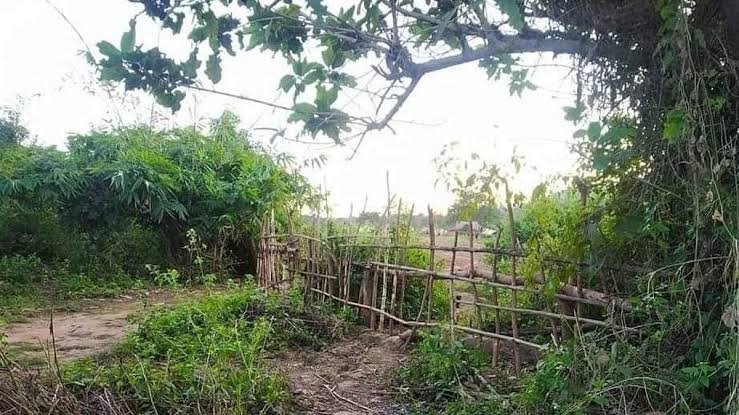
The association said the proposed boundary would place dwelling houses, agricultural fields, community lands and even burial grounds either directly on the international boundary or beyond the proposed fencing, effectively separating Indian citizens from their ancestral properties.
Describing the villages as the cultural and economic foundation of the Kuki-Zo community in the frontier region, the KCA warned that residents could become “refugees within or outside their own country” if the present proposal is implemented.
Association questions 2017 proposal
The KCA stated that an earlier proposal prepared in 1980 had reportedly accepted the existing ground position of the villages. However, it claimed that the changes introduced under the 2017 proposal were made without consulting the affected inhabitants despite their direct impact on traditional settlements and livelihoods.
The association argued that any border demarcation should reflect the realities on the ground rather than relying solely on administrative maps.
Demands placed before the government
The association has urged the Manipur government to immediately take up the matter with the Union Ministries of Home Affairs and External Affairs and seek a review of the proposed alignment affecting Boundary Pillars 65, 66 and 67.
Among its key demands are:
- A review of the proposed realignment in the Khengjoi sector.
- Border fencing strictly along the existing ground position to avoid displacing villages.
- A joint ground verification involving district officials, village authorities and the Kuki Chiefs’ Association before any pillar is shifted.
- Assurance that no village, residential house or agricultural land belonging to Indian citizens is left outside the proposed fence.
The KCA also said the border exercise should not be completed under an “artificial three-month timeline” without proper consultation with the affected indigenous communities.
While opposing the proposed realignment, the association reaffirmed its commitment to India’s territorial integrity and national security.
It said the Kuki people have historically lived along the international border and have contributed to safeguarding the frontier, adding that national security should not come at the cost of displacing the very communities that inhabit and protect these border areas.
The memorandum was signed by KCA Khengjoi Block Chairman T. Seithang Haokip and General Secretary Thangjamang Haokip.
Copies of the representation have also been submitted to the Governor of Manipur, the Chief Secretary, the Deputy Commissioner of Chandel district and the Director of the International Boundary Directorate under the Survey of India.
The appeal marks the latest pushback against the Centre’s border fencing programme in Manipur, where local communities continue to demand that security measures be implemented without compromising the land rights, livelihoods and identity of indigenous residents living along the Indo-Myanmar frontier.