Jamia Millia Islamia has set a timeline for restoring its students’ union, with elections expected in August 2027. The announcement follows an 18-day agitation demanding elected student representation after nearly two decades.
BY PC Bureau
New Delhi, October 29: Jamia Millia Islamia has agreed to restore its students’ union and set a timeline for elections, ending a prolonged campus standoff over the absence of an elected student body for nearly two decades. The university has also announced the withdrawal of disciplinary action against students linked to the agitation and urged protesters to call off their hunger strike and demonstrations.
Under the announced schedule, the constitution of the Jamia Millia Islamia Students’ Union (JMISU) will be approved and implemented by May 15, 2027. Elections will follow within six weeks of the new academic session beginning on July 16, placing the polls in August 2027.
The elections will be the first at the university since 2005. The union was dissolved in March 2006 following incidents of campus violence and disruptions to academic activities.
The administration has said show-cause notices, suspensions, rustications and campus bans related to the recent protests will be withdrawn. It has called on students to end their agitation in view of the commitments. Reports indicate that protesting students subsequently broke their hunger strike and welcomed the announcement.
Big Update from Jamia Millia Islamia:
Jamia Millia Islamia Administration orders completion of Students’ Union Constitution by May 15, 2027; elections to follow within six weeks of the academic session beginning July 16. Disciplinary actions and campus bans linked to the protest period to be revoked, as per the order.
However, the decision on whether to call off the protest and hunger strike will be taken collectively by the students after due deliberations.
#jamia #JamiaMilliaIslamia
@zoo_bear @RanaAyyub @ajitanjum @sardesairajdeep @Saurabh_Unmute
— Nasir Khuehami (ناصر کہویہامی) (@NasirKhuehami) October 29, 2026
Eighteen-day agitation forces a timeline
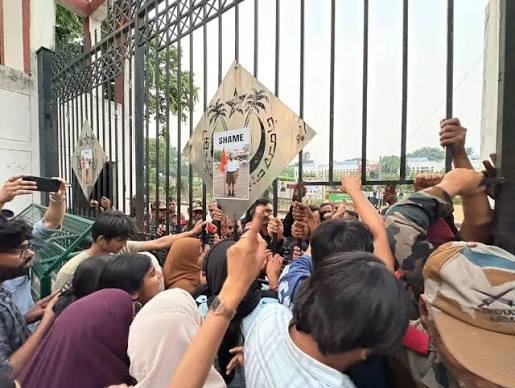
The latest decision follows an agitation that began around October 11–12, with Jamia students demanding restoration of the union, a definite election schedule and withdrawal of disciplinary action. Law student Ebin Basil was among those who joined an indefinite hunger strike.
Protesters argued that the absence of an elected union had deprived students of a formal platform to raise concerns over hostels, campus facilities, academic matters and other issues affecting university life.
The movement gained momentum after Aligarh Muslim University announced steps towards restoring its own student union elections. At Jamia, protesters gathered near the Gulistan-e-Ghalib lawns and the political science department as the dispute with the administration intensified.
The unrest led to increased security deployment, barricades and restrictions on gatherings. The Jamia university also shifted classes online amid the tensions, while its Foundation Day celebrations scheduled for October 29 were cancelled.
READ: Arunachal Media Guild Opposes Police Move Against Journalist
Jamia Committee tasked with drafting union constitution
On October 21, the university formed a committee headed by Professor Zubair Meenai, Dean of Social Sciences, to prepare a constitution for the students’ union.
The panel was asked to examine the circumstances surrounding the union’s dissolution in 2006, relevant court orders, university statutes and the Lyngdoh Committee guidelines governing student elections. It was also tasked with consulting stakeholders, including students, and preparing a draft by December 20, 2026.
An earlier order issued on October 26 had promised elections within 15 days of the constitution’s approval, withdrawal of protest-related disciplinary measures and an inquiry into the conduct of security personnel. However, the absence of a firm deadline for approving the constitution left protesters dissatisfied, and the agitation continued.
The October 29 announcement provides a clearer timetable for completing the constitution and holding elections, addressing a central demand of the students.
The administration has sought a return to normal academic activity, while the new schedule provides several months for drafting the constitution, consulting stakeholders and preparing for the election process.
The commitments mark a significant step towards restoring elected student representation at Jamia after nearly 20 years. Their implementation will now depend on the drafting committee’s work, approval of the constitution and adherence to the announced deadlines.