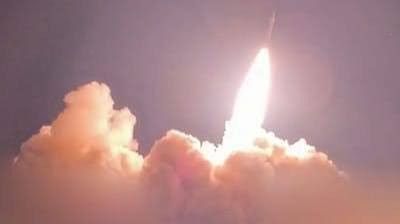
Iran’s Revolutionary Guard claimed it destroyed US refuelling aircraft and fighter jets in missile and drone strikes targeting American military assets in Jordan, though the claims remain unverified.
BY PC Bureau
July 17, 2026: The conflict between the United States and Iran widened dramatically on Friday as Tehran claimed its forces had struck American military assets across the region, including destroying several US refuelling aircraft and fighter jets in missile and drone attacks targeting bases in Jordan.
The Islamic Revolutionary Guard Corps (IRGC) said the operation was launched in retaliation for overnight US airstrikes on Iranian territory that reportedly killed at least eight people. The claims could not be independently verified, and neither the Pentagon nor Jordanian authorities immediately confirmed any damage to US military assets. Jordan’s armed forces said they intercepted three Iranian missiles that entered its airspace, reporting no casualties or damage inside the country.
Jordan’s armed forces said they intercepted and destroyed three Iranian missiles that entered its airspace, adding that there were no casualties or damage inside the kingdom.
In a statement, the IRGC said its missile and drone operation targeted American military facilities supporting US operations in the region. It also urged Jordanians to oppose the US military presence in the country and claimed responsibility for striking a US special operations command centre at al-Tanf in southeastern Syria. There was no immediate response from either the Pentagon or Syrian authorities regarding the claim.
Satellite images recently shared by Tasnim News Agency of the Al-Dhafra Air Base in Abu Dhabi, United Arab Emirates, purportedly show the destruction of four hangars used by US forces, after successful missile strikes launched by the Islamic Revolutionary Guard Corps (IRGC)… pic.twitter.com/HpipwOC5CC
— The Cradle (@TheCradleMedia) July 17, 2026
Attacks Spread Across the Region
The latest strikes formed part of a broader Iranian military response extending across several countries in the Middle East.
In northern Iraq’s Kurdish region, explosions were reported near Irbil and Sulaymaniyah, where Iranian officials said they targeted bases linked to the Kurdish dissident group Komala. Local reports said at least nine people were killed.
Iranian missiles or drones were also reported to have targeted sites in Qatar, while Kuwait reported damage to a power generation and water desalination facility following attacks linked to the escalating conflict.
The widening geographical scope of the strikes highlights the growing risk that the confrontation could draw additional regional states into the conflict.
READ: Trump Revives Election Security Debate, Calls for Sweeping Reforms
Iran-US war update summary last night
The US begun its desperate madness attacks & Trump greenlighted warcrimes.
A total of 5-6 bridges in Hormozgan province were targeted:
• The Griveh bridge, connecting Bandar Abbas, Khmeir, and Lar.
• The bridge after the village of… pic.twitter.com/QKKyAnt2lm— Arya Yadegaar (@AryJeayBackup) July 17, 2026
IRGC’s Drone and Missile Strategy
Military analysts say the IRGC increasingly relies on coordinated attacks combining ballistic missiles with large numbers of armed drones to overwhelm enemy air-defence systems.
The drones are often launched in waves to force interception systems to expend costly defensive missiles, while faster ballistic missiles follow to strike high-value military targets. This layered approach allows Iran to threaten airbases, logistics hubs and fuel storage facilities across the region while complicating interception efforts.
Iran has steadily expanded its drone arsenal over the past decade, making unmanned systems a central element of its regional military doctrine.
Strait of Hormuz Concerns Intensify
The escalating conflict has renewed concerns over the security of the Strait of Hormuz, through which roughly one-fifth of the world’s seaborne oil passes.
Although shipping traffic has continued, commercial vessels have increased security precautions, insurers have raised war-risk premiums, and several shipping companies are closely monitoring developments.
Any prolonged disruption in the strategic waterway could affect global energy supplies, increase oil prices and disrupt international trade.
Conflict Continues to Escalate
The latest exchange follows the collapse of an interim ceasefire and a series of intensified American strikes targeting Iranian military and infrastructure facilities.
According to Iranian officials, recent US attacks have struck ports, bridges, transport links, electrical infrastructure and multiple cities along Iran’s southern coast, including Bandar Abbas, Bushehr, Qeshm, Kish Island, Bandar-e Lengeh, Bandar-e Khamir, Sirik, Ahvaz, Dashti and Bostan. Roads, railway infrastructure and an airport in Iranshahr were also reportedly damaged.
Iran says dozens of people have been killed and hundreds injured in the American campaign over recent days.
With both Washington and Tehran continuing to exchange military strikes across multiple theatres, regional tensions remain at their highest level in years, raising fears of a broader Middle East conflict involving US allies and Iran-bac